

More news on this day
Passengers across Europe are facing another day of disrupted travel as a fresh wave of flight cancellations and delays involving Lufthansa, KLM and SAS ripples through major hubs in Germany, the United Kingdom, Spain and the Netherlands, leaving travelers stranded in cities such as Munich, Manchester, Barcelona and Amsterdam.
Get the latest news straight to your inbox!
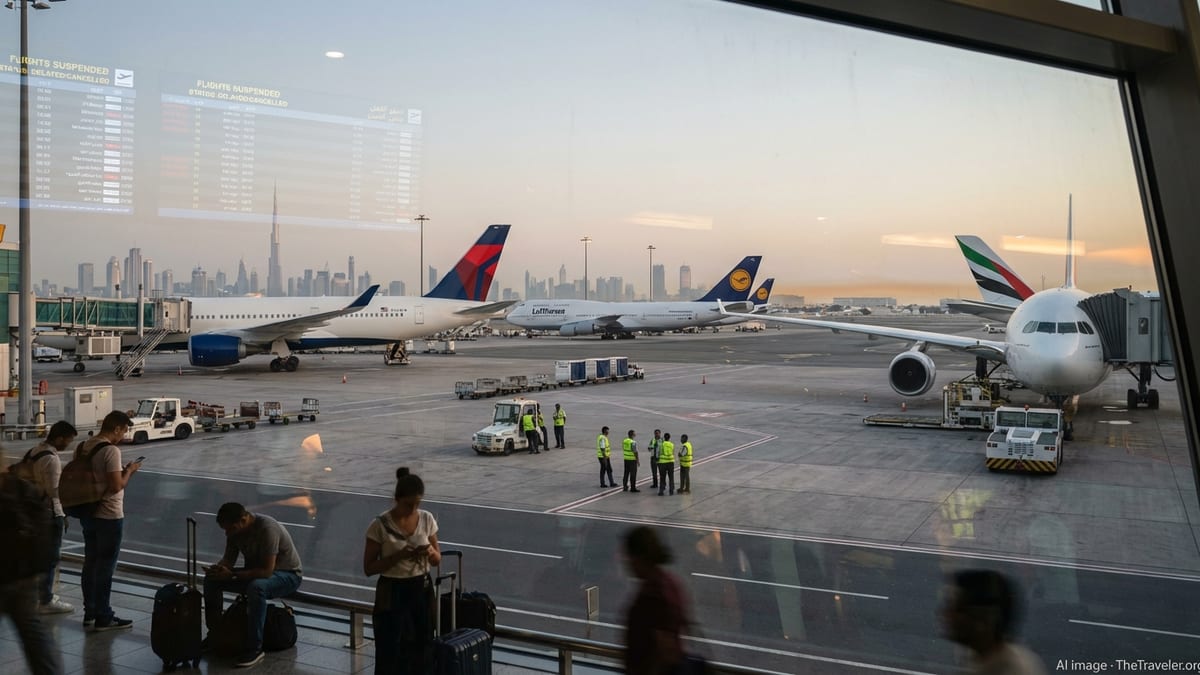
Europe’s Hubs Buckle Under New Wave of Disruptions
Publicly available flight tracking data and industry reports indicate that dozens of services operated by or involving Lufthansa, KLM and SAS have been cancelled or severely delayed in recent days, adding to a turbulent late-March period for European aviation. While overall cancellation rates at major airports remain relatively low compared with total traffic, the concentration of disruption on key routes has left passengers facing missed connections, overnight stays and last-minute rebooking struggles.
The latest data points to at least 39 cancellations and more than 90 delays involving these carriers across multiple European countries, intersecting with wider operational challenges that have already affected hundreds of flights at major hubs in Germany, the United Kingdom, Spain, Turkey, France and the Netherlands. Travel news monitoring shows that airports such as Frankfurt, Munich, London, Paris, Istanbul and Amsterdam have repeatedly appeared among the most disrupted in recent daily tallies.
In this context, individual cancellations on key inter-European links quickly cascade into larger problems. Even a single grounded aircraft can erase multiple rotations across the day, affecting downstream flights and leaving airport terminals crowded with travelers waiting for scarce alternative options.
Although some disruptions are linked to unsettled spring weather patterns and residual staffing pressures, aviation analysts note that the impact is most visible to passengers in the form of broken itineraries at already busy hubs, where slot constraints and high load factors limit the ability to recover schedules quickly.
Munich and German Airports Under Sustained Pressure
Germany’s major airports, including Munich, have been among the hardest hit by recent operational turbulence, with published coverage describing waves of cancellations and hundreds of delays over several consecutive days. Lufthansa, as the country’s largest carrier and a key user of both Munich and Frankfurt, features prominently in disruption statistics, even when the absolute number of cancelled flights remains a small percentage of its daily schedule.
Munich in particular has seen a pattern where cancellations are limited but delays are extensive, affecting a significant share of total operations. Industry summaries for March 31, 2026, describe cancellation rates of around 1 percent at Munich, but with delays affecting more than one in five flights, amplifying knock-on effects for passengers connecting to destinations across Europe and beyond.
Routes linking Munich to other major cities, including Amsterdam, Düsseldorf and Spanish destinations, are especially vulnerable because they often serve as feeder legs into long-haul networks. When a Munich departure is cancelled or heavily delayed, travelers may miss onward flights from other hubs, forcing airlines to scramble for rerouting solutions that are constrained by limited remaining seats at the end of the month and ahead of the Easter travel period.
For stranded passengers, the practical impact is acute. Many are being offered rebookings that require extra connections or overnight stays, while others turn to rail links or rival airports in southern Germany and neighboring countries to continue their journeys.
Stranded Travelers in Manchester, Barcelona and Amsterdam
In the United Kingdom and Spain, Manchester and Barcelona have emerged in recent days as focal points for traveler frustration. Reports from travel outlets tracking Europe-wide operations highlight that both airports have suffered repeated clusters of cancellations and delays linked to network issues rather than purely local problems.
At Manchester, disruptions are often tied to inbound aircraft or connections from continental Europe. When a Lufthansa or KLM feeder flight into a hub such as Frankfurt, Munich or Amsterdam experiences problems, passengers starting their journey in northern England can find themselves stuck before even leaving the country. Published accounts and passenger testimonies describe cases in which evening flights from Germany to Manchester have been cancelled at short notice, leaving travelers with limited same-day alternatives.
Barcelona’s role as a major Mediterranean gateway means even small schedule changes ripple quickly. Travel news coverage in early 2026 has repeatedly cited Barcelona among airports affected by day-long or multi-day episodes of disruption, with some passengers reporting extended waits after cancellations of services to Amsterdam and other northern European hubs. In several cases, travelers originally booked on KLM-operated flights have reportedly been re-routed via London or other intermediate hubs on different carriers.
Amsterdam’s Schiphol Airport, meanwhile, continues to feature prominently in disruption reports, both as an origin and as a critical transfer point. Monitoring by European travel media shows that Schiphol has experienced recurring waves of delays and cancellations across multiple carriers, including KLM and SAS, particularly when broader weather systems or regional airspace restrictions come into play.
KLM and SAS Struggle With Congested Networks
For KLM, the concentration of its network through Amsterdam intensifies the impact of any operational stress. Recent summaries of daily activity show that even when the total number of cancellations is modest, the number of delayed departures from Schiphol can run into the hundreds, reflecting the complexity of managing a tightly banked hub with high aircraft utilization.
Some of the latest disruptions involving KLM are reported to stem from a combination of adverse weather episodes earlier in the season, residual knock-on effects, and route restrictions affecting flights linked to the Middle East and other regions. Travel industry analyses indicate that, on heavily used European routes into Amsterdam, average delays can stretch beyond half an hour, multiplying missed connections across the day.
SAS, which knits together Scandinavia with hubs such as Copenhagen, Oslo and Stockholm, is also facing renewed operational strain. Recent tallies compiled by travel news outlets list dozens of SAS delays and scattered cancellations as storms, tight crew resources and congested airspace converge. For passengers traveling from or through the Nordics to cities like Amsterdam, Munich or Barcelona, this can mean longer layovers, missed long-haul departures and complex rebooking scenarios.
The situation is further complicated by aircraft and crew rotations that span multiple countries. A disruption originating in Scandinavia can easily cascade into late arrivals and onward delays at central European hubs by the afternoon peak.
What Passengers Are Experiencing on the Ground
Across social platforms and consumer forums, travelers are describing a patchwork of experiences as they navigate cancellations and delays in recent days. Some passengers report being notified of cancellations many hours in advance and rebooked automatically onto later flights, while others describe finding out only at the airport and struggling to secure assistance amid long lines at service desks.
Accounts from travelers in cities such as Manchester, Barcelona and Amsterdam indicate that securing alternative routes on the same day is becoming more difficult when disruptions strike during busy travel periods. In some cases, passengers report being offered routings involving two or even three connections, or being rebooked onto partner or rival carriers via different hubs, stretching relatively short trips into day-long journeys.
Travel advisory pieces circulating in European media stress the importance for passengers of checking flight status frequently, using airline apps or airport information channels, and being prepared for last-minute gate or schedule changes. Consumer advocates also point to European Union air passenger rights regulations, which may entitle travelers to care, rebooking and in some circumstances financial compensation when flights are cancelled or significantly delayed for reasons within an airline’s control.
With late winter and early spring weather still unsettled and air traffic remaining robust, aviation observers suggest that episodes of disruption like those currently affecting Lufthansa, KLM and SAS are likely to continue in the short term, particularly at pressure-point hubs including Munich, Manchester, Barcelona and Amsterdam.