

More news on this day
European air travel is facing another bout of disruption as airports in the Netherlands, Denmark, Germany and several neighbouring countries report more than 500 delayed flights and over 60 cancellations, affecting major carriers including British Airways, Ryanair and easyJet at hubs such as Amsterdam and Frankfurt.
Get the latest news straight to your inbox!
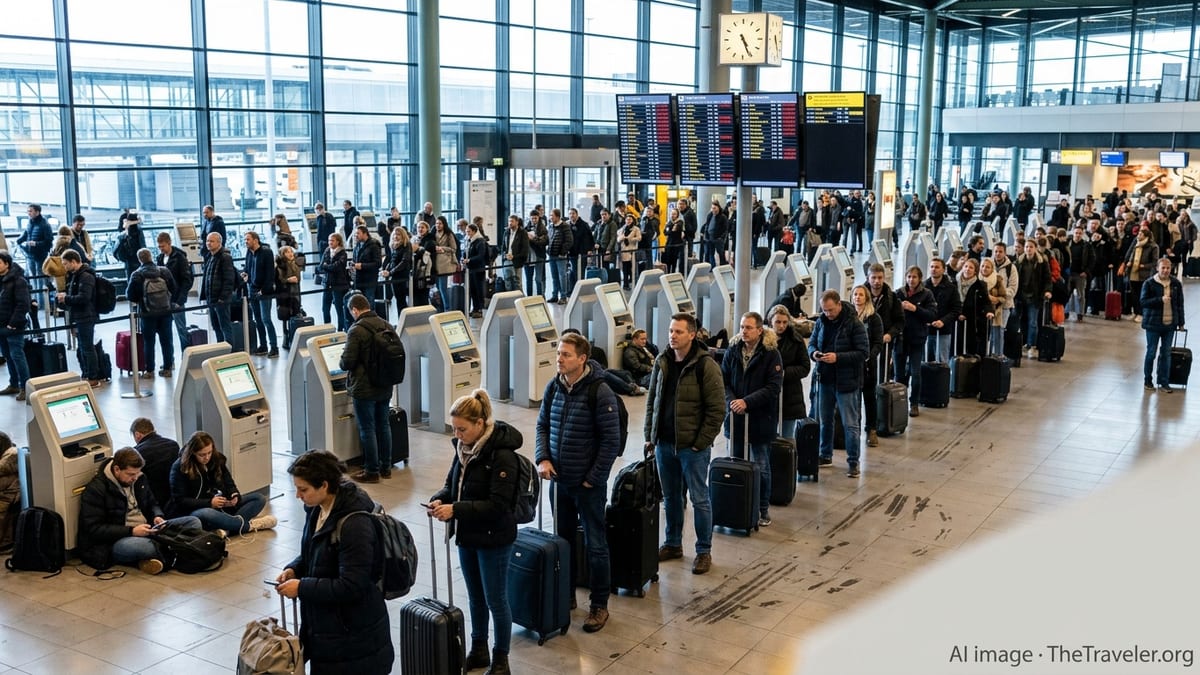
Major Hubs Struggle With Growing Operational Strain
Published figures for late March 2026 show Europe’s aviation network under sustained pressure, with hundreds of flights running late each day and dozens scrubbed from schedules across the continent. Recent data indicates that on one of the worst days, more than 2,700 flights were delayed and 117 cancelled across Germany, the United Kingdom, France and other markets, underscoring how fragile the system has become in peak periods.
Amsterdam Schiphol in the Netherlands and Frankfurt International in Germany have been among the hardest hit. Reports highlight Schiphol managing more than 350 to 400 delays in a single day alongside a cluster of cancellations, while Frankfurt has recorded multiple days where cancellations reached double digits and delays climbed into the hundreds.
While the aggregate figures are spread across dozens of carriers and routes, they translate directly into missed connections, overnight stays and abandoned itineraries for passengers connecting through these hubs. The disruption has been particularly visible on intra European services linking the Netherlands and Germany with the UK, France, Spain and Turkey.
Publicly available information points to a pattern of rolling disruption rather than a single isolated event, with several consecutive days at the end of March marked by elevated delay and cancellation levels at major airports.
British Airways, Ryanair and easyJet Among Most Affected
Network and low cost airlines are all feeling the impact. Coverage of operations at Amsterdam Schiphol in recent days shows easyJet, KLM, Lufthansa and Ryanair among the carriers recording the highest number of delayed departures and arrivals, with British Airways and other full service airlines also reporting disruption on key routes.
One snapshot from Amsterdam on 31 March references more than 380 delayed flights and 13 cancellations at the Dutch hub alone, with KLM bearing a significant share of the schedule changes and low cost rivals easyJet and Ryanair also facing multiple delays and at least one cancellation each. Similar patterns have been noted over Germany, where carriers such as Lufthansa and its partners have had to trim departures and re time services from Frankfurt and Munich.
British Airways has seen disruption on flights linking London with Amsterdam, Frankfurt and other European cities, while Ryanair and easyJet have been affected on high frequency leisure and city break routes. According to published coverage, these airlines are juggling tight turnarounds, crew rostering limits and slot constraints, which leave little margin when conditions deteriorate.
Other airlines, including Air France, Iberia, SAS, Emirates and several Gulf and North American carriers serving European hubs, have also experienced knock on effects as late arriving aircraft and crew scheduling challenges cascade through daily operations.
Weather, Airspace Restrictions and Strikes Drive Irregular Operations
The current wave of disruption does not appear to stem from a single cause. Recent reports highlight a combination of adverse weather, temporary airspace restrictions linked to geopolitical tensions, and industrial action in parts of Europe as key drivers of irregular operations.
Winter and early spring weather systems have brought strong winds, heavy rain and occasional snow to parts of the UK, France, Germany and the Netherlands, periodically reducing runway capacity and forcing airlines to slow departures and arrivals. Earlier in the season, published accounts described storms that led to dozens of cancellations and nearly one hundred delays across several countries in a single day.
In parallel, airspace closures and reroutings associated with ongoing conflict zones have increased the complexity of flight planning for airlines using hubs like Frankfurt, Amsterdam, London and Istanbul. Some carriers have cited longer routings and restricted corridors as factors that compress already busy schedules and limit the ability to recover from earlier delays.
Industrial action has also played a role. Recent advisories have referenced strikes affecting airline staff and airport workers in parts of Belgium and Germany, prompting flight cancellations and schedule reductions that feed into wider network disruption when aircraft and crews are out of position.
Passenger Impact Across Amsterdam, Frankfurt and Beyond
For travellers, the headline numbers of 510 delayed flights and 61 cancellations across affected European countries translate into crowded terminals and uncertain itineraries. Major hubs such as Amsterdam Schiphol and Frankfurt are designed to handle disruption, but when hundreds of flights are delayed on the same day, terminal congestion and long queues for rebooking and baggage services become difficult to avoid.
Passengers on British Airways, Ryanair and easyJet have reported missed connections at London, Amsterdam and Frankfurt, as well as knock on issues at secondary airports such as Munich, Brussels, Zurich and Istanbul. The concentration of low cost operations at certain terminals has meant that even a relatively small number of cancellations can leave long lines of travellers seeking alternative options.
Downline airports have also absorbed the pressure. Coverage of recent days points to delays spreading to cities including Paris, Barcelona, New York and other long haul destinations when aircraft depart late from European hubs. Late evening waves are particularly vulnerable, as limited remaining capacity and crew duty time limits constrain recovery options.
For business travellers and holidaymakers alike, the result is a higher level of uncertainty, with travel times stretching beyond scheduled durations and same day connections becoming harder to guarantee when heading through the busiest airports.
What Travellers Can Do as Disruption Persists
With operational strain across multiple European hubs expected to continue in the short term, travellers are being advised by consumer groups and travel media to build additional buffer time into itineraries, especially when connecting through Amsterdam, Frankfurt or London. Longer layovers and earlier departure choices can offer greater resilience when schedules begin to slip.
Passengers flying within or from the European Union, or with EU based carriers, are covered by air passenger rights legislation that sets out entitlements in the event of long delays or cancellations. Under this framework, travellers may be eligible for care, rerouting or financial compensation, depending on the cause and length of the disruption and the distance of the flight.
Experts commonly recommend that passengers monitor airline apps and airport information channels closely on the day of travel, as flight status can change repeatedly in a congested network. Early contact with airlines when disruption first appears can increase the chances of securing alternative routings before seat availability tightens.
While airlines and airports across Europe continue efforts to restore punctuality, the recent series of days with hundreds of delays and cancellations suggests that travellers planning journeys through the region in the coming weeks should remain prepared for last minute changes and extended travel times.