

More news on this day
Passengers across Europe are facing a fresh wave of travel turmoil after a tangled mix of weather, airspace restrictions and operational problems triggered 190 flight cancellations and 821 delays across the UK, Germany, France, Spain and Turkey, disrupting services for major carriers including Ryanair, British Airways, Pegasus Airlines and Aegean Airlines at hubs in London, Frankfurt, Paris, Madrid and Istanbul.
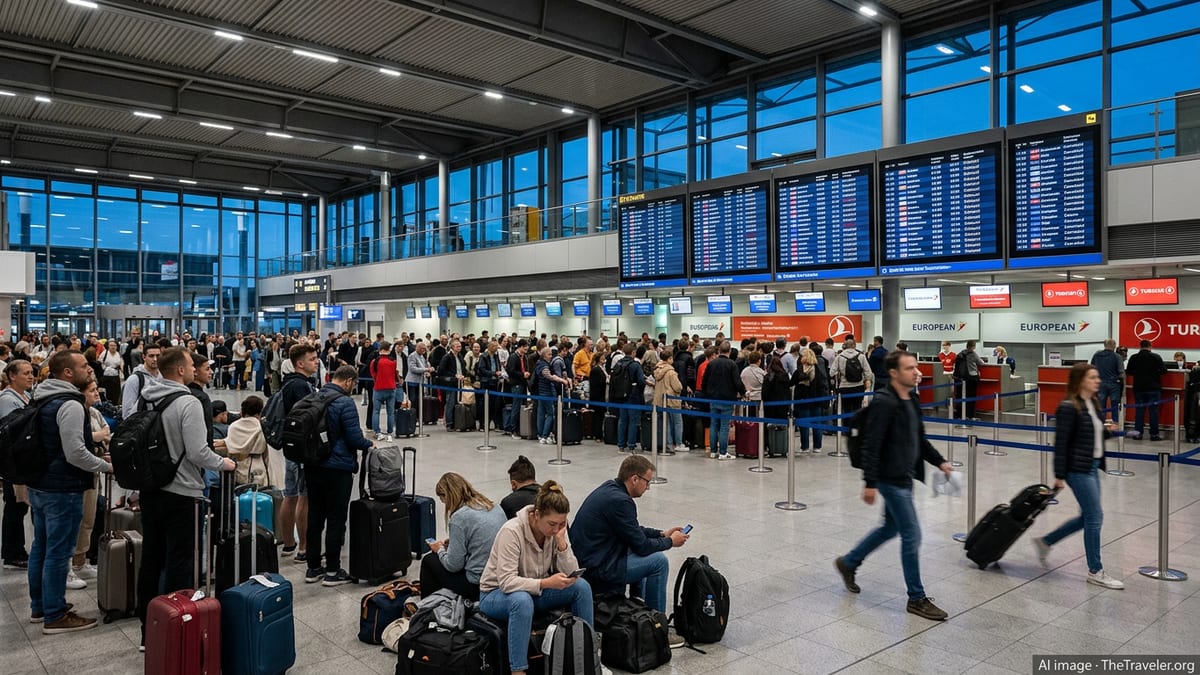
Major European Hubs Struggle to Keep Flights Moving
At London’s main airports, a combination of capacity constraints and knock-on congestion from earlier disruptions left departure boards flashing delay warnings for much of the day. Short-haul services operated by Ryanair and British Airways were among the hardest hit, with aircraft held on the ground as carriers reshuffled rotations and crew to keep at least part of their schedules intact.
Frankfurt and Paris reported similar scenes, as ground handlers, air traffic control and airline operations centers worked to re-slot affected flights and accommodate growing numbers of stranded passengers. Travelers reported long queues at ticket desks and transfer counters as they sought rerouting options, overnight accommodation or meal vouchers when onward connections evaporated.
In Spain, Madrid–Barajas and Barcelona–El Prat struggled with a rolling pattern of delays after earlier arrival disruptions rippled through departure waves. Domestic and intra-European services bore the brunt, affecting airlines from Iberia and Vueling to Ryanair and Lufthansa and adding pressure to already busy terminals at the start of the spring travel season.
Istanbul’s sprawling airports, crucial links between Europe, the Middle East and Asia, also saw mounting disruption. Pegasus Airlines, Turkish carriers and European partners all reported schedule changes as they navigated a tightening web of airspace restrictions and adjusted routings that lengthened block times and compressed turnaround windows.
Airspace Tensions and Weather Set the Stage for Disruption
Operational pressures at Europe’s hubs have been building for days as airlines continue to work around closures and restrictions in parts of Middle Eastern airspace. Longer routings between Europe and Asia, as well as to key Gulf and Levant destinations, have stretched aircraft and crew resources, leaving carriers with less slack to absorb fresh weather or technical issues.
Recent storms and unsettled conditions across parts of Western and Central Europe further complicated the picture. When crosswinds, low cloud or heavy rain coincide with already saturated air traffic corridors, airlines can be forced to trim frequencies, slow operations and accept wider gaps between departures and arrivals to preserve safety margins, quickly turning local weather into a continent-wide scheduling headache.
The result on Monday was a patchwork of delays that rarely made headlines individually but collectively added up to widespread disarray. A flight arriving an hour late into London or Frankfurt could miss its assigned onward slot, pushing subsequent departures further back and forcing operators to choose between cancellations and escalating knock-on delays.
With carriers running close to full capacity ahead of Easter, spare aircraft and standby crews were limited. That left airlines such as Ryanair, British Airways, Pegasus and Aegean making difficult choices about which rotations to prioritize, often canceling thinner routes to protect heavily booked trunk services.
Ryanair, British Airways, Pegasus and Aegean Among Hardest Hit
Low-cost giant Ryanair, with an extensive footprint at secondary airports across the UK, Germany, France and Spain, faced particular exposure whenever congestion or weather disrupted narrow scheduling buffers. Even minor delays on the first wave of the day can snowball for point-to-point carriers, leaving later departures from London, Frankfurt or Madrid departing hours behind schedule.
British Airways, which depends heavily on coordinated connections at London Heathrow and Gatwick, wrestled with a different set of challenges. A canceled or heavily delayed arrival from continental Europe or the Mediterranean can cascade across long-haul departures to North America, Africa or Asia, forcing last-minute aircraft swaps and rebookings for transfer passengers.
In Turkey, Pegasus Airlines saw its tightly timed regional network strained by the need to reroute or cancel select Middle East services. Every schedule change reverberated through onward flights linking Istanbul with European cities, leaving some passengers stuck overnight while others were reaccommodated on alternative routings through different hubs.
Aegean Airlines, which has already been trimming flights to destinations in Israel, Iraq and the Gulf, continued to juggle aircraft and crews to protect core European services feeding into major hubs. Reduced flexibility on these long-haul-adjacent routes left less capacity available for short-notice recovery flights, increasing the likelihood that disrupted passengers would need to wait for subsequent scheduled services.
Passengers Face Long Queues, Missed Connections and Patchy Information
For travelers on the ground, the statistics translated into hours of uncertainty. At London, Frankfurt and Paris, lines at customer service desks stretched down concourses as passengers sought rerouting and hotel vouchers after missed connections, particularly for intercontinental journeys that could not easily be rebooked the same day.
Families traveling at the start of school holidays reported waiting in crowded terminals late into the evening as airlines struggled to locate spare seats on already full services. In Madrid and Barcelona, some passengers described a “domino effect” of rolling delays as arriving crews and aircraft missed their scheduled turns, pushing back departures multiple times before flights finally left or were formally canceled.
Airline apps and airport display boards did not always keep pace with rapidly changing plans. In several cases, passengers received departure updates only minutes before boarding or learned of cancellations at the gate, complicating efforts to secure alternative travel or accommodation. At Istanbul, where many travelers were in transit between Europe and Asia, rebooking queues formed at multiple transfer desks as rerouting via different hubs became the only viable option.
Despite the frustration, airport operators urged travelers to stay with official communication channels, warning that unverified reports on social media could misstate causes of disruption or available options. Many airports recommended arriving earlier than usual, particularly for morning departures, and building in extra time for tight connections within Europe.
Know Your Rights Under European and UK Passenger Rules
Consumer advocates stressed that passengers caught in the disruption should familiarize themselves with their rights under European Union Regulation 261/2004 and equivalent UK rules, which can entitle travelers to assistance, rerouting, refunds and in some cases monetary compensation. Eligibility depends on factors such as the cause of disruption, length of delay and whether the flight departs from or is operated by an airline based in the EU or UK.
Under these protections, airlines are generally required to offer a choice between rerouting at the earliest opportunity or a refund when a flight is canceled. For long delays, passengers may be entitled to meals, refreshments and, where necessary, hotel accommodation and transport between the airport and their lodging when an overnight stay becomes unavoidable.
Compensation payments are more complex and typically apply only when disruptions are deemed within an airline’s control, such as certain technical or operational issues, rather than extraordinary circumstances like severe weather or sudden airspace closures. Travelers are often advised to file claims directly with the airline first, keeping boarding passes, booking confirmations and any written notices of delay or cancellation.
With schedules across Europe expected to remain fragile in the coming days, industry analysts recommend that passengers monitor flight status closely, allow generous buffers for connections and consider flexible ticket options where possible. While airlines and airports work to stabilize operations, travelers are likely to face a period of continued uncertainty whenever their journeys depend on the continent’s busiest hubs.