

More news on this day
Passengers across France and Scandinavia are facing another day of disruption as aviation data points to more than 30 cancellations and at least 51 delays affecting Air France, SAS, and Scandinavian Airlines Ireland services through key hubs including Paris, Copenhagen, and Oslo.
Get the latest news straight to your inbox!
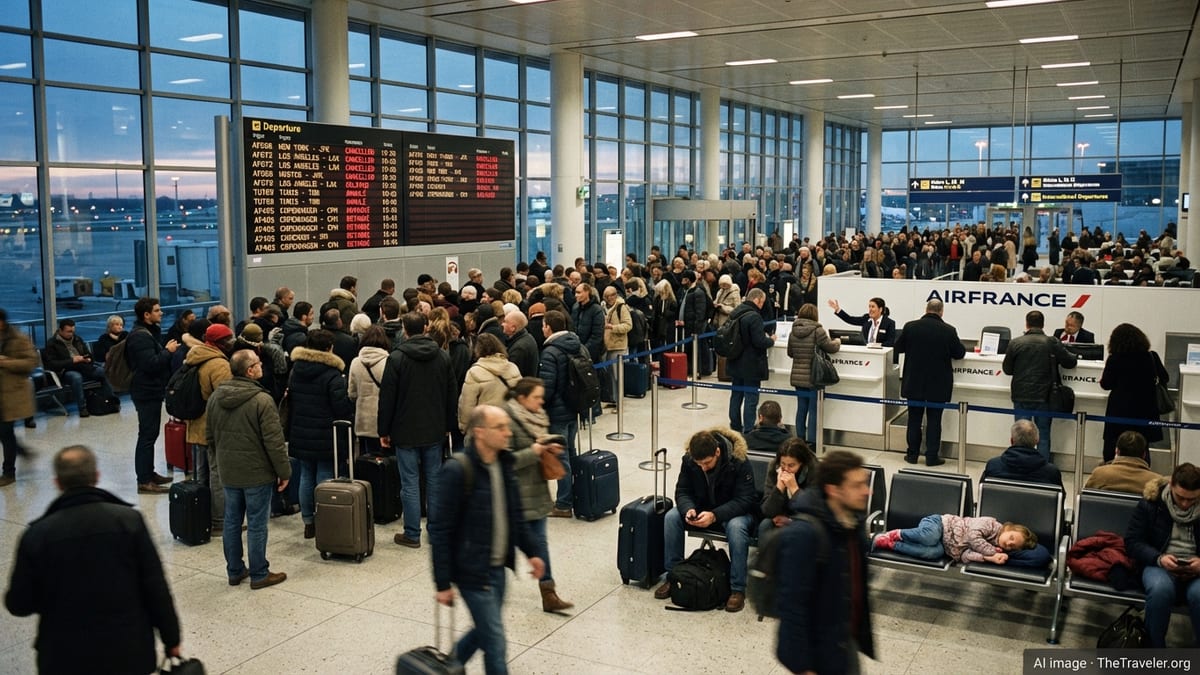
Fresh Wave of Disruptions Hits Key European Hubs
Published flight-tracking data for early April indicates that cancellations and delays have clustered around major hubs in Western and Northern Europe, with Paris Charles de Gaulle, Copenhagen Kastrup, and Oslo Gardermoen among the airports experiencing ongoing schedule instability. Recent tallies show more than 30 flights involving Air France, SAS, and SAS’s Irish unit cancelled in a single operating window, alongside at least 51 delayed services that have rippled across regional and long haul networks.
The latest figures come on the heels of several difficult days for European aviation, during which hundreds of flights across Germany, the United Kingdom, Denmark, France, Italy, Spain, and the Nordic countries have either been cancelled or heavily delayed. In those broader counts, SAS and its affiliates have featured prominently in Scandinavia, while Air France has shouldered a significant share of disruption in and out of Paris and other French gateways.
In Scandinavia, Oslo and Copenhagen continue to be focal points. Reports summarising airport performance on recent peak disruption days highlight Gardermoen and Kastrup as among the most affected Nordic hubs, with cancellations and delayed departures for SAS’s mainline operation and Scandinavian Airlines Ireland contributing to congestion in terminals and tight connection windows for onward travel.
Weather, Infrastructure Strain, and Fuel Costs Create a Volatile Mix
The latest cancellations and delays are unfolding against the backdrop of a broader, weeks long period of pressure on European aviation. Publicly available coverage describes a combination of high winds and unsettled spring weather in parts of Scandinavia and northern Europe, which has reduced runway capacity at times and made it harder for airlines to recover from early morning disruptions. Power outages in sections of Sweden, Norway, and Ireland have also been noted for their impact on ground infrastructure and surface transport links used by airport staff.
Operational strain is being compounded by structural challenges, including higher fuel prices and tight aircraft utilization. SAS recently announced plans to cancel at least a thousand flights in April, most of them on Norwegian domestic routes, as part of efforts to adjust capacity in response to surging fuel costs and shifting demand. While those planned cuts are separate from day to day irregular operations, they reduce the margin for schedule recovery when unplanned disruption occurs.
For Air France, recent analysis of network performance highlights a concentration of delays and cancellations at Paris Charles de Gaulle and other major French airports on days when wider European disruption has spiked. When storms or airspace constraints affect multiple countries simultaneously, carriers working dense schedules with limited spare aircraft can find small issues rapidly cascading into larger network wide delays.
Impact on Passengers in Paris, Copenhagen, Oslo, and Beyond
For travelers, the numbers translate into missed connections, extended queues, and overnight stays in airport hotels. At Copenhagen, recent reporting notes that on some days nearly half of all departures have run late, with a smaller but still significant number cancelled outright. Those figures have directly affected SAS and its Irish operating arm, which handle a large share of departures to Norway, Sweden, and wider European destinations.
Oslo Gardermoen has seen a similar pattern, with clusters of cancellations on certain days and knock on delays spreading across Norwegian domestic and international routes. Passengers connecting from smaller Scandinavian cities onto long haul services are particularly vulnerable when an initial short hop is cancelled or heavily delayed, leaving limited alternatives later in the day.
In France, Air France passengers through Paris Charles de Gaulle and other major airports such as Nice and Lyon have faced a series of rolling disruptions. In recent multi country snapshots of flight operations, Air France has been listed among the carriers grappling with re positioning aircraft and crews after earlier cancellations, a process that can stretch across several days before schedules fully stabilise.
The combination of planned capacity cuts, weather related constraints, and infrastructure strain means that passengers across the region may continue to encounter irregular operations even when conditions appear normal on the day of travel. Travel data for the first week of April suggests that these issues are not limited to any single country, but instead reflect a pan European pattern.
What the Latest Data Shows About Air France, SAS, and Scandinavian Airlines Ireland
Recent compilations of flight performance figures for early April show Scandinavian Airlines Ireland accounting for a notable share of cancellations and delays relative to its size. One dataset covering a single disruption heavy day lists the Irish unit with close to double digit cancellations and several dozen delayed services, reflecting its role on busy routes within northern Europe and to selected continental hubs.
Separate breakdowns of airline performance during another wave of disruption across Europe point to Air France contending with multiple cancellations and scores of delayed flights, particularly at Charles de Gaulle. SAS, meanwhile, appears in several national level tallies as one of the main carriers affected in Norway and Denmark, with delays recorded at Oslo, Copenhagen, and other Scandinavian airports even on days when total cancellation numbers have been more modest.
Despite the current turbulence, punctuality statistics published for March suggest that SAS as a whole entered April from a relatively strong operational baseline, having been ranked among the world’s most punctual airlines in recent industry reports. That contrast highlights how quickly performance indicators can deteriorate when volatile weather, fuel driven schedule changes, and infrastructure interruptions converge.
What Travellers Can Expect in the Coming Days
Looking ahead, most publicly available outlooks suggest that airlines and airports in France and Scandinavia are working to normalise operations after the early April disruption, but the situation remains fluid. With SAS already trimming parts of its programme for economic reasons and Air France still managing the after effects of recent network wide delays, further localised irregularities remain possible, particularly during peak travel periods and in adverse weather.
Travel analysts note that when multiple factors align to produce several days of widespread disruption, recovery can stretch beyond the initial event as aircraft and crew rotations are gradually brought back into balance. This appears to be the case across parts of northern and western Europe, where successive daily snapshots continue to show elevated levels of delays even as cancellation numbers fluctuate.
Passengers booked on Air France, SAS, or Scandinavian Airlines Ireland services through Paris, Copenhagen, Oslo, and other affected cities in the coming days are being advised by consumer advocacy organisations and travel industry commentary to monitor their bookings closely, allow extra time for connections, and familiarise themselves with applicable passenger rights in case of significant delay or cancellation. While airlines are gradually restoring more stable operations, the recent wave of cancellations and delays underlines how quickly conditions can change for travellers moving through Europe’s busiest hubs in the early spring period.