

More news on this day
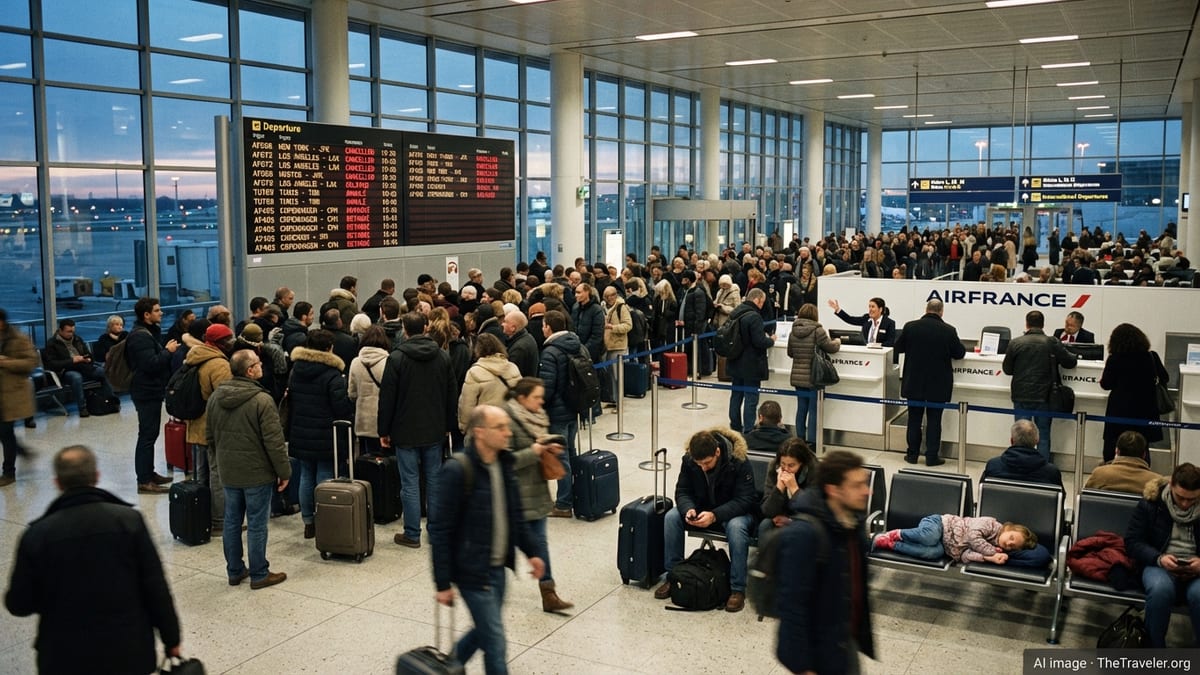
Passengers across France and Scandinavia are facing another day of disruption as fresh data shows more than 30 flight cancellations and over 50 delays affecting services operated by Air France, SAS, and Scandinavian Airlines Ireland at major hubs including Paris, Copenhagen, and Oslo.
Get the latest news straight to your inbox!
Latest Numbers Show Persistent Disruption at Key Hubs
Publicly available flight-monitoring data for the first week of April indicates that irregular operations remain elevated across several major European airports, with France and the Nordic region among the hardest hit. Aggregated figures for recent days point to more than 30 cancellations and at least 51 delays tied to Air France, SAS, and their Scandinavian affiliates on routes touching Paris Charles de Gaulle, Copenhagen, Oslo Gardermoen, and secondary cities.
At Paris Charles de Gaulle, recent disruption reports highlight a combination of cancellations and well over 100 delays in a single day, affecting services from Air France and partner carriers feeding into its long-haul network. In the same period, Copenhagen Airport has reported multiple cancellations and dozens of delayed departures and arrivals, many of them involving Scandinavian Airlines and its regional operators.
Oslo Gardermoen has also seen a spike in irregular operations since the first April weekend, with double-digit cancellations and delays reported on particular days. Flights linking the Norwegian capital with Copenhagen, Stockholm, London, and continental European cities have been especially vulnerable, leading to missed connections and extended airport waits for travelers.
Beyond the largest hubs, knock-on effects are being felt at airports in Stavanger, Bergen, Gothenburg, and other regional gateways, where short-haul SAS and subcontracted Scandinavian Airlines Ireland services connect smaller cities to the main European network. Even a modest number of cancellations on these thinner routes can leave passengers with limited same-day alternatives.
What Is Behind the Current Wave of Cancellations and Delays
Recent disruption in Scandinavia is unfolding against a backdrop of cost pressure and operational strain. In March, published coverage on SAS detailed plans to cancel at least 1,000 flights in April as elevated jet fuel prices squeeze the carrier’s finances, with many of those cuts concentrated on Norwegian domestic and Nordic regional routes. These pre-planned reductions appear to be intersecting with day-of-operations challenges at key hubs.
Strong winds and unsettled spring weather across Denmark and southern Norway over the first April weekend contributed to cascading delays. Once early departures from Copenhagen and Oslo left late, aircraft and crews struggled to return to schedule, creating follow-on disruption on later rotations. Flight compensation specialists tracking the weekend’s events have highlighted more than 150 delays and nearly 30 cancellations at Copenhagen alone on a single day, affecting SAS, CityJet, and other operators serving Nordic routes.
For Air France, the latest problems sit within a wider pattern of congestion at major Western European hubs. Recent tallies of European-wide disruption, citing airports in France, the Netherlands, Italy, Portugal, and the UK, show Paris Charles de Gaulle among the airports with significant numbers of delayed movements. While Air France has avoided the mass cancellations seen during previous strike seasons, even a small number of scrubbed flights can cause extensive knock-on impacts when paired with heavy delay volumes and tight connection windows.
Industry analysts note that structural issues such as limited spare aircraft capacity, ongoing crew rostering constraints, and increasingly crowded airspace over parts of Europe continue to limit airlines’ ability to recover quickly when weather or technical issues arise. The current mix of planned schedule cuts and unplanned day-of disruptions illustrates how fragile operations remain going into the busy spring and summer travel periods.
How Passengers in Paris, Copenhagen, and Oslo Are Being Affected
For travelers, the statistics translate into long queues, missed holidays, and unexpected overnight stays. At Paris Charles de Gaulle, delays on short- and medium-haul services ripple into long-haul connections, leaving some passengers facing rebookings on later transatlantic or Asia-bound flights. Domestic and European travelers, particularly those on tight schedules or same-day returns, are experiencing crowded rebooking desks and reduced choice as alternative flights fill quickly.
In Copenhagen, reports indicate that disruptions over the recent weekend left hundreds of passengers waiting for updated departure times as airport screens filled with delayed statuses. Travelers heading to smaller Nordic destinations such as Aalborg, Kristiansand, and Stavanger have been particularly exposed, since many of these routes operate only a handful of times per day and are often served by SAS or affiliated regional partners. When one flight cancels, the next available option may be hours or even a full day later.
Oslo Gardermoen’s challenges have been especially pronounced on routes linking Norway to major European hubs like London, Amsterdam, and Copenhagen. Publicly available data shows clusters of cancellations and late operations on these services since the first April weekend, complicating onward travel for passengers connecting to long-haul networks. Travelers on leisure itineraries to or from southern Europe are also feeling the effects, with some spring holidaymakers forced to extend hotel stays or cut trips short.
Social media posts and discussion boards suggest rising frustration among passengers who feel caught between airlines and airports when disruptions occur. Some travelers report slow communication, with notifications about cancellations and gate changes arriving late or inconsistently across apps, email, and departure boards, adding confusion to an already stressful situation.
Response Measures and Options for Stranded Travelers
While no single overarching cause explains every affected flight, airlines and airports are deploying familiar playbooks to manage the disruption. Publicly available material from carriers indicates that rebooking options typically include moving passengers to later flights on the same airline, using alliance or codeshare partners where agreements allow, and in some cases placing customers on non-partner carriers to complete essential journeys. On the ground, standard measures include providing meal vouchers and, where required by local regulation, hotel accommodation when overnight stays become unavoidable.
Consumer-rights guidance circulating in recent days emphasizes that passengers departing from European Union and associated airports, or flying with EU-based airlines such as Air France and SAS, are often covered by extensive protections when significant delays or cancellations occur. These protections can include the right to re-routing at the earliest opportunity and, in some circumstances, financial compensation, depending on the cause of disruption and the length of delay.
Given the volatile conditions, travel experts recommend that passengers flying through Paris, Copenhagen, Oslo, and other busy hubs build additional time into their itineraries, particularly when planning self-made connections between separate tickets. Monitoring airline apps and airport information channels on the day of travel can help travelers react quickly if schedules change, improving the odds of securing earlier rebookings or alternative routings before seats run out.
With airlines already warning of schedule adjustments related to fuel costs and network restructuring, and with spring weather and airspace constraints still in play, operational data suggests that irregularities may persist across parts of Europe in the near term. For now, travelers across France and Scandinavia continue to face an elevated risk of disruption, even as airlines work to restore reliability ahead of the peak summer season.