

More news on this day
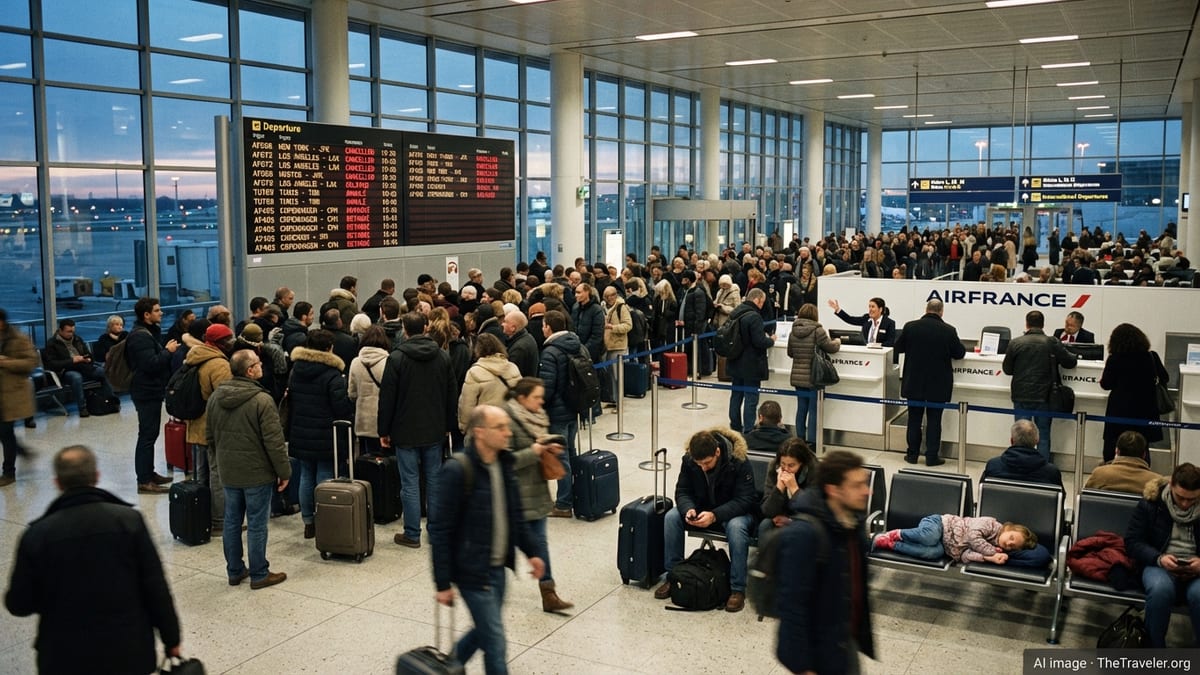
Passengers across France and Scandinavia are facing another day of flight chaos, with more than 30 cancellations and at least 51 delays reported on routes operated by Air France, SAS and affiliated carriers linking Paris, Copenhagen, Oslo and several regional cities.
Get the latest news straight to your inbox!
Fresh Disruptions on Key European Routes
New disruption data from European flight-tracking and travel-industry outlets indicates that services touching Paris Charles de Gaulle, Copenhagen and Oslo have again been hit by a mix of cancellations and significant delays. The latest figures point to more than 30 flights cancelled and at least 51 delayed across networks operated by Air France, SAS and wet-lease operators flying on behalf of Scandinavian Airlines Ireland.
The problems are concentrated on heavily used intra-European routes such as Paris to Copenhagen and Paris to Oslo, as well as dense Nordic corridors linking Copenhagen with Norwegian and Swedish cities. Publicly available schedules show repeated short-notice timetable adjustments in April, amplifying the disruption for passengers who depend on these hubs for onward connections.
Across the affected airports, the pattern mirrors wider turbulence in European aviation this spring. Recent coverage by travel-industry publications highlights days in which hundreds of flights have run late across multiple countries, with Paris Charles de Gaulle and Copenhagen among the airports seeing frequent knock-on delays following earlier disruptions.
While the latest wave has not shut down any single hub, the cumulative impact is being felt by travelers who now face missed connections, extended layovers and overnight stays in transit cities as airlines work through backlogs.
SAS Cancellations Add Pressure to Nordic Hubs
SAS and its associated operations, including flights flown on behalf of Scandinavian Airlines Ireland and other wet-lease partners, are under particular scrutiny after a series of schedule cuts. Recent reporting in Scandinavian media and specialist aviation forums describes at least one thousand SAS flights scheduled for cancellation in April, driven primarily by higher fuel costs and staffing constraints on Nordic routes.
Most of those cancellations are concentrated on domestic and short-haul services, especially within Norway and on links from Oslo to smaller cities. However, ripple effects are reaching major hubs such as Copenhagen and Stockholm, where missed feeder flights are disrupting longer-haul itineraries to and from continental Europe, including France.
Observers note that SAS has publicly emphasized its long-term focus on punctuality and reliability, pointing to strong on-time performance rankings. Yet the scale of its recent schedule changes highlights the strain on carriers attempting to balance cost pressures, volatile fuel prices and still-shifting demand patterns across the Nordic region.
For travelers, the practical consequence is a higher risk of same-day cancellations, tighter rebooking options and longer waits at key transfer airports such as Copenhagen, which serves as SAS’s primary intercontinental hub.
Weather, Fuel Costs and Network Congestion Behind the Numbers
Although each airline and airport faces different operational challenges, several common factors are emerging behind the current tally of more than 30 cancellations and 51 delays across France and Scandinavia. Recent disruption summaries for Copenhagen cite episodes of strong winds in Denmark and southern Norway that triggered dozens of cancellations and more than one hundred delays in a single weekend, causing aircraft and crews to fall out of position.
At the same time, the sharp rise in jet fuel prices linked to geopolitical tensions has prompted SAS and other carriers to trim their spring schedules. Scandinavian news outlets and passenger-rights groups have documented how higher fuel costs have pushed airlines to reduce frequencies on marginal routes and consolidate services, increasing vulnerability when a single cancellation removes one of only a few daily options.
Network congestion is another contributor. Travel-news coverage from across Europe shows that as traffic returns toward pre-pandemic levels, airports like Paris Charles de Gaulle and Copenhagen are again operating close to capacity at peak times. Minor disruptions early in the day can translate into late-evening cancellations when aircraft are unable to recover their schedules, a pattern travelers are now seeing in both French and Scandinavian hubs.
While there is no single trigger for the present wave of disruption, the combination of weather, fuel economics and crowded networks is creating an environment in which even routine operational issues can escalate into widespread delays.
Impact on Passengers in Paris, Copenhagen, Oslo and Beyond
For passengers, the statistics translate into missed holidays, disrupted business trips and long queues at customer-service counters. Travelers passing through Paris, Copenhagen and Oslo report extended waits as ground teams process rebookings following same-day cancellations or rolling delays.
Consumer-rights organizations focused on European air travel are reminding affected passengers that EU and UK air-passenger protection rules may apply when flights are significantly disrupted. Publicly available guidance explains that travelers on qualifying flights with Air France, SAS or their regional partners could be entitled to meal vouchers, hotel accommodation and, in some cases, financial compensation, depending on the cause and length of delay and the distance flown.
However, those protections do not eliminate the immediate inconvenience. Limited seat availability in peak periods means stranded travelers in Paris and Copenhagen can sometimes face rebooking options several days later, especially on routes with few daily services or where multiple flights have already been removed from the timetable for April.
Social media posts and forum discussions from recent days illustrate how quickly itineraries unravel when connections via Copenhagen or Paris are delayed. A delay of an hour or two on a feeder flight into a hub can force passengers to overnight in transit or reroute through entirely different airports if the last onward departure has already left.
What Travelers Should Watch for Next
As the situation evolves, publicly available flight-status pages and airport operations dashboards suggest that disruption levels remain fluid from day to day. Travel-industry analysts caution that more short-notice cancellations are possible through April as SAS continues to adjust its Nordic network and as Air France navigates broader congestion across key European hubs.
Passengers booked on affected airlines in the coming days are being advised by travel advisors and consumer groups to monitor their flight status closely, verify departure and arrival times on airline apps before heading to the airport, and allow generous connection windows when routing through Paris Charles de Gaulle, Copenhagen or Oslo.
Travel specialists also underline the importance of knowing basic passenger rights under European regulations, including the right to rerouting on the earliest available flight and, in some cases, comparable transport on other airlines when original carriers cannot offer timely alternatives. Keeping receipts for meals, accommodation and local transport during disruptions may help when seeking reimbursement.
With fuel prices still elevated and weather disruptions likely to recur as spring progresses, the network strain affecting Air France, SAS and their partners may not be resolved overnight. For now, travelers across France and Scandinavia are bracing for further days in which cancellations and delays remain an unwelcome but persistent feature of air travel.