

More news on this day
Hundreds of passengers were left stranded in Switzerland on March 2 as Geneva and Zurich airports reported a combined 173 flight delays and 34 cancellations, disrupting services by Emirates, El Al, Qatar Airways and several other major carriers and triggering ripple effects across European and long haul networks.
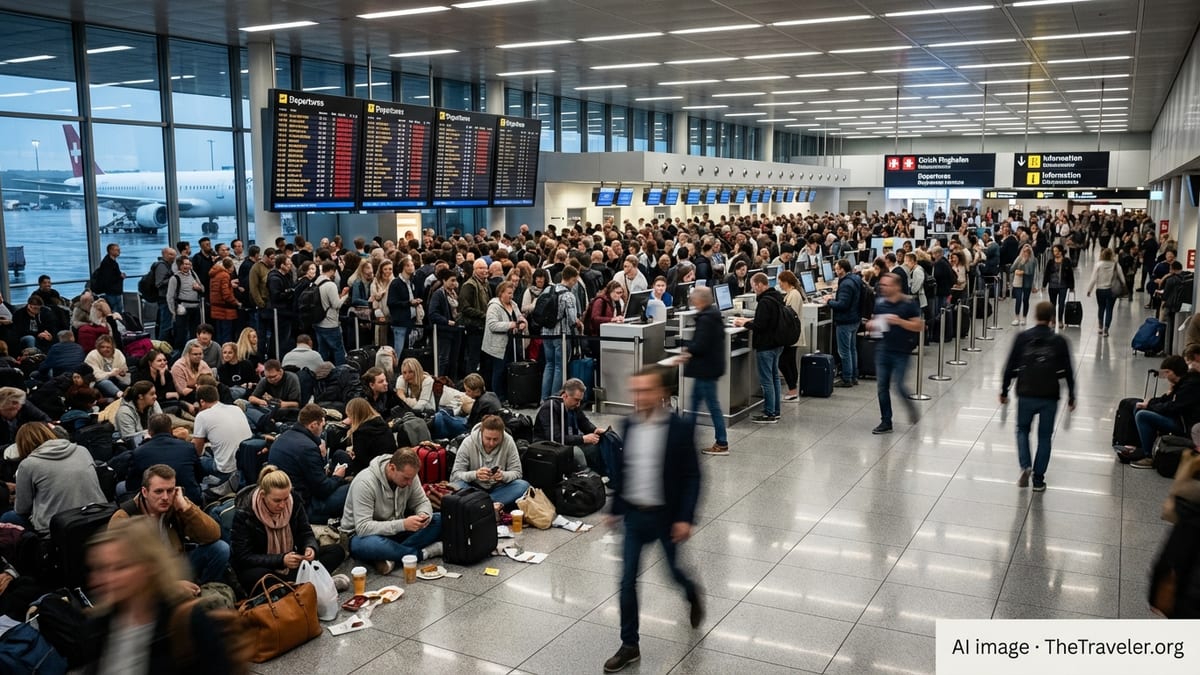
Swiss Hubs Plunge Into Day of Travel Turmoil
Geneva and Zurich, Switzerland’s two busiest gateways, spent Sunday grappling with mounting operational disruption that turned normally efficient terminals into scenes of queues, missed connections and hastily rebooked itineraries. According to operational data for March 2, the two airports together recorded 173 delayed departures and arrivals alongside 34 outright cancellations, affecting both European and intercontinental routes.
Airport duty managers reported crowded departure halls, long lines at airline service counters and passengers bedding down in seating areas as they waited for information on rebooked flights. With aircraft and crews falling out of position, many services were rescheduled at short notice or rerouted via other European hubs, compounding the sense of uncertainty for travellers already on tight connections.
The disruption comes at a sensitive time for Switzerland’s tourism sector, with late winter city breaks and alpine holiday traffic overlapping business travel demand. Travel agents and hoteliers in Geneva and Zurich said they were contending with last minute cancellations, delayed check ins and extended stays as visitors struggled to leave or reach the country.
Geneva Airport Records Dozens of Delays and Cancellations
At Geneva Airport, a key entry point for leisure travellers bound for the Alps as well as diplomats and business visitors, the disruption was particularly visible through the morning and early afternoon. The airport logged 15 cancellations and 78 delays, affecting a mix of short haul European sectors and long haul services operated by major international airlines.
Swiss and easyJet, two of Geneva’s most prominent carriers, faced a wave of schedule changes, with Swiss reporting multiple cancellations and more than 30 delayed flights. Other European airlines including Air France, SAS, British Airways, KLM and Iberia also experienced knock on delays as congestion built on departure and arrival banks.
Geneva’s role as a transfer point for onward rail links into France and the broader Swiss rail network meant the impact reached well beyond the airport perimeter. Late arriving flights pushed many passengers onto later train departures, while some missed last evening services altogether, forcing unexpected overnight stays in airport hotels and city properties.
Zurich, Switzerland’s Main Hub, Struggles With Network Knock Ons
Zurich Airport, the country’s largest international hub and the primary base of Swiss, reported an even higher tally of affected services. Operational data showed 19 cancellations and 95 delays across the day, as the airport’s tightly timed banked schedule came under strain from aircraft rotations that were no longer running on time.
Swiss, which relies on Zurich for a complex web of European and long haul connections, saw dozens of delayed flights and several cancellations as crews and aircraft ended up out of sequence. Regional partner Helvetic and leisure carrier Edelweiss Air also reported elevated delay levels, adding to congestion at gates and on taxiways.
International carriers including Emirates, Qatar Airways, El Al and Etihad Airways were among those cancelling or heavily adjusting services, with some long haul departures scrubbed entirely and others subject to prolonged holds. Passengers on disrupted flights reported lengthy waits at transfer desks, with onward connections to North America, the Middle East and Asia proving particularly difficult to rebook at short notice.
Gulf and Middle East Carriers Hit as Airspace Constraints Bite
The disruption in Switzerland is closely tied to wider turbulence across global aviation networks, as ongoing airspace restrictions in parts of the Middle East continue to ripple through long haul operations. Airlines such as Emirates, Qatar Airways and Etihad Airways, which depend on carefully orchestrated connection waves through their Gulf hubs, have been especially vulnerable to cascading schedule changes.
At Geneva and Zurich, data for March 2 showed Emirates cancelling multiple flights while recording no delayed operations, a sign that services were pulled from the schedule entirely rather than operating on revised routings. Qatar Airways and El Al also scrapped departures, with carriers preferring outright cancellations to extended detours that would push crews beyond legally permitted duty hours.
Aviation analysts note that even passengers not travelling to the Middle East can feel the impact when such long haul networks are disrupted. Aircraft and crews that would usually cycle between Europe, Asia and Africa via Gulf hubs are now out of position, limiting the availability of both seats and spare aircraft to be redeployed when irregular operations strike at European airports.
Passengers Face Long Queues, Limited Options and Ongoing Uncertainty
For travellers on the ground in Geneva and Zurich, the statistics translated into hours of waiting and a scramble for alternatives. Many passengers reported queueing at airline counters for rebooking, only to discover that seats on later flights were scarce or fully booked due to the volume of disrupted services across Europe.
Families returning from ski holidays and business travellers heading to meetings found themselves weighing whether to wait for replacement flights, detour via other hubs, or switch to rail for at least part of their journey. Travel advisers in Switzerland recommended that affected passengers remain flexible on routing, accept indirect journeys where available and monitor airline apps closely for rolling schedule updates.
Consumer groups reminded passengers that, under European passenger rights rules, travellers on eligible flights may be entitled to assistance such as meals, accommodation and rebooking support when significant delays or cancellations occur. However, they cautioned that processing claims could take time given the scale of disruption not only in Switzerland but across a broader swathe of the global network.
With aircraft, crews and passengers now scattered away from their usual operating patterns, airline operations teams warned that it could take several days before schedules at Geneva and Zurich fully stabilise, leaving travellers to brace for further delays and last minute changes in the early part of the week.