

More news on this day
Air travel across parts of China and Southeast Asia faced fresh disruption today as 63 flights were reportedly canceled and 854 delayed at six major airports, stranding passengers and putting pressure on already busy regional networks.
Get the latest news straight to your inbox!
Major Hubs Hit Across China and Indonesia
Published coverage indicates that the disruptions are concentrated at Changsha Huanghua, Shanghai Hongqiao, Shenzhen Bao’an, Guangzhou Baiyun, Tianjin Binhai and Jakarta Soekarno Hatta International Airport, all of which serve as key domestic and international gateways. These facilities handle heavy daily traffic for business and leisure travelers, connecting secondary cities to global long haul routes.
While the total impact cited is 63 cancellations and 854 delays across the six airports, the knock on effects extend beyond the immediate figures. Aircraft and crews out of position at one hub can lead to late departures and missed connections at other airports in the region, magnifying the disruption for travelers who are not flying through the affected hubs directly.
Recent traffic data and media reports show that several of these airports have experienced periodic operational stress in the past week, particularly in southern China. Guangzhou Baiyun and Shenzhen Bao’an have both faced waves of delays in recent days, with local coverage linking previous disruptions to thunderstorms and challenging weather patterns in the Greater Bay Area.
At Jakarta Soekarno Hatta International Airport, one of Southeast Asia’s busiest hubs, operational challenges can ripple into regional networks serving Singapore, Kuala Lumpur, Bangkok and other major cities. Even a relatively limited set of cancellations and delays there can add to congestion at connecting airports and tighten turnaround times for airlines trying to keep schedules on track.
Travelers Face Long Queues and Tight Connections
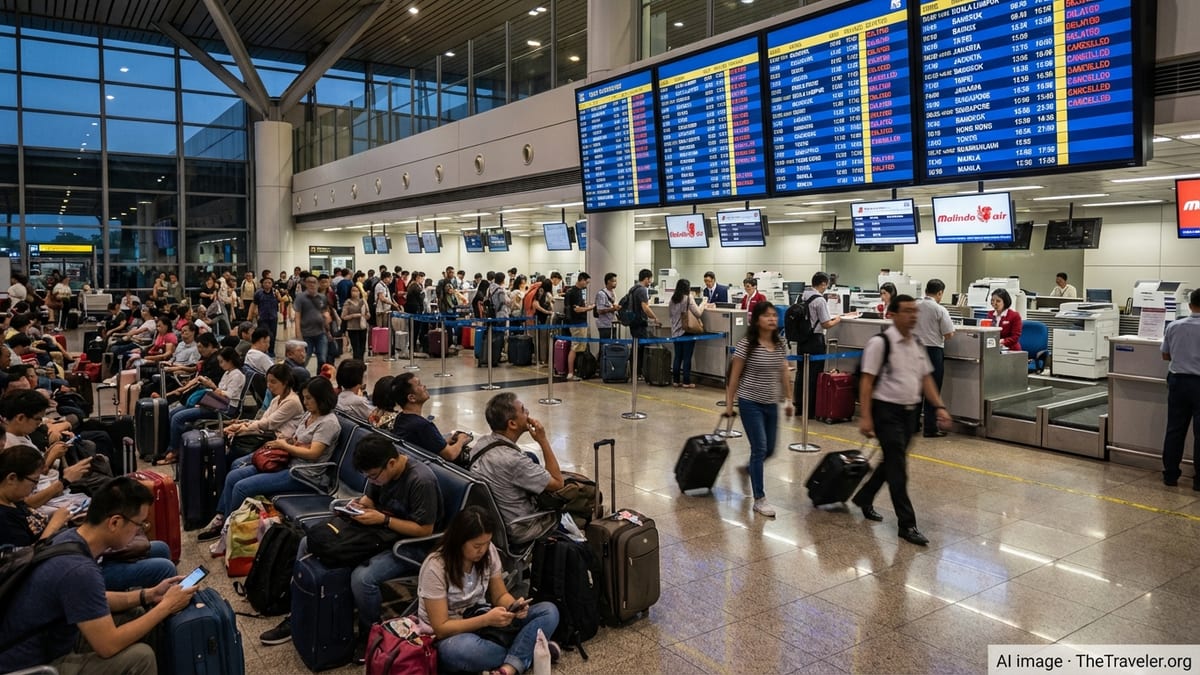
Across the affected airports, passengers are contending with a familiar pattern of long check in lines, crowded departure halls and uncertainty around departure times. Social media posts and localized coverage frequently highlight travelers waiting hours for updated information, with rolling schedule changes announced throughout the day as airlines adjust operations.
In hub airports such as Shanghai Hongqiao and Guangzhou Baiyun, disruption at domestic terminals often has an outsized impact on connecting traffic. Many travelers use these airports to transfer between short haul Chinese routes and international flights operated by Chinese and foreign carriers. When an initial domestic leg is delayed, passengers risk missing onward services, leading to rebooking challenges and extended stays in transit areas.
Reports from recent days also describe passengers opting to cancel or reroute journeys altogether when delays extend into the evening peak. For travelers on tightly timed itineraries, including business trips and short getaways, even a delay of a few hours can make their plans unworkable. This has led some passengers to seek refunds or travel credits, particularly where airlines have publicly communicated flexible change policies during periods of irregular operations.
Families and group travelers may be especially affected when seats on alternative flights are limited. At times of concentrated disruption, alternative departures can quickly sell out, forcing travelers to accept overnight stays or multi stop routings that significantly extend total travel time.
Weather, Congestion and Network Complexity Among Key Factors
Although detailed causation for each affected flight has not been fully itemized, recent reporting across Chinese and regional outlets points to a mix of adverse weather, airspace congestion and knock on operational constraints as driving factors behind current delays. Thunderstorms, reduced visibility and strong winds have been cited in connection with earlier disruption at Guangzhou Baiyun and Shenzhen Bao’an, conditions that can reduce runway capacity and increase separation between aircraft.
Airports such as Shanghai Hongqiao, Changsha Huanghua and Tianjin Binhai operate within some of the busiest air corridors in China, where scheduling is tightly managed and recovery windows can be limited. When a cluster of flights cannot depart on time, queues can form both in the air and on the ground, affecting departure slots for later services and putting pressure on airline and airport resources.
Jakarta Soekarno Hatta presents its own challenges, combining heavy domestic traffic with significant international demand. Published analyses of on time performance have previously highlighted periods of congestion at the airport, particularly around peak travel seasons and during weather disturbances. In such conditions, even minor disruptions can extend turnaround times for aircraft and make it more difficult for airlines to return to normal operations quickly.
Industry data on punctuality trends across Asian hubs also suggests that recovery from large scale disruption can take many hours or even spill into the following day. Once rotations are significantly out of sync, airlines must rebuild aircraft and crew schedules while working within regulations on crew duty limits and available airport slots.
Ripple Effects for Airlines and Tourism Markets
The combined disruption at these six airports arrives at a time when air travel demand in Asia continues to recover and grow, particularly on regional leisure and visiting friends and relatives routes. Publicly available figures for late March and early April point to robust passenger numbers at many Chinese airports, as well as at Jakarta Soekarno Hatta, feeding tourism flows throughout Southeast Asia.
When cancellations and extensive delays occur at multiple hubs on the same day, airlines often face a complicated balance between accommodating affected passengers and preserving as much of the existing schedule as possible. Rebooking travelers onto later flights, arranging interline transfers where agreements exist, and managing hotel and meal support in severe cases can all add to operational costs.
For tourism operators and destination marketing organizations in Southeast Asia and China, such episodes highlight ongoing vulnerabilities in regional connectivity. Package tours, conference travel and short break itineraries can all be disrupted when inbound travelers arrive late or miss the first days of their plans, prompting some organizers to factor in greater schedule buffers or recommend early arrival before key events.
Analysts tracking Asia Pacific aviation trends note that while the region’s air transport system has shown strong resilience since major pandemic related shutdowns, local weather events, airspace constraints and airport infrastructure limitations continue to pose periodic challenges. The current wave of disruption underscores how interdependent major hubs have become, where issues at a handful of airports can reverberate across multiple countries within hours.
Guidance for Affected Passengers
Travel industry advisories recommend that passengers due to travel through Changsha Huanghua, Shanghai Hongqiao, Shenzhen Bao’an, Guangzhou Baiyun, Tianjin Binhai or Jakarta Soekarno Hatta on the affected day monitor their flight status frequently using airline channels and airport departure boards. Same day schedule changes are common during irregular operations, and departure times can shift several times as conditions evolve.
Travelers with onward connections are often encouraged to leave additional time between flights when booking itineraries that rely on busy hubs with known weather or congestion risks. Where schedules are already fixed, passengers may benefit from checking the minimum connection time for their specific airport and airline, and preparing contingency plans in case of missed connections, such as knowing later departure options or nearby accommodation.
Insurance providers in many markets offer policies that cover costs associated with significant delays, missed connections and cancellations, subject to specific terms. Passengers who experience extended disruption may wish to keep receipts and documentation of delays, including airline notifications, to support any potential claims.
As operations gradually stabilize, observers expect airports and airlines to review the performance of their response to this latest disruption, including communication channels, rebooking processes and coordination across hubs. For travelers, the episode serves as another reminder of the benefits of flexible planning, real time information tools and an awareness of how quickly conditions at major Asian airports can change.