

More news on this day
Hundreds of travelers found themselves unexpectedly stranded across Spain on Sunday, as Madrid and Barcelona’s main airports reported 19 flight cancellations and 408 delays affecting services from Qatar Airways, Iberia, Air Europa Express, Avianca, American Airlines and other major carriers.
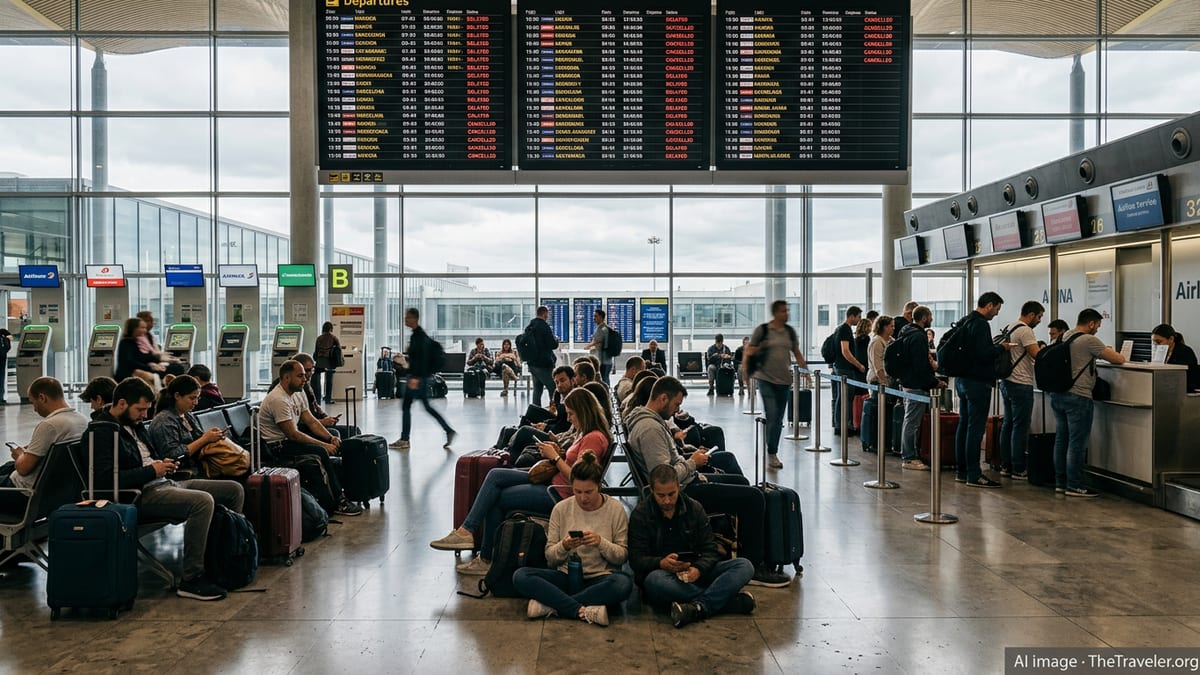
Madrid and Barcelona Bear the Brunt of Fresh Disruptions
Adolfo Suárez Madrid-Barajas and Josep Tarradellas Barcelona-El Prat, Spain’s two busiest air gateways, experienced a fresh wave of operational disruption on March 8, with a total of 19 flights canceled and 408 delayed throughout the day. The figures, compiled from live airport operations data, point to another difficult weekend for air travel at the heart of the Iberian network.
While the number of outright cancellations remained limited compared with peak crisis days seen earlier this month, the sheer scale of delays created knock-on problems across the country. Passengers reported hours-long waits at departure gates, missed connections and last-minute gate changes that added to the sense of uncertainty. Queues at customer service desks lengthened through the afternoon as travelers sought rerouting, overnight accommodation or basic information about when they might finally depart.
Industry sources noted that Madrid and Barcelona, which together handle tens of millions of passengers annually under the Aena airport network, have become particularly vulnerable to ripple effects from global disruptions. With many long-haul flights funneled through the two hubs, even modest schedule changes can leave aircraft and crew out of position and quickly translate into widespread delays.
Global Tensions and Weather Complications Feed into Spain’s Gridlock
The latest disruption in Spain is unfolding against a backdrop of severe turmoil along key Middle East corridors, where airspace restrictions and security concerns since late February have forced airlines to cancel or reroute thousands of flights. Qatar Airways, in particular, has been heavily affected by the closure of its Doha hub, and the repercussions have reverberated through European airports that feed long-haul traffic to the Gulf.
Operational planners say that as aircraft are diverted around closed airspace or redeployed onto alternative routes, European schedules inevitably tighten. Longer flight times, additional fuel stops and crew duty limits leave less margin to absorb even minor local issues. When those constraints collide with busy weekend traffic at Madrid and Barcelona, delays can multiply quickly, especially for airlines running complex networks that tie together Europe, the Americas and the Middle East.
Meteorological conditions around the Iberian Peninsula have also added friction in recent days. Weather agencies have warned of unsettled conditions and periods of strong winds and heavy rain affecting parts of central and northeastern Spain, including the Barcelona region. Even when airports remain fully open, such conditions often require increased spacing between takeoffs and landings, slowing operations and triggering further backlog in already crowded skies.
Major Carriers Struggle to Keep Schedules on Track
Among the airlines hit on Sunday were global and regional heavyweights with significant operations in Spain. Qatar Airways, Iberia, Air Europa Express, Avianca and American Airlines all reported flights delayed from Madrid or Barcelona, while other European and low-cost carriers also saw their schedules slide. For some, the issues were limited to late departures and arrivals. For others, they resulted in full-day cancellations where aircraft could not be positioned in time.
Spain’s flag carrier group, including Iberia and Iberia Express, has already been operating under pressure amid ongoing suspensions and timetable adjustments on sensitive routes, particularly to Tel Aviv and Doha. Air Europa Express, the regional arm of Air Europa, has similarly been juggling tight turnarounds on domestic and short-haul European routes, where even a short delay early in the day can cascade into multiple late flights by evening.
American Airlines and Avianca, both important players in transatlantic traffic to and from Spain, have also been contending with shifting demand and complex routings as passengers attempt to bypass closed Middle East corridors. Where possible, carriers have been offering free rebooking, rerouting via alternative hubs or full refunds, but the volume of affected travelers is making it harder to provide rapid solutions at the airport level.
Hundreds of Travelers Isolated Across Spain
The practical impact of Sunday’s disruption has been sharply felt by passengers scattered well beyond Madrid and Barcelona. Missed connections out of the two hubs left travelers overnighting in secondary cities, from coastal resorts to regional capitals, as they waited for the next available seats. Some ended up spread among multiple hotels near airports, while others opted for trains or long-distance buses when domestic legs were scrapped.
Travel agencies and passenger rights organizations reported a spike in calls from customers unsure of their entitlements amid the chaos. Under European rules, travelers whose flights are significantly delayed or canceled for reasons within an airline’s control may be eligible for compensation, meal vouchers and hotel accommodation. However, when knock-on effects stem from wider airspace closures or severe weather, determining eligibility can be complex and time-consuming.
At Madrid-Barajas, ground staff described stretched resources as they tried to assist stranded passengers while simultaneously turning around arriving aircraft. In Barcelona-El Prat’s terminals, long lines formed at airline counters, with some customers queuing for hours just to confirm the status of their flights. Though many services eventually departed, the experience underscored how quickly even a modest number of cancellations combined with hundreds of delays can leave travelers feeling effectively isolated.
Aena and Airlines Urge Passengers to Check Status Before Traveling
Spain’s airport operator Aena and the affected airlines have urged passengers to monitor real-time flight information before leaving for the airport, stressing that conditions may change at short notice as the wider global situation evolves. Carriers are increasingly using mobile apps and text alerts to push updates directly to customers, but on a busy travel day, those messages can still lag behind rapid operational decisions in the control room.
Travel experts recommend that passengers with upcoming itineraries involving Madrid or Barcelona build in extra connection time, keep essential items such as medications and a change of clothes in hand luggage, and remain flexible about routing options. In some cases, accepting a rerouting via a less congested European hub can get travelers to their final destination sooner than waiting for a direct service from Spain’s main airports.
With the Middle East airspace situation still volatile and European skies already nearing capacity as spring approaches, airlines and airports across the continent are bracing for further bouts of disruption. For now, Madrid and Barcelona’s experience on March 8 serves as a stark reminder of how interconnected the global aviation system has become, and how quickly a crisis thousands of kilometers away can upend travel plans for hundreds of people in terminals across Spain.