

More news on this day
Travelers across China are facing a fresh wave of disruption as more than 100 flights were cancelled on Tuesday, snarling connections to major hubs including Beijing, Shanghai, Guangzhou, Chengdu, Shenzhen, Xi’an and Kunming and forcing thousands of passengers to hastily rework their plans.
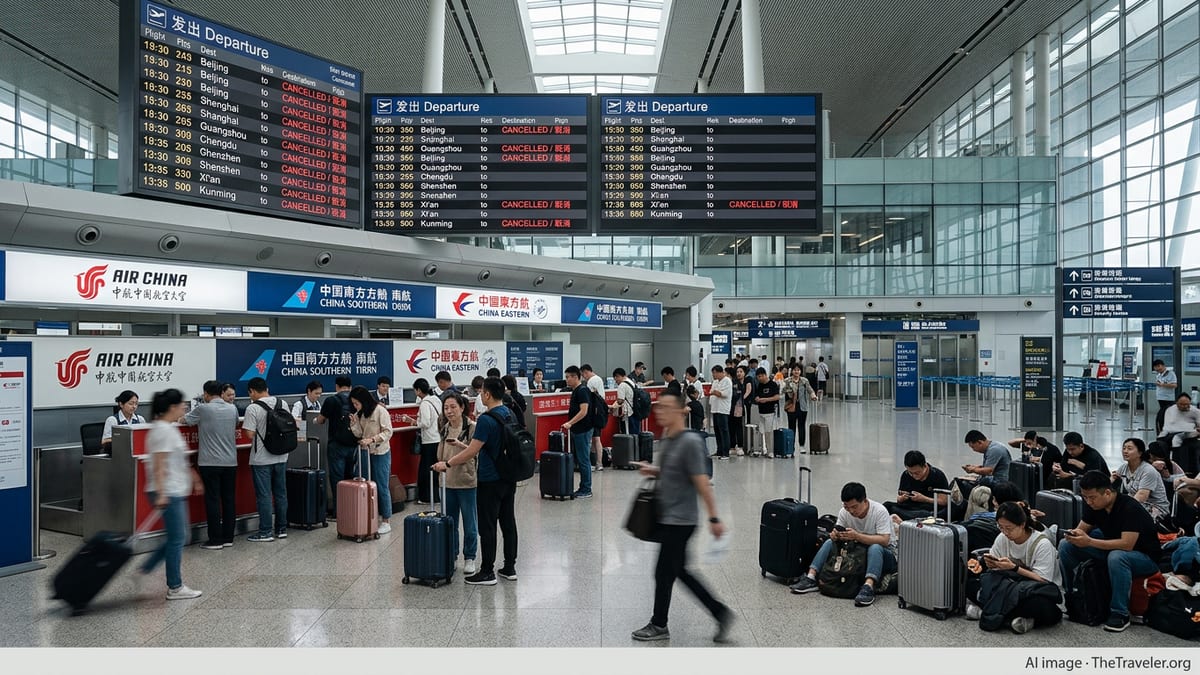
Major Carriers Hit as Schedules Are Cut Back
The latest bout of disruption has hit China’s biggest state-owned airlines hardest, with Air China, China Southern Airlines and China Eastern Airlines among the carriers trimming services and cancelling departures across the domestic network. Flights serving Beijing Capital, Shanghai Pudong, Guangzhou Baiyun and Chengdu Tianfu were especially affected, according to real-time tracking data shared by multiple Chinese airport operators on Tuesday.
While many of the cancelled services are short-haul domestic routes linking major coastal and inland hubs, the knock-on effects are already being felt by travelers with onward international connections. Passengers bound for Europe, Southeast Asia and the Middle East via Beijing and Shanghai reported missed or tight transfers after early-morning legs were abruptly removed from the schedule.
Operational pressures have been building on Chinese carriers for weeks amid a volatile regional picture. Airlines have simultaneously been ramping up capacity on recovering routes while coping with aircraft rotations affected by earlier suspensions to Japan services and selective restorations of flights to the Middle East, leaving little slack in the system when fresh disruptions arise.
Beijing, Shanghai and Guangzhou Bear the Brunt
China’s busiest hubs once again emerged as focal points for the disruption. At Beijing Capital International Airport, a cluster of departures to key secondary cities was cancelled or heavily delayed, complicating plans for business travelers heading into the capital for early-week meetings and government events.
In Shanghai, both Pudong and Hongqiao airports saw cancellations on trunk routes to inland centers such as Xi’an and Kunming, as well as popular southbound services to Guangzhou and Shenzhen. Even a relatively small number of cancellations at these megahubs can quickly spiral into wider disruption, as aircraft and crews fail to be in position for subsequent rotations.
Guangzhou Baiyun, a vital gateway for southern China and a major base for China Southern Airlines, also reported a spike in day-of-travel schedule changes. Travelers connecting through Guangzhou to other parts of Asia faced particularly acute uncertainty, as airlines juggled aircraft between domestic and regional international services.
Ripple Effects Reach Chengdu, Shenzhen, Xi’an and Kunming
Beyond the big three coastal hubs, western and southwestern gateways including Chengdu, Shenzhen, Xi’an and Kunming are contending with their own localized waves of flight cuts. These airports play a crucial role in linking inland provinces with the country’s eastern seaboard, meaning any interruption can quickly isolate travelers from alternate options.
Business travelers in Chengdu and Xi’an reported multiple last-minute text messages and app notifications advising of cancellations or equipment changes, often with only limited rebooking choices on the same day. With many flights already operating near capacity during peak periods, the scope to simply shift affected passengers to the next departure has been narrow.
In Kunming and Shenzhen, delays and cancellations on early flights have cascaded into the afternoon and evening, as operators scramble to restore aircraft rotations. Travelers heading to or from tourist destinations in Yunnan and the Greater Bay Area have found themselves stuck in queues at airport service desks, seeking rerouting or overnight accommodation.
Why This Round of Disruption Feels Different
China’s domestic aviation market has endured isolated pockets of disruption in recent months, from weather-related shutdowns to geopolitically driven route suspensions, particularly on services to Japan. What makes this latest episode stand out is the concentration of cancellations across multiple major hubs on the same day, magnifying the impact on both domestic and international journeys.
Carriers are also managing a complex rebalancing of their networks. After earlier cuts on China–Japan routes and caution around certain long-haul markets, airlines have been redeploying aircraft onto high-demand domestic corridors and selectively rebuilding services to destinations in the Middle East and Europe. This has left some fleets and crews tightly scheduled, increasing vulnerability to any new operational hiccups.
Aviation analysts note that, as Chinese airlines push to rebuild capacity and capture rising demand, their room to absorb shocks has narrowed. Even modest disruptions at one or two nodes can now have outsized consequences for travelers traversing the country’s tightly woven hub-and-spoke system.
What Affected Travelers Should Do Now
Passengers booked to fly into or out of Beijing, Shanghai, Guangzhou, Chengdu, Shenzhen, Xi’an or Kunming over the coming days are being urged to check their flight status repeatedly on the day of travel, rather than relying solely on original confirmations. Airlines have been publishing rolling updates and pushing notifications as further adjustments are made to schedules.
Where flights are cancelled, China’s major carriers have generally been offering free changes or refunds, particularly when passengers are connecting onto other domestic segments or international legs. However, airport reports suggest that rebooking options can be limited during peak travel periods, so travelers may need to be flexible about departure times, routings or even their choice of destination airport within a region.
Travel agents recommend allowing longer connection windows when routing via Beijing, Shanghai or Guangzhou in the near term, and considering alternative hubs when possible. For those already en route, staying in close contact with airline staff at transfer points and making use of official airline apps for same-day rebooking can improve the chances of securing a workable alternative.