

More news on this day
Passengers across Europe are facing cascading disruption after 76 flights were reportedly canceled and around 1,170 delayed at several of the continent’s busiest hubs, including Frankfurt, London Heathrow, Munich, Brussels and Amsterdam Schiphol, creating widespread travel chaos and leaving thousands scrambling to rebook disrupted journeys.
Get the latest news straight to your inbox!
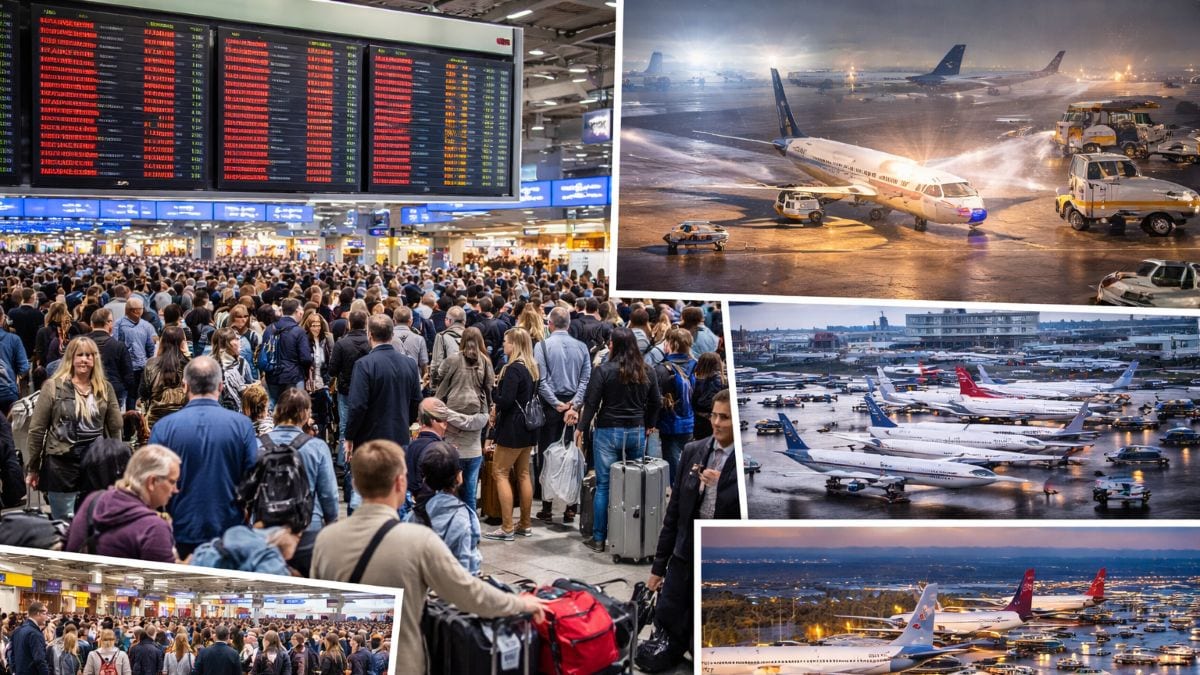
Image by Travel And Tour World
Major European Hubs Buckle Under Operational Strain
Publicly available flight-tracking data and media coverage indicate that a wave of cancellations and delays has rippled through some of Europe’s most important airports, disrupting both intra-European and long-haul traffic. The worst impacts have been reported at Frankfurt Airport, London Heathrow, Munich Airport, Brussels Airport and Amsterdam Schiphol, with knock-on effects felt across airline networks.
The disruption has centered on 76 outright cancellations and approximately 1,170 delays, a level of interference that can quickly spill over into subsequent departure banks. At large hub airports, a single missed arrival or aircraft rotation can remove a vital link in the complex web of connections, causing queues at check-in desks, lengthy waits at rebooking counters, and congested departure halls.
Travelers connecting through these hubs have been especially vulnerable, as delayed feeder flights force missed onward departures. With many European routes already operating close to capacity at peak periods, same-day alternatives have reportedly been limited, intensifying the sense of chaos for stranded passengers.
While the precise mix of causes varies by airport, reports point to a familiar combination of staffing constraints, tight schedules and sensitivity to weather or technical issues, all of which can rapidly translate into widespread disruption once thresholds are crossed.
Frankfurt, Munich and Heathrow Feel the Hub Effect
Frankfurt and Munich, two of Germany’s key intercontinental gateways, have been among the most affected airports in the current wave of disruption. As tightly scheduled hubs that handle a high volume of connecting traffic, both airports are acutely exposed to any operational disturbance. Delayed arrivals can dislocate outbound waves, leading to a cluster of missed connections in a short time window.
In Frankfurt, reports point to extensive delays across European feeder services as well as long-haul departures, underscoring how a relatively modest number of cancellations can mask a much larger number of passengers affected. Munich has experienced similar challenges, with aircraft and crews out of position and ground-handling resources stretched by late-arriving flights and compressed turnaround times.
London Heathrow, one of the world’s busiest international hubs, has likewise seen disruption radiate through its daily schedule. With limited runway capacity and tightly packed slots, the airport operates with little room to absorb irregular operations. Once delays begin to accumulate, airlines can be forced to cancel selected services to stabilize the schedule, a step that can strand passengers with few immediate alternatives, particularly on popular transatlantic and European trunk routes.
These hubs collectively serve as vital connectors between Europe, North America, the Middle East and Asia. As a result, disruptions at Frankfurt, Munich and Heathrow have not only inconvenienced point-to-point travelers, but also reverberated through long-haul networks, affecting itineraries far beyond Europe’s borders.
Amsterdam Schiphol and Brussels Struggle With Capacity Pressures
Amsterdam Schiphol and Brussels Airport have also faced heavy disruption, highlighting ongoing capacity pressures at key Benelux gateways. Schiphol in particular has a recent history of operational strain during periods of strong demand, with passenger volumes and aircraft movements at times outpacing available staffing and infrastructure flexibility.
Recent experiences at Schiphol have shown how quickly delays can grow once departures begin to slip from their assigned slots. Even a relatively small share of cancellations can still translate into long queues at security, passport control and customer service desks as disrupted travelers seek assistance, while delayed aircraft compete for scarce gate and runway availability.
Brussels Airport, an important European and regional hub, has reported its own cluster of delays and cancellations. When both Schiphol and Brussels are affected, the options for rerouting through neighboring hubs can narrow considerably. This narrowed margin makes it more difficult for airlines to accommodate disrupted passengers on alternative flights, especially during peak travel days when seats are already heavily booked.
The combined strain on Amsterdam and Brussels has added to pressure on rail and road links in the wider region, as some travelers look to trains or long-distance buses to bridge gaps created by missed or canceled flights.
Knock-On Effects for Airlines and Passenger Rights
The latest round of disruption has raised fresh questions for travelers about rebooking options, overnight accommodation and compensation rights under European passenger protection rules. Publicly available information on European regulations indicates that, depending on the cause of the disruption, travelers on affected flights may in some cases be entitled to care such as meals and hotel stays, and in certain circumstances to financial compensation.
However, the practical experience at crowded hubs often diverges from the theoretical protections on paper. When hundreds of flights are delayed across multiple airports on the same day, airline call centers can become overwhelmed, digital self-service tools may struggle to keep up with demand, and airport desks rapidly develop long queues. Passengers with complex itineraries or tight onward connections can find it particularly challenging to secure timely, workable alternatives.
Operationally, airlines are left balancing the need to recover their schedules with the duty of care owed to disrupted passengers. Decisions to cancel individual services in order to restore broader network stability can reduce delays later in the day but leave some travelers facing significant detours or extended layovers. These trade-offs are particularly stark at hubs such as Frankfurt, Heathrow and Schiphol, where a single aircraft rotation can affect hundreds of connecting passengers.
Industry observers note that recurrent episodes of large-scale disruption risk eroding traveler confidence in peak-season reliability, putting renewed focus on contingency planning, staffing resilience and coordination between airports, airlines and air traffic management bodies.
Advice for Travelers Navigating the Disruptions
For those scheduled to travel through Frankfurt, London Heathrow, Munich, Brussels or Amsterdam Schiphol during periods of heightened disruption, travel experts commonly recommend proactive monitoring and flexible planning. Checking flight status frequently on airline apps or airport information services can provide early warning of delays or cancellations and allow more time to consider alternatives.
Passengers with onward connections are often advised, where possible, to build in longer layovers at busy hubs or to consider earlier departures on feeder legs. Those already affected by cancellations may find that using airline digital channels and mobile apps can sometimes secure rebooking options more quickly than waiting in physical queues at the airport, though this depends on the carrier and the scale of disruption.
Travelers are also encouraged to keep records of boarding passes, booking confirmations and receipts for meals or accommodation purchased during a disruption. Such documentation can be important when submitting claims under airline policies or applicable passenger-rights regulations once travel is completed.
With Europe’s largest airports operating close to capacity for much of the year, the latest episode of mass delays and cancellations serves as a reminder of how vulnerable air travel remains to operational shocks. For passengers, a combination of vigilance, flexibility and awareness of their rights remains essential when navigating an increasingly crowded and complex aviation landscape.