

More news on this day
Passengers across Europe faced hours-long queues, missed connections and overnight stays in terminal buildings after 76 flights were reportedly canceled and around 1,170 delayed at Frankfurt, London Heathrow, Munich, Brussels and Amsterdam Schiphol, creating a fresh wave of disruption at some of the continent’s busiest hubs.
Get the latest news straight to your inbox!
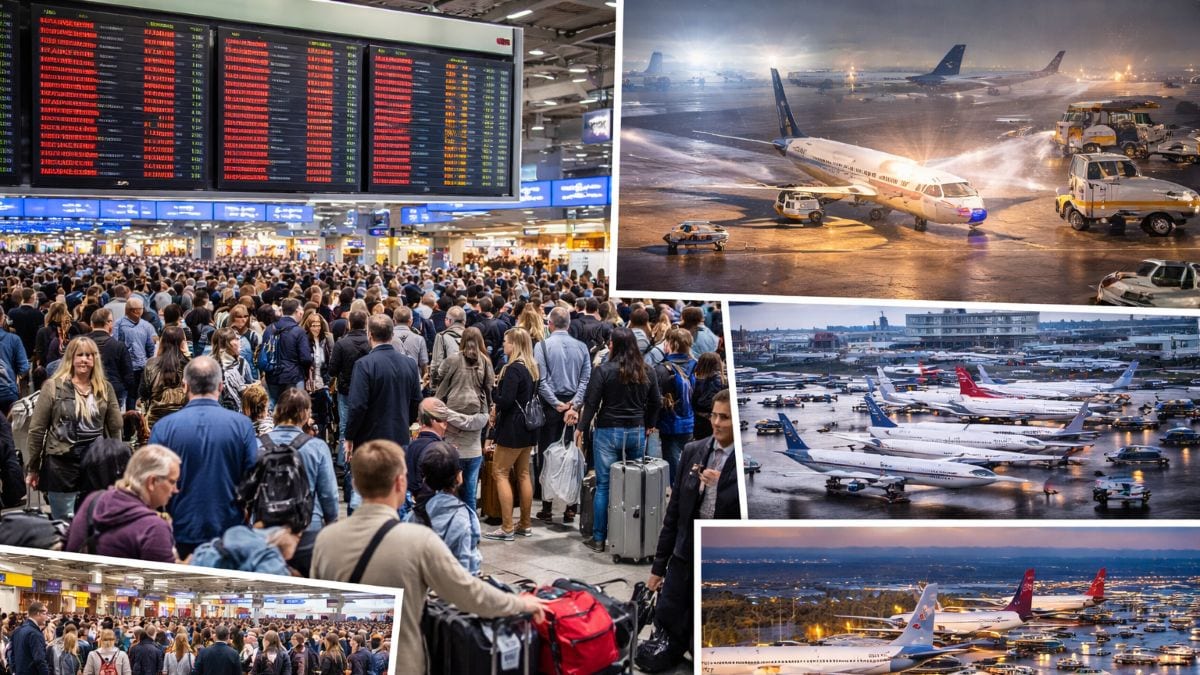
Image by Travel And Tour World
Major Hubs Buckle Under Sudden Disruption
The latest wave of disruption affected a core group of European hub airports that together handle hundreds of thousands of passengers per day. Publicly available flight tracking data and media coverage indicate that Frankfurt, London Heathrow, Munich, Brussels and Amsterdam Schiphol all reported elevated levels of cancellations and significant knock-on delays during the current disruption.
The figures, citing 76 canceled flights and around 1,170 delays across the six airports, point to a system under acute stress. While such numbers represent a fraction of daily movements at these hubs, the concentration of disruption within a limited time window compounded the impact on connecting passengers and onward networks.
Reports from airport operations dashboards suggest that the cancellations were spread across both short haul and long haul services, affecting intra European links as well as key routes to North America, the Middle East, Africa and Asia. Delays ranged from minor schedule slips of 30 to 45 minutes to severe hold ups of several hours.
The ripple effects were felt well beyond the airports directly listed in the disruption reports. As aircraft and crews fell out of position, knock on delays extended to secondary European cities whose timetables depend heavily on smooth operations at the big hubs.
Weather, Capacity Strains and Crew Rotations Blamed
Preliminary assessments from aviation data providers and network performance reports point to a combination of adverse weather, constrained runway capacity and scheduling sensitivities as key factors behind the latest chaos. Recent reporting on airport punctuality across the region shows that low visibility, strong winds and ground handling suspensions continue to be recurring triggers for disruption, particularly at Amsterdam Schiphol and London Heathrow.
Frankfurt and Munich, both central pillars of the German air transport system, have in recent months featured in European network reports for increased en route and airport related delays linked to weather and air traffic control capacity. When even slight constraints coincide with peak morning or evening bank operations, congestion quickly builds, making it difficult to recover punctuality during the rest of the day.
Industry analyses also highlight the sensitivity of hub operations to crew rotations and aircraft availability. Once a small cluster of flights is canceled or severely delayed at a hub, it can remove entire aircraft rotations from the network, forcing airlines to consolidate services and rebook passengers, which in turn strains airport infrastructure such as check in counters and rebooking desks.
Some consumer advocates note that, while disruptive weather or air traffic control restrictions may be outside an airline’s direct control, the scale of knock on delays often reflects how tightly scheduled fleets and crews have become, leaving limited margin to absorb unexpected shocks.
Scenes of Long Queues and Scramble for Alternatives
Across social media and passenger forums, images and first hand accounts from travelers at Frankfurt, Heathrow, Munich, Brussels and Schiphol describe long queues at security and rebooking desks, crowded gate areas and difficulty finding up to date information on revised departure times. Many travelers reported missed connections on long haul itineraries and an urgent search for last minute hotel rooms near the airports.
Publicly available posts from passengers transiting through Amsterdam and London pointed to departure boards dominated by delayed statuses, with some short haul flights repeatedly pushed back in 30 minute increments before eventually departing or being removed from the schedule. Travelers connecting from long haul services arriving late into Europe often found that their onward intra European legs had already left or had been consolidated.
At Brussels and Munich, passenger accounts described a scramble for alternative routes via other hubs, including Paris and Zurich, as airlines attempted to redistribute disrupted traffic. Those with flexible tickets reported better success in securing same day alternatives, while holders of heavily restricted economy fares often faced longer waits for rebooking options.
With airport hotels quickly filling, some passengers indicated that they opted to stay landside in terminal seating areas rather than transferring to distant accommodation. Others described confusion around meal vouchers and compensation rules, reflecting the complexity of passenger rights regulations and the difficulty of applying them consistently in fast moving disruption scenarios.
Knock On Effects for Airlines and the Wider Network
The immediate impact of the 76 cancellations and more than a thousand delays is measured in hours of lost time for travelers, but aviation analysts point to broader consequences for airlines and the European network. Disrupted rotations can force carriers to reposition aircraft, reroute cargo and replan crew schedules, often at short notice and considerable cost.
Airports such as Frankfurt, Heathrow and Schiphol operate close to their declared capacity during peak periods, meaning that recovery windows to reinsert delayed flights into the schedule are narrow. When punctuality deteriorates beyond a certain threshold, airlines may choose to proactively cancel later services to protect the stability of the remaining schedule.
Network performance summaries published by European aviation bodies in recent months have repeatedly identified these same hubs as critical nodes where small disturbances can quickly escalate into network wide issues. The latest disruption therefore reinforces ongoing concerns about the resilience of Europe’s air traffic system as demand continues to grow.
For carriers, the episode adds pressure at a time of high operating costs and competitive fare environments. Irregular operations generate additional expenses in fuel, airport fees, crew overtime and customer care, while also risking long term damage to brand perception among frequent travelers.
Travelers Urged to Build in Buffer Time
Consumer travel platforms and passenger advocacy groups are using the latest disruption as a reminder for travelers to build additional buffer time into itineraries that rely on tight connections at major European hubs. Guidance commonly advises avoiding minimum connection times when possible, especially during busy holiday periods or seasons associated with poor weather.
Travel advisers also recommend that passengers monitor their flight status closely in the 24 hours before departure and consider checking in as early as online systems allow. In the event of cancellations or lengthy delays, having airline apps installed and loyalty program details ready can speed up the rebooking process.
For those yet to travel, publicly available advice suggests considering early morning departures, which may have a higher chance of leaving on time before daily congestion builds. Passengers connecting through disruption prone hubs may also wish to explore alternative routings via airports currently reporting more stable operations, even if it means an extra stop.
While large scale disruptions of the scale reported at Frankfurt, Heathrow, Munich, Brussels and Schiphol remain relatively infrequent relative to the total number of flights operated, the latest episode underscores how quickly travel plans can unravel when Europe’s busiest airports are hit by a combination of challenging weather and constrained capacity.