

More news on this day
Air travel across Europe and key long-haul routes faced fresh disruption this week, with data showing new clusters of cancellations and delays on Air France, KLM, and British Airways services that left passengers stranded from Paris and Amsterdam to London, New York, Tokyo, and beyond.
Get the latest news straight to your inbox!
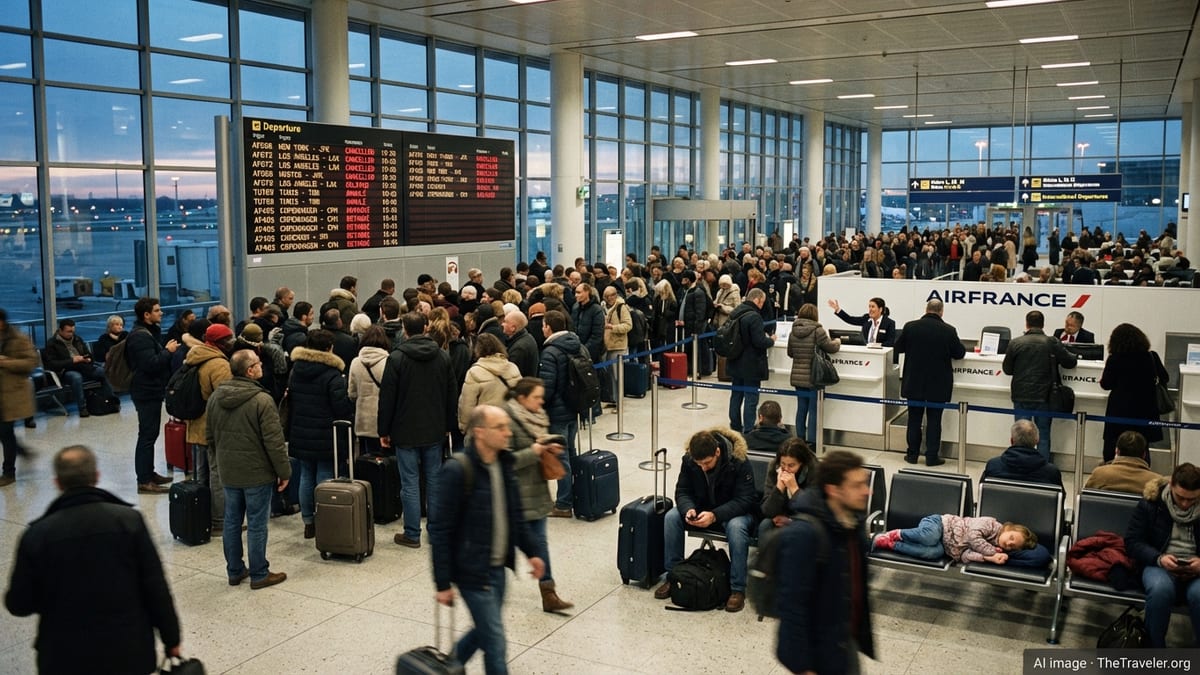
New Wave of Disruptions Across European Hubs
Recent operational data and disruption trackers indicate that major European carriers, including Air France, KLM, and British Airways, have been hit by another round of irregular operations, with 21 flight cancellations and at least 136 significant delays recorded across multiple hubs. The disruptions are concentrated at key European airports such as Paris Charles de Gaulle, Amsterdam Schiphol, and London Heathrow, but the knock-on effects extend across transatlantic and Asian routes.
These latest issues come on top of a turbulent early 2026 for European aviation, marked by repeated pockets of large-scale disruption. Earlier reports documented hundreds of cancellations and thousands of delays across European hubs in January and March, underscoring how fragile airline and airport operations remain when exposed to weather, airspace restrictions, or network bottlenecks.
Publicly available disruption overviews show that Amsterdam and Paris continue to figure prominently whenever schedules begin to fray, with both Air France and KLM often forced to trim or retime flights as crews, aircraft, and turnaround slots fall out of alignment. British Airways has similarly been affected from its London bases, particularly whenever regional weather or broader air traffic management measures constrain capacity.
The current cluster of 21 cancellations and 136 delays reflects that pattern: a relatively modest number of outright cancellations compared with earlier mass events, but a broad field of delays that spread across the network, pushing late arrivals into the following bank of departures and compounding passenger disruption well beyond the initial hotspots.
Passengers Stranded From Paris to New York and Tokyo
As flights are retimed or scrubbed from schedules at short notice, passengers are finding themselves stranded far from their intended destinations. Reports from recent weeks describe travelers stuck in cities such as Paris, Amsterdam, London, Barcelona, and Vienna, with onward journeys to long-haul destinations including New York and Tokyo delayed or rerouted following cancellations at European hubs.
In New York, disruption bulletins and passenger-rights summaries have highlighted growing knock-on effects at LaGuardia and other area airports, where clusters of cancellations and hundreds of delays have been recorded over recent days. Although not all of these interruptions involve European carriers, long-haul flights to and from Amsterdam, Paris, and London are heavily intertwined with US domestic schedules, meaning a late-arriving transatlantic service can trigger missed connections across the continent.
Similar patterns are visible in Asia. Tokyo, a key long-haul market for both European and Japanese airlines, has seen its own share of cancellations and reduced frequencies in early 2026, as carriers including British Airways and partners adjust schedules in response to regional airspace constraints and broader network pressures. When a London or Paris service is cancelled or retimed, passengers booked onward to Japanese domestic or regional Asian routes often find themselves rebooked via alternative hubs or held overnight.
The result is that a disruption event that begins with a handful of affected flights at a European hub can rapidly expand into a global issue. Travelers originally booked on a direct connection may be re-routed through multiple cities or shifted to partner airlines, increasing pressure on already busy airports and lengthening journeys by many hours.
Operational Strains, Airspace Constraints, and Weather Pressures
Analysts of recent disruption trends point to a familiar mix of causes behind the latest wave of cancellations and delays. Weather remains a persistent driver, with thunderstorm systems and seasonal conditions over North America and Europe forcing temporary ground stops and capacity reductions at large airports. Recent storm-related interruptions around Washington-area airports and New York have contributed to broader schedule instability affecting transatlantic operations involving European carriers.
Airspace restrictions and safety advisories in parts of the Middle East are also continuing into April 2026, according to widely cited passenger-rights briefings. These constraints have led airlines such as British Airways and KLM to suspend or limit certain routes, while Air France and other long-haul operators adjust flight paths and frequencies. Rerouted services often face longer flight times and narrower schedule margins, leaving less room to absorb additional delays elsewhere in the network.
At the same time, European airports and airlines are still contending with tight staffing and high utilization of aircraft, which can magnify the impact of even minor technical or operational setbacks. When a single aircraft experiences a delay at an early-morning departure, it can cascade across multiple flights that aircraft is scheduled to operate that day, including long-haul sectors to North America or Asia.
Industry research published this year on delay management has highlighted how delicate tail-assignment and turnaround planning can be for large carriers such as Air France. Small deviations from planned minimum turnaround times can ripple across fleets and route networks, particularly when airlines are operating near full capacity with limited spare aircraft available for substitution.
What the Numbers Reveal About Passenger Impact
While 21 cancellations may appear modest against the backdrop of Europe’s daily flight volume, their impact is amplified by the 136 recorded delays and by how these irregularities cluster at major hubs. Each cancelled long-haul flight can displace hundreds of passengers, many of whom are connecting onward to secondary cities in Europe, North America, Africa, or Asia. Delayed flights, especially those running several hours late, can effectively strand connecting passengers in intermediate cities overnight.
Passenger-rights organizations that track disruption data note that when cancellations and delays occur in close succession, airport infrastructure and customer-service channels quickly become overwhelmed. Recent accounts from travelers in Amsterdam and Paris describe long queues at service desks, overloaded phone lines, and difficulty securing timely rebookings, especially on popular transatlantic and Asian routes.
Data from previous disruption days in January and March 2026 show that when cancellations at major hubs rise into the dozens and delays exceed one thousand, tens of thousands of passengers can be affected in a single day. Even when the present event is smaller in overall scale, its timing at the start of a busy spring travel period increases the likelihood that flights are already close to full, reducing flexibility for last-minute rebookings.
The reach of the disruption is further extended by code-sharing and alliance agreements. A cancellation on a flight marketed by one airline but operated by another can involve multiple reservation systems and customer-service teams, complicating efforts to secure alternative travel, particularly for itineraries crossing several regions.
Guidance for Travelers Caught in the Disruption
Publicly available information from airlines and passenger-advocacy platforms emphasizes that travelers affected by cancellations and significant delays should document their itineraries carefully and monitor airline communications closely. For flights involving European carriers such as Air France, KLM, and British Airways, consumer-rights summaries point out that regional regulations may provide entitlements to rebooking, care, and in some situations financial compensation, depending on the cause and length of the disruption.
Airlines typically encourage customers to use digital channels, including mobile applications and booking-management tools, to request rebookings or vouchers when disruptions strike large hubs. During recent events at Amsterdam and Paris, online rebooking tools were frequently updated to offer departures on later dates, alternative routings via other hubs, or travel on partner airlines where capacity allowed.
Passenger-rights groups also suggest that travelers remain flexible about routings and dates when disruption clusters such as the current 21 cancellations and 136 delays occur. Accepting a connection through a secondary hub or shifting travel by a day can sometimes secure a confirmed seat more quickly than waiting for a direct replacement on the original route, particularly on heavily booked long-haul services.
As airlines and airports move deeper into the spring travel season, the latest wave of irregular operations underscores the importance of resilience planning in European and global aviation. For passengers, it is a reminder that even a relatively contained disruption at a handful of hubs can quickly translate into a multi-day, multi-continent ordeal stretching from Paris and Amsterdam to London, New York, Tokyo, and far beyond.