

More news on this day
Thousands of U.S. air travelers faced another bruising day of disruption on Tuesday as 86 flights were canceled and 399 delayed nationwide, snarling traffic at major hubs including New York’s John F. Kennedy, Newark Liberty and Dallas Fort Worth and leaving passengers scrambling to rebook or abandon trips altogether.
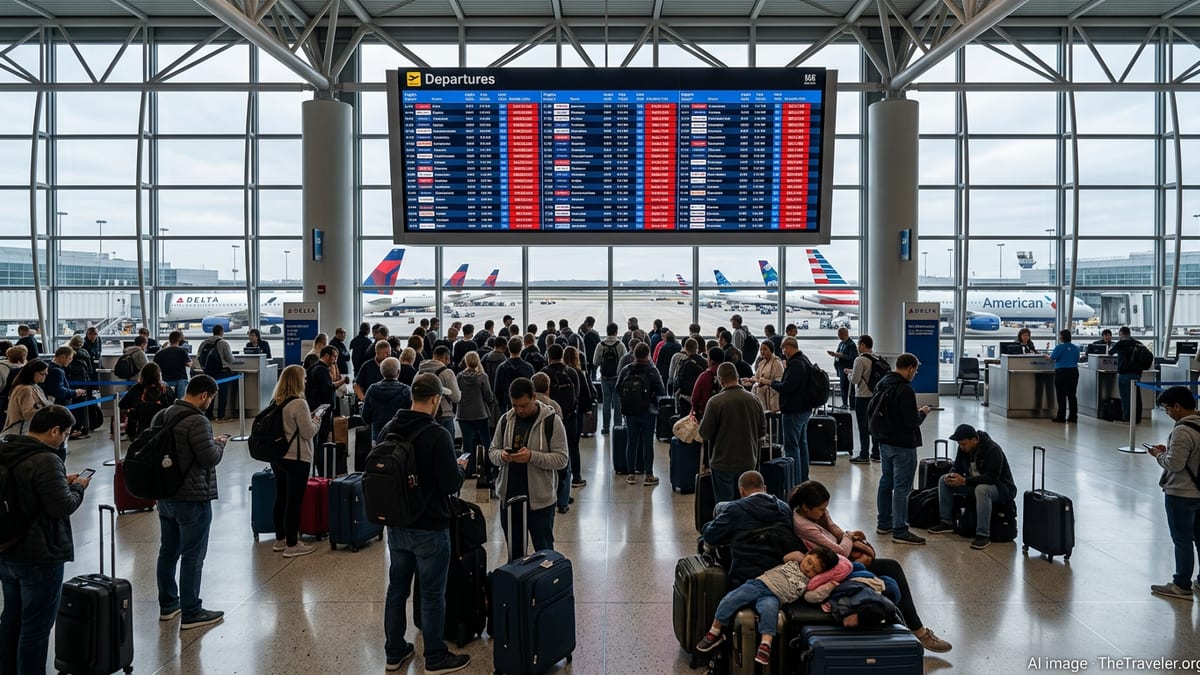
Major Hubs From New York to Dallas Bear the Brunt
The latest wave of cancellations and delays rippled quickly through some of the country’s busiest airports, where even modest schedule changes can cascade into hours of disruption. At New York’s JFK and Newark Liberty, early-morning delays stacked up as ground operations struggled to absorb aircraft and crews out of position from earlier weather and congestion in the Northeast.
Dallas Fort Worth, one of the nation’s largest connecting hubs, saw rolling delays on domestic routes as airlines attempted to re-sequence aircraft and accommodate missed connections. Passengers reported lengthy lines at customer service desks and crowded gate areas as rolling updates on departure boards turned tentative departure times into further postponements.
While the total number of affected flights was far smaller than during the powerful February blizzard that led to thousands of cancellations across the Northeast, today’s disruption was more localized and unpredictable. Travelers who had specifically chosen routes through New York and North Texas to avoid snow-hit airports elsewhere in the country found themselves caught in a fresh round of operational turbulence.
Compounding the pressure, some smaller regional airports feeding into these hubs also reported weather-related slowdowns, which reduced the flexibility airlines rely on to reroute planes and crews. The result was a patchwork of seemingly minor issues that, taken together, pushed key hubs past their tipping point.
Weather Hangover, Staffing Gaps and Strained Infrastructure
Behind the numbers lies a familiar but potent mix of triggers: lingering weather effects, staffing constraints and infrastructure operating with little margin for error. The recent sequence of winter storms that pounded large portions of the United States and Canada has left airlines and airports working through a backlog of maintenance and repositioning flights, even as skies have cleared over much of the country.
At the same time, air traffic control facilities in the busy Northeast corridor continue to contend with staffing shortfalls that have periodically forced the Federal Aviation Administration to slow traffic flows into congested airspace around New York and New Jersey. When controllers are stretched thin, arrival and departure rates at airports such as Newark and JFK are reduced, extending ground holds for flights already boarded and increasing the likelihood of missed connections down the line.
Airport operations have also been stretched. Ground crews, baggage handlers and security staff remain in high demand following years of turnover, and even modest absenteeism can translate into delays during peak travel periods. In some terminals, airlines briefly paused boarding to give ramp teams time to clear arriving aircraft and ensure that bags and catering caught up with tight turnarounds.
Industry analysts note that while the absolute numbers of cancellations and delays were moderate compared with major storm events, the clustering of problems at powerful hub airports made the situation feel far more severe for travelers. With many flights fully booked, even small disturbances left few spare seats on alternative departures.
Which Airlines Were Hit Hardest
The disruption was spread across multiple U.S. carriers, though the impact was not even. Full-service network airlines with large presences at the affected hubs shouldered a significant share of the cancellations, particularly on routes touching New York and Dallas. Their reliance on tight connection banks made it difficult to isolate individual problem flights without disturbing wider portions of their schedules.
Low-cost carriers operating dense schedules along the East Coast corridor also logged notable delays, especially where turnarounds relied on aircraft arriving from previously storm-hit regions. Some budget airlines, which operate with fewer spare aircraft and crews, had limited ability to swap planes or staff at short notice, increasing the risk that a single delayed inbound leg could cascade into multiple late departures.
Regional affiliates flying under the brands of larger airlines were another pressure point. Operating shorter flights into and out of congested hubs, these carriers often bear the brunt when mainline networks are forced to trim capacity to keep longer-haul services on time. A number of today’s 86 cancellations came from these feeder operations, cutting links between smaller communities and major hubs.
By midafternoon, several airlines had offered fee-free rebooking options for customers traveling through the worst-affected airports and were urging passengers with flexible plans to move trips to later in the week. Call centers and online chat services experienced heavy demand as travelers sought to salvage vacation plans, business meetings and family visits.
What Passengers Can Expect Next
With most weather systems moving out of the busiest travel corridors, airlines and airports expressed cautious optimism that conditions would stabilize over the next 24 hours. However, the residue of today’s disruption is likely to be felt in the form of scattered delays as aircraft and crews are repositioned and missed connections are accommodated.
Passengers scheduled to fly through JFK, Newark or Dallas Fort Worth were advised to monitor their flight status closely and to enroll in airline text or app alerts. Many carriers increasingly rebook customers automatically when a significant delay or cancellation is confirmed, but those who respond quickly often secure the most favorable alternative routes.
Travelers already at the airport were encouraged to allow additional time for security screening and to be prepared for gate changes as operations normalize. In some terminals, airlines temporarily reassigned aircraft to different departure points to relieve congestion in crowded concourses, leading to last-minute adjustments that caught some passengers by surprise.
For those whose flights were canceled outright, U.S. Department of Transportation rules require airlines to offer refunds when a passenger chooses not to travel, although compensation for hotels and meals depends on carrier policy and the cause of the disruption. Consumer advocates continue to push for clearer, more standardized protections as episodes like today’s underscore how quickly routine travel can unravel.
Persistent Strains on the U.S. Air Travel System
Today’s problems, while modest in scale compared with historic winter storms, highlight the ongoing fragility of the U.S. air travel system. A combination of tight scheduling, high demand, aging infrastructure and thin staffing has created an environment in which even relatively small triggers can generate widespread knock-on effects.
Recent months have seen repeated calls from airlines and industry groups for continued investment in air traffic control technology and airport modernization, particularly in the crowded Northeast where bottlenecks in the sky mirror congestion on the ground. At the same time, carriers are reassessing their own schedules at busy hubs, balancing the commercial value of frequent departures against the operational risks of running networks too close to capacity.
For travelers, the lesson is an unwelcome but familiar one: building more buffer into itineraries can provide a critical margin of safety when disruptions strike. Choosing longer connection windows, favoring earlier departures and keeping essential items in carry-on bags remain some of the most practical defenses against the kind of cascading delays that left thousands of passengers in limbo today.
As airlines work through the evening to restore normal operations, attention is already turning to the next potential stress points on the calendar. With spring break travel and the busy summer season on the horizon, today’s turbulence serves as a reminder that the margin for error in American air travel remains narrow, even on days without a major storm in the forecast.