

More news on this day
Hundreds of travelers across New Zealand and Australia faced hours of disruption on March 10 as airports in Auckland, Wellington, Melbourne, Sydney and other major hubs reported more than 430 flight delays and around 30 cancellations, snarling connections on Qatar Airways, Air New Zealand, QantasLink and several other carriers.
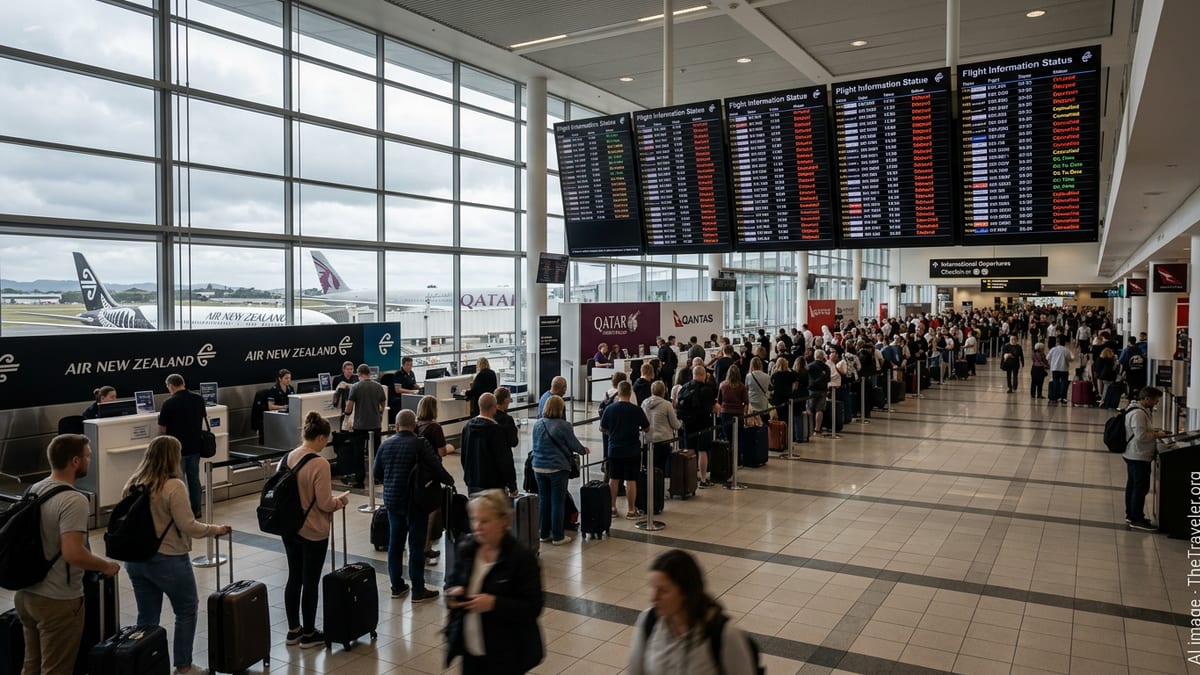
Major Hubs Buckle Under Combined Operational Pressures
Operational data compiled from airport boards and aviation tracking services on Tuesday pointed to a difficult operating day across Oceania, with Auckland, Wellington, Sydney and Melbourne among the hardest hit. Industry sources reported that more than 430 flights were running late by at least 15 minutes, while approximately 30 services were canceled outright, affecting both domestic and international routes.
At Sydney and Melbourne, peak-time schedules were heavily compressed as morning and early afternoon services backed up into later waves. Similar patterns appeared at Auckland and Wellington, where passengers spoke of cascading delays as late‑arriving aircraft forced knock‑on rescheduling across already busy trans-Tasman and domestic networks.
Airport operators and airline representatives cited a convergence of challenges: lingering weather disruptions from recent systems in the Tasman region, tight crew and air-traffic-control staffing, and complex long-haul rerouting driven by ongoing Middle East airspace closures. While each factor alone might normally be manageable, together they pushed already stretched schedules beyond their limits.
Ground handling teams at several airports were also operating under pressure, with baggage delivery and aircraft turnaround times lengthening as the day progressed. Passengers reported waiting more than an hour for checked luggage at some terminals, further complicating attempts to make tight onward connections.
Qatar Airways and Long-Haul Networks Feel Airspace Fallout
Qatar Airways passengers transiting through Auckland, Melbourne and Sydney were among those feeling the brunt of the disruption. The carrier has already been contending with reduced operations and limited relief flights following the closure of Qatari airspace in late February and its gradual, highly controlled reopening. That backdrop left little room to absorb fresh delays on Oceania departures and arrivals.
With Hamad International Airport in Doha still operating under constrained conditions, many Australia- and New Zealand-originating flights have been subject to last-minute retimings, schedule changes and, in some cases, outright cancellations. Travelers booked to Europe and the Middle East via Doha reported being rebooked on later dates or offered alternative routings on partner and non-partner airlines, subject to seat availability.
The challenge for long-haul carriers is compounded by congested skies along alternative corridors to Europe and Asia. Routes that would typically rely on Gulf overflights are now forced to skirt restricted airspace, adding time and fuel burn. That has led airlines to proactively thin schedules, remove marginal services and consolidate frequencies, which in turn magnifies the impact when bad weather or local bottlenecks hit departure airports like Auckland and Sydney.
For Qatar Airways customers in Oceania, that meant that even relatively minor local delays could translate into missed long-haul connections and multi-day disruptions, particularly on already overbooked corridors to London, Frankfurt and other European gateways.
Air New Zealand, QantasLink and Domestic Travelers Caught in the Snarl
Domestic and regional travelers were far from immune. Air New Zealand and QantasLink, key players in short-haul operations on both sides of the Tasman, experienced a busy day of schedule adjustments as delays accumulated at hub airports.
In New Zealand, Air New Zealand’s services linking Auckland and Wellington with regional centers such as Christchurch, Queenstown and Dunedin operated with reduced punctuality as aircraft and crews cycled in late from earlier flights. Some point-to-point services were canceled to free up capacity for congested trunk routes, leaving travelers to be re-accommodated on later departures.
Across the Tasman, QantasLink’s extensive regional network feeding into Sydney and Melbourne also came under strain. With mainline Qantas and international partners prioritizing long-haul connections, some smaller-city departures were retimed or merged, leading to crowded gates and packed replacement services. Passengers reported full flights, long queues at service desks and difficulty securing same-day alternatives.
While most affected travelers were eventually rebooked, the patchwork nature of regional schedules meant that some faced overnight stays in hub cities or extended road and rail journeys to complete their trips. For business passengers reliant on day-return itineraries, the disruptions effectively wiped out planned meetings and events.
Passengers Face Long Queues, Patchy Information and Limited Options
For many travelers, the most frustrating aspect of Tuesday’s disruption was not only the delays themselves but the uncertainty surrounding them. Long queues formed at airline customer service counters in Auckland, Wellington, Sydney and Melbourne as rolling delay estimates were updated in 30- or 60-minute increments.
Several passengers described difficulty reaching call centers or airline chat agents, with hold times stretching beyond an hour during peak disruption periods. Others noted inconsistencies between information shown in airline apps, airport departure boards and text messages, complicating decisions about whether to wait at the gate, attempt to reroute or abandon trips entirely.
Accommodation and meal support varied by carrier and ticket type. Full-service airlines generally provided hotel and meal vouchers for passengers stranded overnight, particularly those on international itineraries, while some domestic travelers with lower-cost fares were advised to seek reimbursement through travel insurance. Consumer advocates in both countries urged travelers to retain boarding passes, receipts and written delay notices to support later claims.
Experts also warned that with school holidays and major events approaching in parts of Australia and New Zealand, spare capacity across airlines is likely to remain tight. That increases the risk that even modest disruptions over the coming days could once again cascade, particularly for travelers relying on multi-leg itineraries through constrained hubs.
Outlook: Schedules Under Pressure as Operators Work to Recover
Airports and airlines across Oceania spent the latter part of Tuesday working to restore order to their schedules, adding extra staff on evening shifts and turning aircraft as quickly as safety protocols allowed. By late day, some of the worst bottlenecks at check-in and security had eased, though departure boards in major terminals still showed clusters of amber and red.
Operations planners expect residual delays to continue into the next 24 to 48 hours as aircraft and crews gradually return to their intended rotations. With long-haul networks already disrupted by Middle East airspace issues, there is limited slack in the system to absorb additional shocks, especially on popular trans-Tasman and Europe-bound routes.
Industry analysts note that while Tuesday’s tally of more than 430 delays and around 30 cancellations is significant, it also underscores how finely balanced the region’s aviation recovery has become. Strong travel demand, lean staffing and global geopolitical turbulence have combined to leave little buffer when storms, technical issues or airspace restrictions strike.
For travelers in New Zealand and Australia, the advice from aviation experts remains consistent: check flight status repeatedly before leaving for the airport, build generous connection times into itineraries, and be prepared for plans to change at short notice as airlines and airports navigate an increasingly complex operating environment.