

More news on this day
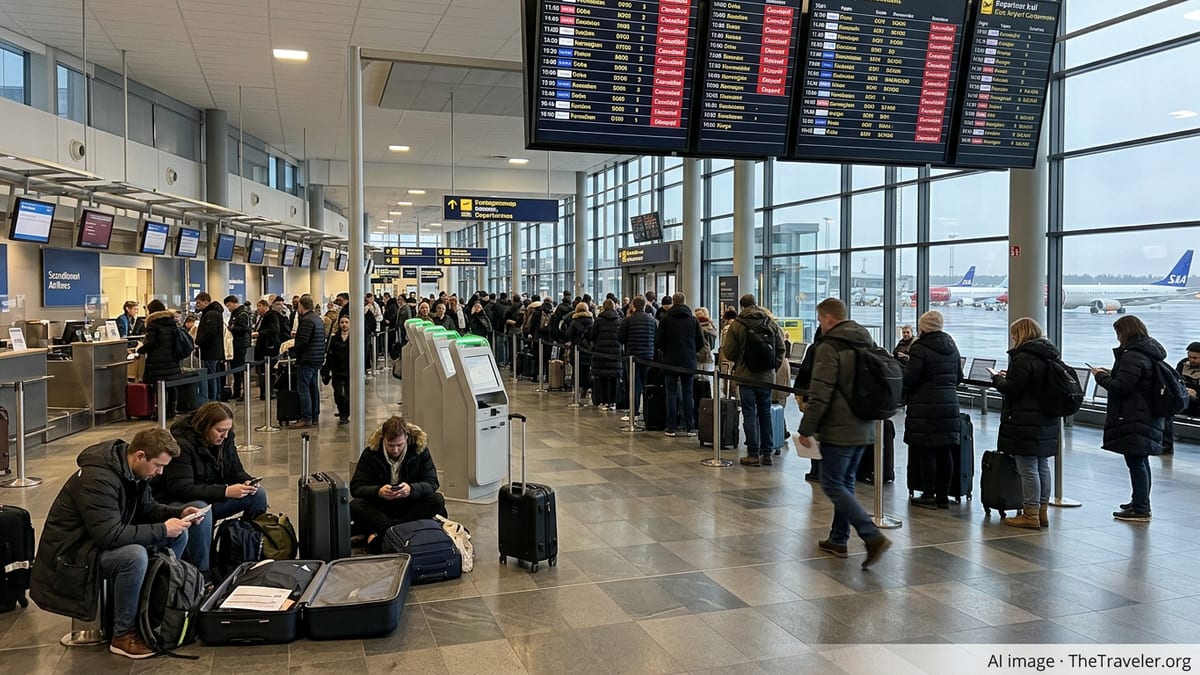
Hundreds of passengers travelling through Oslo Airport Gardermoen and Trondheim Airport Værnes on Tuesday, 10 March, faced long queues, missed connections and unexpected overnight stays as more than a dozen flights were cancelled and many more delayed, disrupting operations for Qatar Airways, Norwegian Air Sweden, Scandinavian Airlines and several other carriers.
Knock-on Effects From Middle East Airspace Closure Reach Norway
The latest wave of disruption in Norway is closely tied to the continuing closure of key Middle Eastern airspace, which has forced airlines including Qatar Airways to suspend or severely curtail services via Doha. With long-haul schedules already fragile, Tuesday’s cancellations at Oslo and Trondheim represent a visible extension of a crisis that began with the grounding of flights across the Gulf region at the end of February.
Qatar Airways, which connects Norwegian travellers to Asia, Africa and Australia via its Doha hub, has been operating on a sharply reduced schedule since late February. The carrier has kept many of its intercontinental rotations on hold while regional authorities review safety conditions along traditional flight corridors, leaving European gateways such as Oslo scrambling to adjust outbound and inbound operations at short notice.
As services are trimmed or rerouted, airports in Northern Europe are increasingly exposed to rolling timetable changes. Even when individual flights are not cancelled outright, revised routings, longer flight times and altered departure slots are feeding into congestion and delays at already busy hubs, and Norwegian airports are now feeling that pressure with greater intensity.
Travel analysts note that although Oslo and Trondheim are far from the airspace closures themselves, their role as links in wider global networks makes them vulnerable to disruptions that start thousands of kilometres away. Once a long-haul leg to or from Doha is pulled from the schedule, associated feeder flights within Scandinavia can quickly become non-viable or require last-minute retiming, as has been seen throughout the day.
Oslo Gardermoen Sees Concentrated Wave of Cancellations
Oslo Airport Gardermoen, Norway’s primary international gateway, experienced the brunt of today’s cancellations, particularly on routes tied to long-haul connections. Airport departure boards on Tuesday morning and early afternoon showed a series of scrubbed services, including Norway-bound and onward flights that normally feed into Middle Eastern and European hubs used by Qatar Airways and its partners.
Scandinavian Airlines (SAS) reported that several of its flights either departed significantly behind schedule or were cancelled outright due to aircraft and crew being out of position after days of disrupted rotations elsewhere in Europe. With aircraft blocked at other hubs or returning late, SAS planners were forced to consolidate frequencies, leaving some Oslo departures without available capacity.
Norwegian Air Sweden, which operates a mix of domestic, intra-Nordic and European services from Oslo, also saw knock-on delays across its network as aircraft arriving from other affected airports turned up late, compressing turnaround times. Even modest delays on early-morning sectors began to cascade through the day, contributing to the growing list of retimed or cancelled departures.
Airport staff worked to rebook passengers where possible, but many found that alternative same-day options were limited. With Qatar Airways and other Gulf carriers still running reduced schedules, travellers hoping to connect from Oslo to destinations in Asia or Australasia often faced waits of 24 hours or more for the next viable itinerary.
Trondheim Værnes Hit by Ripple Effects on Domestic and Feeder Routes
Trondheim Airport Værnes, a key regional hub linking central Norway to both Oslo and international destinations, also reported a cluster of cancellations and extensive delays. While the airport handles fewer long-haul connections than Oslo, its role as a feeder station meant that any disruption on trunk routes quickly translated into gaps in service for local travellers.
Several flights between Trondheim and Oslo were either cancelled or significantly delayed as airlines adjusted capacity in response to long-haul changes and aircraft availability. This left business travellers and holidaymakers stranded in both directions, with some forced to transfer to later departures or even switch to rail for the domestic leg of their journey.
Scandinavian Airlines and Norwegian Air Sweden were again among the most visibly affected at Værnes, juggling aircraft rotations to maintain a minimum level of service on core domestic routes. Smaller regional carriers, which rely on tight connections to trunk flights via Oslo, also felt the strain as passengers missed onward links or arrived too late to board international departures.
For Trondheim-area travellers, the impact was particularly severe for those holding through-tickets involving Qatar Airways flights via Oslo and Doha. When the long-haul segment disappeared from the timetable, their domestic legs lost their purpose, leaving many to negotiate refunds, reroutings or overnight stays at short notice.
Airlines Respond With Rebooking, Limited Compensation and Schedule Adjustments
Airlines operating in and out of Norway moved on Tuesday to offer rebooking options and basic care to affected travellers, but capacity constraints limited what could be provided. Qatar Airways continued to prioritise re-accommodating stranded passengers on the small number of services it is still able to operate, while also working with partner airlines in Europe to create alternative routings where airspace and schedules allow.
SAS and Norwegian Air Sweden encouraged passengers to use digital channels and self-service tools to change bookings, warning that airport service desks and call centres were experiencing high volumes. Both companies pointed out that under European passenger-protection rules, travellers on cancelled flights are entitled to rebooking or a refund and care such as meals and accommodation when long delays occur, though cash compensation can be restricted when cancellations are tied to extraordinary circumstances beyond the airline’s control.
Operational planners are also making tactical changes to schedules in the days ahead. Some low-demand frequencies are being temporarily removed to free up aircraft and crews for high-priority routes, while turnaround times at Oslo and Trondheim are being lengthened to build extra buffer into the system. Airlines hope these measures will prevent today’s disruption from repeating at the same scale later in the week.
Even so, carriers acknowledge that as long as Middle Eastern airspace closures persist and global traffic patterns remain in flux, timetables will be subject to short-notice adjustments. Passengers with imminent departures from Norwegian airports are being advised to monitor flight status closely and avoid starting long, multi-leg journeys without checking each segment.
What Travellers Through Oslo and Trondheim Should Expect Next
Looking ahead to the coming days, travellers using Oslo Gardermoen or Trondheim Værnes should be prepared for continued volatility in departure and arrival times, particularly on itineraries involving Qatar Airways and other carriers with significant exposure to Gulf-region routing. While the volume of same-day cancellations may ease if airlines succeed in stabilising rotations, late-notice schedule changes are likely to remain a feature of travel through Norway’s main airports.
Industry observers suggest that domestic and intra-Nordic routes will gradually recover first, as carriers can more easily reposition aircraft within Scandinavia than across longer intercontinental sectors. However, any fresh disruption at major European hubs, whether due to weather, staffing or knock-on effects from the Middle East, could quickly undo this progress and once again affect flights to and from Oslo and Trondheim.
For passengers, the most practical advice remains to build extra time into travel plans, especially when onward connections are involved. Keeping airline apps updated, enabling notifications and double-checking departure times before leaving for the airport can make the difference between a manageable delay and an unplanned overnight stay.
With hundreds of travellers already impacted today and schedules still in flux, Norway’s aviation community is bracing for a turbulent week. For now, authorities and airlines alike are focused on keeping essential links open, minimising cancellations where possible and restoring confidence among travellers who have seen their plans repeatedly upended.