

More news on this day
Air travel across Singapore, the Gulf and wider Southeast Asia was thrown into fresh turmoil on March 1, as a wave of operational disruptions triggered cancellations and hundreds of delays at Singapore Changi Airport, rippling across key carriers including Singapore Airlines, Gulf Air, AirAsia, Thai Airways, Vietjet and Malaysia Airlines.
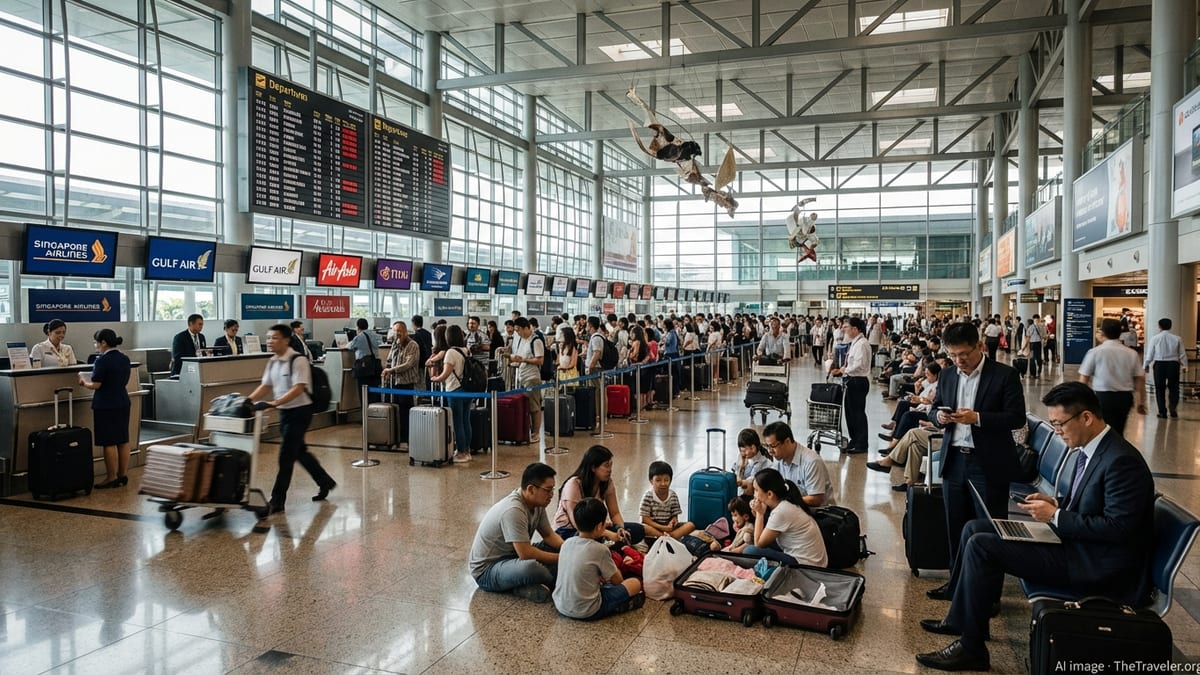
Changi Disruptions Ripple Across Asia and the Gulf
Operational strain and congested airspace combined to leave passengers facing long queues, missed connections and rolling delays at Singapore Changi Airport, one of Asia’s busiest hubs. Airport data and aviation tracking services showed a surge in late-running flights, with at least 11 services cancelled outright and more than 240 delayed over the course of the day, affecting departures and arrivals across the region.
Singapore Airlines, which uses Changi as its principal hub, was among the hardest hit, with delays on regional routes to Malaysia, Thailand and Vietnam compounding earlier disruptions on long-haul services that had already stretched crew and aircraft resources. Budget operators such as AirAsia and Vietjet, which depend on tight turnarounds at Changi and nearby hubs, also reported extensive knock-on delays as aircraft arrived late and struggled to regain schedule.
The disruption coincided with heavy traffic flows between Southeast Asia and the Gulf, where airports in the United Arab Emirates and Bahrain were already battling their own spikes in delays and cancellations. With many flights operating as through-connections between Singapore, Kuala Lumpur, Bangkok and key Middle Eastern hubs, even relatively minor timetable shifts quickly cascaded into missed links and forced rebookings.
Ground staff at Changi were deployed to manage crowding at transfer desks and boarding gates, while airlines advised passengers to arrive early, monitor flight status closely and allow additional time for connections. Travellers reported waits of several hours at customer service counters as carriers scrambled to reroute itineraries and secure seats on later flights.
UAE and Bahrain Hubs Struggle With Volume and Weather
In the Gulf, major airports in Dubai and Abu Dhabi in the United Arab Emirates and Bahrain International Airport in Manama experienced simultaneous strains, amplifying the impact on passengers traveling between the Middle East and Southeast Asia. Recent days had already seen elevated levels of disruption at these hubs, with hundreds of flights delayed or cancelled due to a mix of adverse weather, congested air corridors and aircraft rotation challenges.
Emirates, Etihad Airways and low-cost operators serving Dubai and Abu Dhabi have been working through a backlog of delayed services, particularly on high-density routes linking the Gulf to South and Southeast Asia. Gulf Air, based in Bahrain, has faced similar headwinds, with late arrivals from regional destinations compressing turn times and pushing subsequent departures behind schedule.
For travellers connecting between Singapore and Gulf hubs on joint itineraries involving Singapore Airlines, Gulf Air and other partners, this meant a higher risk of misaligned connections. Flights that left Changi late arrived into the Gulf after connecting services had closed, forcing overnight stays or complex reroutings via alternative airports in India, Malaysia or Turkey.
Aviation analysts noted that the Gulf hubs function as critical bridges between Asia, Europe and Africa, so any instability there is magnified across multiple regions. When combined with an unusually heavy traffic day at Changi, the result was a multi-node disruption event that quickly spread beyond the immediate airports involved.
Regional Carriers in Southeast Asia Feel the Strain
Throughout Southeast Asia, airlines that rely on dense regional networks and multiple daily frequencies found themselves grappling with knock-on effects from the disruptions in Singapore and the Gulf. Thai Airways and Thai AirAsia reported delays on services linking Bangkok with Singapore and key Malaysian and Vietnamese cities, as aircraft and crews were held up by late inbound legs and longer turnaround times.
Vietjet, which has expanded rapidly across the region with low-fare services, also saw rotations affected on popular routes between Vietnam and Singapore, as well as onward connections via Thai and Malaysian hubs. Malaysia Airlines and AirAsia, both heavily exposed to high-volume shuttle routes into Changi and other regional airports, faced pressure to consolidate some lightly loaded services and retime others to restore operational stability.
At Kuala Lumpur International Airport and Bangkok’s primary airports, passengers described a patchwork of delays lasting from one to several hours, particularly on flights tied to disrupted Singapore and Gulf connections. While only a minority of services were cancelled outright, the sheer number of late departures and arrivals upset travel plans for holidaymakers and business travellers alike.
Industry observers said the episode underscored how interconnected the Southeast Asian network has become, with low-cost and full-service operators sharing traffic flows and relying on quick transfers and high daily aircraft utilization. When one major hub such as Changi or Dubai falters, carriers across the region must adjust rapidly to avoid widespread cancellations.
Passengers Confront Long Queues, Missed Connections and Limited Options
For passengers caught in the latest wave of travel turmoil, the statistics translated into hours of uncertainty and difficult choices. Long queues formed at ticketing and transfer counters in Singapore, Dubai, Abu Dhabi and Bahrain as travellers sought rebookings, hotel vouchers and meal assistance after missing onward flights or facing multi-hour delays.
Families on multi-stop itineraries between Europe, the Middle East and popular Southeast Asian destinations such as Phuket, Bali and Ho Chi Minh City were particularly vulnerable, as even a single delayed leg could disrupt an entire journey. Some travellers turned to alternative routings via less affected hubs in India, Indonesia or secondary Malaysian airports, but limited spare capacity during peak periods kept options tight.
Airlines reminded customers that they were prioritising passengers with imminent departures and those who had already experienced significant disruption. However, the combination of crew duty limits, aircraft positioning requirements and high seasonal demand limited how quickly carriers could add extra flights or equipment upgrades to clear backlogs.
Consumer advocates again urged passengers to review their rights to rebooking, refunds and accommodation under applicable fare rules and local regulations. They also advised allowing longer connection windows when planning multi-leg journeys that cross multiple congested hubs, especially during busy travel periods or in seasons prone to adverse weather.
Aviation Authorities Monitor Network Stress at Key Hubs
Aviation regulators and airport operators in Singapore, the UAE and Bahrain have been monitoring the operational stress at their facilities, coordinating with airlines and air traffic control to smooth peaks where possible. Authorities have indicated that they are reviewing ground handling capacity, runway usage patterns and slot allocations to reduce the likelihood of similar bottlenecks recurring.
In Singapore, Changi Airport officials highlighted the need to balance rapid traffic growth with resilience measures, including additional staffing during known peak periods and improved communication channels with airlines and passengers when delays mount. The airport, which handled nearly 70 million passengers last year, has been gradually ramping up operations as regional travel demand returns to and in some markets exceeds pre-pandemic levels.
Gulf regulators, facing their own surges in transfer traffic as carriers rebuild long-haul networks, are likewise assessing how weather events, temporary airspace restrictions and tight flight schedules interact to create cascading delays. Industry experts said closer coordination between hubs, combined with more realistic scheduling buffers, could help mitigate the impact of future disruption episodes.
For now, however, travellers moving between Singapore, the Gulf and the wider Southeast Asian region are being warned to brace for potential residual delays over the coming days, as airlines work to reposition aircraft, reset crew rosters and bring one of the world’s busiest air corridors back to a more stable rhythm.