

More news on this day
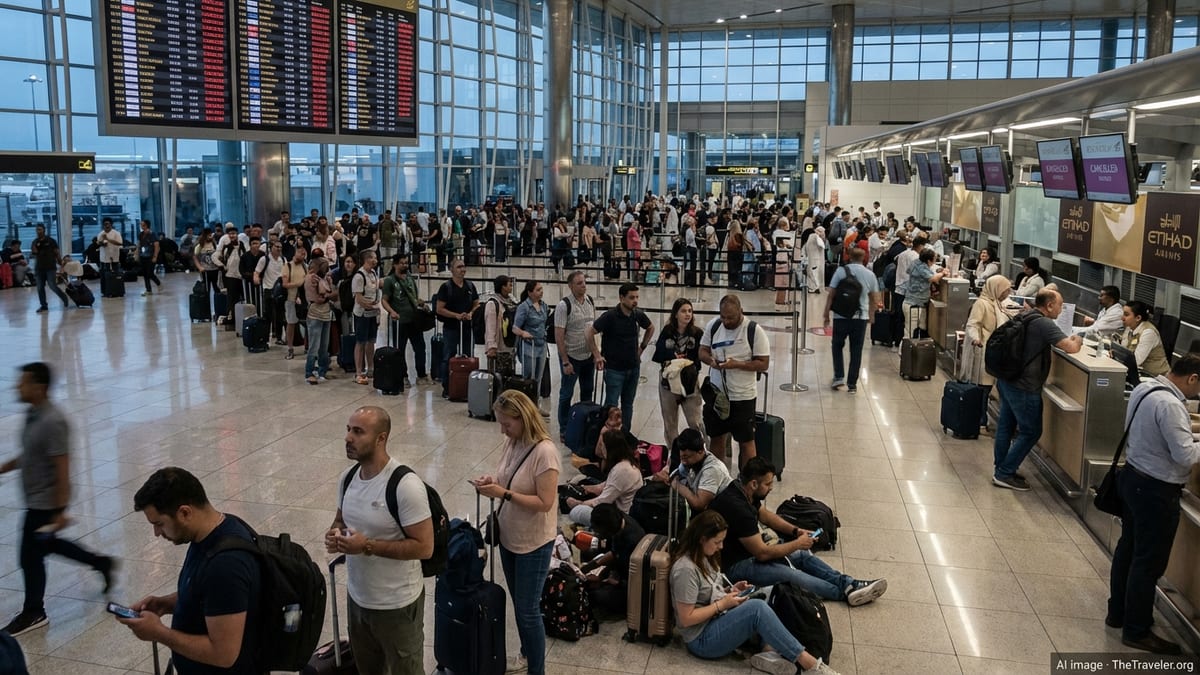
Hundreds of flights operated by Emirates, Etihad Airways, Flydubai and IndiGo have been cancelled or severely delayed on March 31, 2026, as prolonged regional security tensions and airspace restrictions continue to disrupt passenger traffic into Dubai and Abu Dhabi, stranding and rerouting tourists from India, the United States and the United Kingdom.
Get the latest news straight to your inbox!
Regional Tensions Trigger Prolonged Disruptions
Publicly available flight-tracking data and recent coverage indicate that operations at Dubai International Airport and Abu Dhabi’s Zayed International Airport have been volatile throughout March, following weeks of missile and drone activity linked to the Iran conflict and subsequent security responses across the Gulf. Flight schedules that had already been trimmed earlier in the month have again come under pressure, resulting in another wave of cancellations and rolling delays on March 31.
Reports describe periods when airspace over parts of the United Arab Emirates was temporarily restricted or closely managed, forcing airlines to thin out schedules, reroute aircraft and lengthen flight times. While both Dubai and Abu Dhabi remain open, the pattern of on-off suspensions, limited departures and last-minute operational changes has made it difficult for passengers and airlines to predict day-to-day reliability.
Industry data cited in recent analyses shows that traffic from major Gulf hubs, including Dubai and Abu Dhabi, is still running below typical late-winter levels despite a partial recovery from the near standstill immediately after the late February escalation. Airlines have been attempting to rebuild networks in phases, but renewed security checks and intermittent restrictions on certain corridors have slowed that process.
Emirates and Flydubai Cut and Consolidate Services
Emirates and Flydubai, both based in Dubai, appear among the most affected carriers due to their reliance on the city as a global connecting hub. Timetables reviewed on March 31 show dozens of Dubai-bound flights listed as cancelled, including services from major Indian metros, European gateways and North American connection points. Some services have reportedly been consolidated, with multiple passenger loads shifted onto a reduced number of operating flights.
Published coverage notes that many Emirates widebody flights have been rescheduled into narrower operating windows during periods assessed as more predictable from a security and routing standpoint. This has compressed departure banks that usually stretch across the day into shorter, more congested slots, creating knock-on delays even for services that do depart.
Flydubai’s point-to-point regional network has also come under strain. Flights to and from South Asia and the Middle East have seen repeated schedule changes, with passengers advised to check departures frequently on day of travel. Some regional sectors into Dubai have been reduced or temporarily halted, creating gaps in the low-cost connectivity that many travelers, especially from the Indian subcontinent, rely on.
Etihad and Abu Dhabi Feel the Ripple Effects
Abu Dhabi’s flag carrier Etihad Airways has faced similar headwinds, including earlier periods in March when publicly available updates showed most commercial flights suspended for several days. More recent schedule data indicates a measured resumption of operations from Abu Dhabi, but with frequencies still significantly lower than normal to key long-haul destinations.
Travel forums and airline updates describe a patchwork of services in and out of Abu Dhabi, with some long-haul flights continuing while others are cancelled or rerouted at short notice. Passenger accounts point to rebookings spread over several days, as Etihad manages limited seat availability on operating services alongside aircraft and crew positioning challenges.
Abu Dhabi airport’s role as an alternative gateway for travelers unable to reach Dubai has been complicated by its own disruptions. While some traffic has diverted or rebooked through the capital, the limited schedule and changing operational picture have constrained its capacity to fully absorb displaced passengers from Dubai, prolonging travel times and forcing many to accept complex multi-stop routings.
Indian, US and UK Travelers Face Uncertainty
Travel demand from India, the United States and the United Kingdom to the UAE remains strong, particularly for leisure stays in Dubai and business travel linked to both emirates. However, the latest wave of cancellations and delays has left many visitors from these key markets scrambling for alternatives just as spring holiday travel peaks.
Coverage from Indian and international outlets highlights multiple examples of passengers arriving at origin airports to find their flights to Dubai or Abu Dhabi cancelled or heavily delayed, sometimes after earlier rebookings in the same week. With IndiGo, Emirates and Flydubai all trimming services on India-UAE routes at various points in March, competition for remaining seats has intensified, raising prices on unaffected flights and complicating last-minute changes.
For travelers from the US and UK, disruptions have often appeared at the connecting stage, with long-haul flights operating but onward regional sectors into Dubai or Abu Dhabi cancelled, or vice versa. Some transiting passengers have reportedly been held for extended periods in transit terminals while airlines arranged rebookings or alternative routings via other Gulf or European hubs.
IndiGo Suspensions Deepen India–UAE Capacity Crunch
Low-cost giant IndiGo, which has become a critical link between India and the UAE, has added an additional layer of complexity by suspending or sharply reducing its operations into Dubai at various points during the crisis. Recent summaries of carrier statuses published on March 30 and 31 indicate that IndiGo flights to and from Dubai have been broadly halted for safety and operational reasons, significantly cutting capacity on some of the busiest India–Gulf corridors.
This move has compounded the impact of schedule cuts by Emirates and Flydubai on overlapping routes, particularly from Indian cities such as Mumbai and Delhi. With fewer non-stop options and constrained capacity on remaining services, travelers have faced longer connections via third countries or have postponed trips altogether.
The shock has been especially visible among price-sensitive leisure and migrant workers who depend heavily on IndiGo’s fares and frequencies. Reports describe crowded airline counters, extended call-center wait times and growing backlogs of pending refund and rebooking requests as passengers seek clarity on when normal schedules might resume.
Across all four airlines, publicly available advisories consistently urge passengers to verify flight status shortly before departure and to ensure contact details are updated in bookings. With the regional security outlook still uncertain and airspace management evolving day by day, aviation analysts suggest that the pattern of rolling disruptions at Dubai and Abu Dhabi is likely to persist in the near term, keeping travelers from India, the US and the UK on alert for further changes.