

More news on this day
Travelers flying through China’s far western Xinjiang region are facing a fresh wave of disruption as delays and cancellations ripple across a cluster of regional airports.
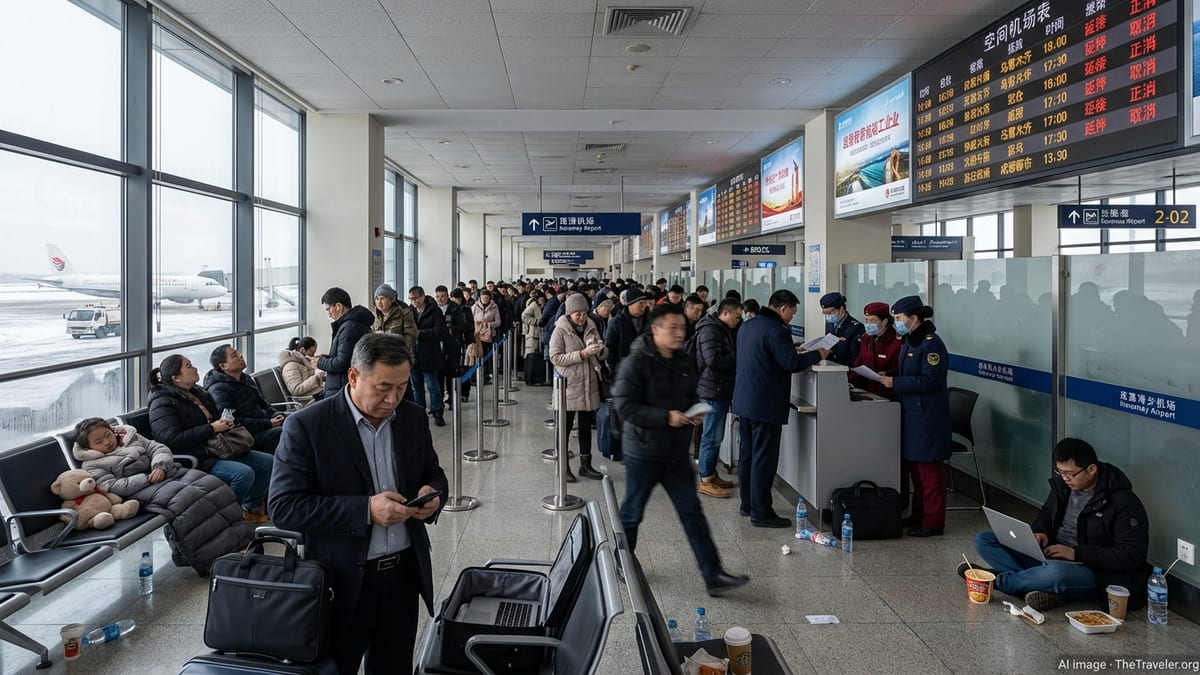
From Karamay and Urumqi to Kuqa and other smaller hubs, at least 15 flights have been delayed and 11 cancelled, affecting services operated by Chengdu Airlines, Urumqi Air and several other Chinese carriers. Stranded passengers are contending with long queues, limited information and uncertainty about when they will finally reach their destinations.
More News
- Caribbean Travel to U.S. Upended by New Visa Freezes and Expanded Bans
- Mexico Restores E-Visas for Brazilians, Paving the Way for Borderless Tourism
- Philippine Airlines Joins Regional Carriers Powering Southeast Asia’s Tourism Boom
Mounting Disruptions Across Xinjiang’s Air Network
The latest disruption centers on Karamay Airport in Xinjiang, where a combination of delayed and cancelled flights has thrown scheduled services into disarray. According to operational data from airport trackers, 15 flights are delayed and 11 have been cancelled, resulting in a significant proportion of the day’s traffic being disrupted. While no long haul or United States bound flights are reported among the cancellations, the impact on domestic connectivity is substantial for this remote oil producing city and its links to the rest of China.
Airlines most affected include Chengdu Airlines, China Express Airlines and Urumqi Air, alongside major full service carriers such as Air China and Sichuan Airlines. At Karamay, Chengdu Airlines registered the highest proportion of outright cancellations, while Air China and others saw substantial delay rates. The pattern reflects a broader operational strain across China’s regional aviation system as carriers juggle aircraft rotations, crew availability and weather related constraints.
Urumqi Diwopu International Airport, the principal gateway to Xinjiang, is also under pressure. Though not facing the same concentration of cancellations as Karamay on this particular day, Urumqi has repeatedly emerged in recent weeks as one of Asia’s most disrupted hubs, at times accounting for the majority of flight cancellations across the region. This latest episode has compounded the sense of fragility in western China’s air travel network.
Stranded Passengers Face Long Waits and Sparse Information
For passengers, the numbers translate into hours of waiting in crowded terminals, missed connections and uncertain contingency plans. At Karamay, Urumqi and Kuqa, travelers have reported spending much of the day in departure halls as ground staff repeatedly revise departure times. With 15 flights delayed out of a relatively modest daily schedule, Karamay’s terminal quickly filled with stranded passengers competing for seating, access to charging points and food outlets.
Business travelers and workers commuting to and from energy and construction sites in Xinjiang have been particularly hard hit, as many depend on tight schedules and same day connections through Urumqi or Chengdu. Families traveling for medical appointments or to visit relatives in other provinces have also found themselves in limbo, reluctant to leave the secure area in case their flights unexpectedly resume boarding.
Information flow has been another point of frustration. With ground teams stretched and multiple airlines affected, passengers describe a patchwork of announcements, app notifications and last minute gate changes. While China’s major carriers have invested heavily in digital customer service, smaller and regional airports still rely heavily on public address systems and manual rebooking at service counters, creating bottlenecks in times of disruption.
Airlines Under Scrutiny as Operational Strain Grows
The disruption has placed a spotlight on operational resilience among China’s carriers serving the country’s western regions. Chengdu Airlines, a key player in secondary and tertiary routes, saw a significant share of its Karamay schedule cancelled on the affected day, while China Express Airlines faced a mix of cancellations and delays. Urumqi Air, based in the regional capital and positioned as a key connector within Xinjiang, also cancelled flights, amplifying the knock on effects across the local network.
Air China, Sichuan Airlines and other larger carriers predominantly experienced delays rather than outright cancellations, suggesting that while aircraft and crews remained available, schedule integrity suffered. Aviation analysts say this pattern points to tightly wound operations, where even minor disruptions can cascade into prolonged delays because of short turnaround times and limited spare aircraft capacity, especially on thin routes in remote regions.
For Urumqi Air, the event adds to mounting pressure to demonstrate reliability in its home market. The airline, which operates a mix of short and medium haul routes across western China, is a crucial lifeline for smaller cities such as Kuqa and Karamay. When its flights are delayed or cancelled, passengers often have few immediate alternatives, particularly during off peak hours or in shoulder seasons when schedules are leaner.
Weather, Logistics and a Fragile Regional Hub System
While airlines and airport authorities have not publicly detailed a single clear cause for the latest wave of disruptions, a mix of factors is likely at play. Xinjiang’s winter weather can be volatile, with sudden snowfalls, low visibility and strong winds that force temporary runway closures or stricter separation between aircraft. Even when conditions do not trigger headline making storms, marginal weather can slow operations enough to trigger knock on delays during busy morning or evening peaks.
Logistical challenges are also significant. Regional airports like Karamay and Kuqa generally operate with tighter resource margins than coastal megahubs. Ground handling teams may be smaller, deicing equipment more limited and their ability to absorb sudden schedule changes constrained. When multiple flights require attention simultaneously, servicing and turnaround times can stretch well beyond planned windows, creating a domino effect across the day’s timetable.
Urumqi’s role as a central hub for the region further amplifies disruption. Many flights from smaller Xinjiang cities feed into Urumqi Diwopu to connect with trunk routes to Beijing, Shanghai, Chengdu and beyond. When one leg of this chain is delayed or cancelled, passengers risk missing onward flights, forcing airlines to rebook them onto later services or via alternate hubs. In some cases, this can mean overnight stays or lengthy detours via cities thousands of kilometers away from their original routing.
Nationwide and Regional Context of Flight Chaos
The trouble in Xinjiang comes amid a broader period of turbulence for air travel across Asia. In recent days, thousands of passengers have been stranded at airports from Shenzhen and Shanghai to Bangkok, Singapore, Kuala Lumpur and Dubai as a combination of weather, congestion and operational issues led to mass delays and hundreds of cancellations across multiple countries. Data from aviation tracking services has highlighted China as one of the hardest hit markets, with several of its major airports appearing near the top of global delay rankings.
Within China itself, Karamay’s difficulties have been mirrored by other airports reporting significant disruption. Dalian Zhoushuizi International Airport in the northeast, for example, has seen dozens of delays and cancellations on the same date, leaving passengers waiting for hours as China Eastern, Shandong Airlines and other carriers worked through a backlog of flights. Similar stories have emerged from Qingdao, Shenyang, Hohhot and other regional hubs, underlining the strain on the national aviation system as traffic grows and winter weather persists.
Industry observers note that China’s rapid aviation expansion in recent years has brought world class infrastructure to many cities but that operational practices are still adjusting to higher volumes and increasingly complex route networks. When multiple regions are hit by adverse conditions or airspace restrictions on the same day, the system’s limited slack is quickly exposed, especially at secondary airports that depend on a small number of daily connections.
What Travelers Can Do if Their Flight Is Affected
For passengers currently stuck at Karamay, Urumqi, Kuqa or other affected airports, travel experts recommend a combination of vigilance and flexibility. The first step is to monitor airline apps and official announcements closely, as gate changes and revised departure times can come with little warning. Signing up for text or app alerts can provide a faster flow of information than relying solely on departure boards, particularly in crowded terminals where screens may be difficult to see.
Travelers are also advised to contact their airline as early as possible if a delay stretches beyond a couple of hours or if a cancellation is announced. Many Chinese carriers now offer options to rebook on later flights, change destinations within a limited range or obtain vouchers for future travel, depending on fare rules and the nature of the disruption. At times of heavy disruption, phone lines and airport counters can be overwhelmed, so using online platforms or chat functions may offer a quicker route to assistance.
Those with time sensitive itineraries, such as international connections, medical appointments or critical business meetings, may need to explore alternative routings. This can include flying first to a larger hub like Chengdu or Xi’an and then onward to the final destination, or in some cases switching airlines entirely. While such changes can be costly, travel insurance or credit card protections may cover a portion of additional expenses, including hotels and meals, depending on the policy.
Implications for Tourism and Regional Connectivity
The immediate priority for airlines and airport operators is to clear backlogs and restore normal schedules, but the repeated appearance of Xinjiang airports in disruption statistics raises broader questions about regional connectivity and traveler confidence. Karamay and Kuqa are important gateways not only for residents but also for domestic tourists and business visitors drawn by the region’s energy sector, landscapes and emerging cultural tourism offerings.
Prolonged or recurrent flight problems risk dampening demand by making trips appear less predictable compared with alternative destinations. Tourism stakeholders in Xinjiang have been working to promote new routes and packages that rely heavily on regional air links. If travelers begin to perceive these routes as vulnerable to frequent disruption, they may opt instead for more established coastal or central Chinese destinations where aviation networks have greater redundancy.
At the same time, the current episode may spur fresh investment in resilience. Airport authorities could accelerate plans to enhance deicing capacity, improve terminal layouts for managing irregular operations and deepen cooperation with airlines on contingency planning. Carriers, for their part, may review fleet and crew deployment to build in more buffer on sensitive routes, accepting slightly lower utilization in exchange for more robust performance during peak disruption periods.
FAQ
Q1: Which airports in China are currently most affected by these disruptions?
Karamay in Xinjiang has reported 15 flight delays and 11 cancellations, with knock on effects at Urumqi Diwopu, Kuqa and other regional airports that depend on the same carriers and route structures.
Q2: Which airlines are involved in the delays and cancellations?
The disruption involves multiple Chinese carriers, notably Chengdu Airlines, China Express Airlines and Urumqi Air, as well as larger airlines such as Air China, Sichuan Airlines and others operating domestic routes through Xinjiang.
Q3: Are any international or United States bound flights affected?
Based on available operational data, the current wave of cancellations at Karamay does not include flights to or from the United States, and the majority of affected services are domestic or regional within China.
Q4: What are the likely causes of the delays and cancellations?
Authorities have not cited a single cause, but winter weather conditions, tight aircraft and crew scheduling, limited ground resources at smaller airports and congestion in China’s broader airspace system are all likely contributing factors.
Q5: What rights do passengers have when flights are cancelled or heavily delayed?
Under Chinese regulations, airlines are generally required to offer rebooking on later flights and basic care such as water and rest areas during extended delays, with hotel arrangements sometimes provided when overnight stays are unavoidable, although compensation practices vary by carrier and cause.
Q6: How long can passengers expect the disruption to last?
The immediate batch of delays and cancellations typically clears over one to two days as airlines reposition aircraft and crews, but passengers should be prepared for lingering schedule adjustments, especially if weather or operational constraints persist.
Q7: What practical steps should travelers take if their flight is delayed?
Travelers should check airline apps and departure boards frequently, enroll in notification services, contact the airline to explore rebooking options and keep receipts for any additional expenses in case they can be claimed later under insurance or airline policies.
Q8: Is it safer to avoid smaller regional airports like Karamay and Kuqa during this period?
While regional airports are more vulnerable when disruption strikes, avoiding them entirely may not be realistic, so travel planners recommend allowing extra buffer time for connections and considering flexible tickets that permit changes at lower cost.
Q9: How are local tourism and business sectors being affected?
Repeated irregular operations can disrupt business travel to energy and infrastructure projects and may discourage some leisure travelers, prompting local authorities and tourism operators to push for stronger contingency planning and communication from airlines and airports.
Q10: What can frequent travelers learn from this event for future trips in China?
Frequent travelers may wish to schedule important meetings or connections with larger time margins, favor itineraries that route through major hubs with multiple daily flights and ensure they have travel insurance that covers delays and cancellations, especially in winter and in remote regions.