

More news on this day
Hundreds of travelers were left stranded around Jordan on March 29 as Amman’s Queen Alia International Airport saw at least seven flight cancellations and nearly 30 delays, disrupting operations for Royal Jordanian, Qatar Airways, Emirates, flydubai, Turkish Airlines and several other carriers.
Get the latest news straight to your inbox!
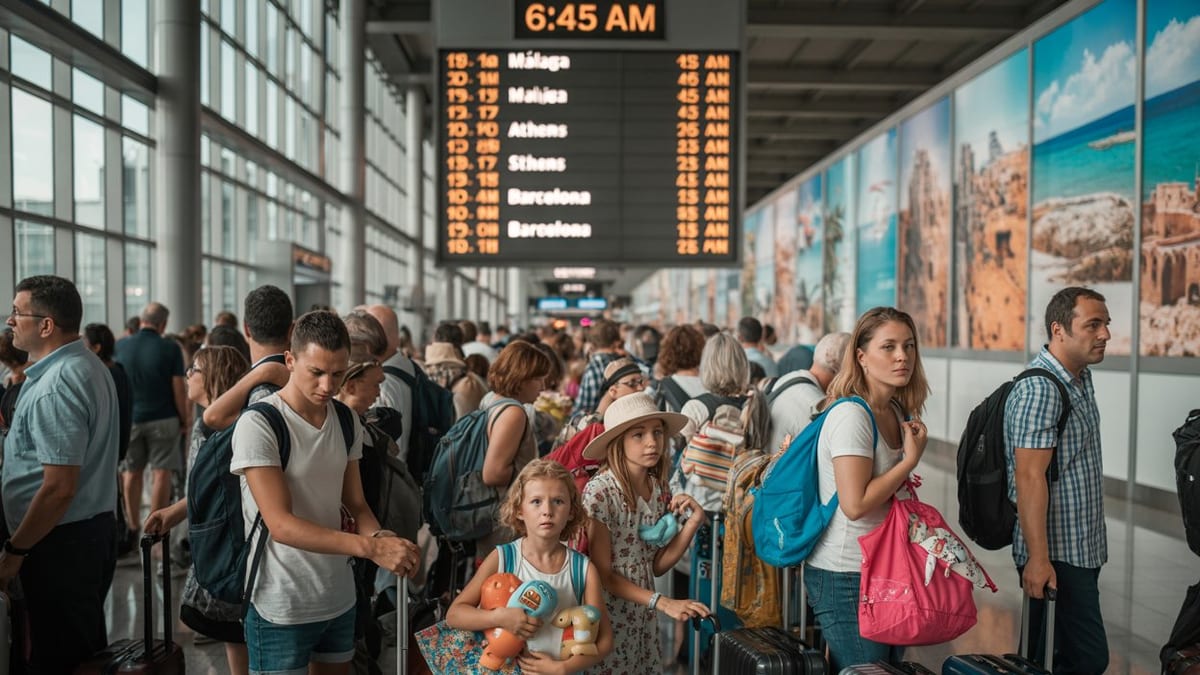
Image by Travel And Tour World
Regional Tensions Spill Into Jordan’s Main Gateway
The disruptions at Queen Alia International Airport come against the backdrop of weeks of instability across Middle East airspace, where a series of military escalations has led to repeated closures and restrictions in several countries. Publicly available aviation and advisory notices in March highlighted how airspace closures and missile overflight risks affected nations including Jordan, Iraq, Israel and parts of the Gulf, triggering thousands of cancellations and schedule changes across the region.
While Jordan’s airspace has reopened to commercial traffic after earlier precautionary closures, the knock-on effect of rerouted and rescheduled flights continues to place heavy pressure on Amman’s hub. Airlines are still juggling altered routings that skirt conflict areas and constrained air corridors, leaving limited flexibility when weather, congestion or operational issues arise on a given day.
Today’s pattern of seven cancellations and 29 delays at Queen Alia reflects that fragile equilibrium. Even when the airport itself is operational, crews, aircraft and flight plans remain tightly stretched across the wider Middle East network, making day-of-operation disruptions more likely and more difficult to absorb.
Jordan’s position as a key transit point between Europe, the Gulf and the wider Levant means that any instability in surrounding airspace can quickly ripple into Amman, turning what might elsewhere be a manageable delay into a larger wave of missed connections and stranded passengers.
Flag Carrier Royal Jordanian Among Hardest Hit
Royal Jordanian, based at Queen Alia International Airport, appears to be among the most affected airlines in today’s disruption. Flight status boards and tracking data show multiple Royal Jordanian departures and arrivals subject to extended delays, with at least one round-trip rotation canceled outright. As the national carrier and primary operator at Amman, any irregular operations on Royal Jordanian’s network are immediately visible to travelers across the terminal.
The airline has already spent much of March adjusting schedules around regional restrictions, including rerouting flights to avoid closed or partially closed airspace nearby. Published coverage earlier in the month described Royal Jordanian services flying further south than usual to circumvent Israeli airspace and other sensitive areas, a measure that lengthens flight times and compresses aircraft utilization. When those stretched resources meet busy weekend traffic, recovery options narrow quickly.
For passengers booked on Royal Jordanian today, the impact ranges from relatively short pushback delays to missed onward connections in Amman and other hubs. Travelers holding multi-sector itineraries, particularly those connecting to Europe, North America or the Gulf, face the greatest uncertainty when a single delayed sector causes the rest of the journey to unravel.
The carrier has been directing passengers to monitor flight status through official channels and to remain in contact with travel agents or booking platforms for rebooking options, but high call volumes and limited seat availability across the region mean that many travelers are still waiting in terminals or hotels for clarity on new plans.
Gulf and Turkish Carriers Also Affected
Operations for Qatar Airways, Emirates, flydubai and Turkish Airlines have also been disrupted by the same web of regional constraints that is now manifesting in Amman. Over recent weeks, published information has indicated periods of suspended or heavily reduced services for several major Gulf carriers amid airspace closures, along with large numbers of reroutings and cancellations as airlines restructured their networks.
Although most of these carriers have gradually restored limited operations on key trunk routes, schedules remain fragile. With many flights now operating along more southerly or circuitous paths, turnaround times and crew rotations have been squeezed across hubs including Doha, Dubai and Istanbul. That fragility is visible today in Queen Alia’s departure hall, where delays for inbound and outbound services operated by Qatar Airways, Emirates, flydubai and Turkish Airlines are contributing to longer queues at check-in, transfer desks and security screening.
For some passengers, the disruption in Amman is the continuation of a longer travel ordeal that began days earlier in other regional hubs. Travelers who had already been rebooked from canceled flights via Doha or Dubai onto itineraries involving Amman are now encountering additional delays or cancellations at Queen Alia, effectively compounding the impact of the wider Middle East network shock.
Low-cost and regional carriers operating into Amman are not entirely spared either. Even when their own routes remain technically open, they depend heavily on shared airspace corridors, regional traffic management decisions and slot availability at congested hubs, all of which remain under stress.
Passengers Face Long Waits, Reroutings And Uncertain Timelines
Across Queen Alia International Airport today, the practical consequences for travelers are long queues, extended waits at boarding gates and increasing demand for last-minute hotel rooms and alternative itineraries. Social media posts and traveler forums from March describe similar experiences elsewhere in the region, with passengers reporting repeated cancellations, abrupt schedule changes and difficulties securing timely assistance during peak disruption periods.
In Amman, many of the stranded passengers appear to be transit travelers attempting to connect between Europe, North America, the Gulf and destinations across the Levant and North Africa. When a single sector is canceled or significantly delayed, onward flights may depart without them, leaving travelers to battle for limited spare seats on later services in a market where many flights are already close to full.
Rebooking options are further constrained by the uneven pattern of recovery across different airlines. Reports indicate that some carriers, notably those with more robust hub operations or less exposure to the most restricted airspace, have been able to restore relatively stable schedules, while others remain heavily curtailed. This creates an imbalance in available capacity, raising fares on still-operating routes and leaving fewer affordable alternatives for stranded travelers.
Travelers with flexible tickets or comprehensive travel insurance may have more room to maneuver, but many are working within the confines of nonrefundable bookings, limited vacation windows or urgent family and business commitments. For them, the combination of uncertainty and the potential cost of last-minute alternatives adds a significant emotional and financial burden to an already stressful situation.
Advice For Upcoming Travelers To And Through Amman
For travelers planning to use Amman’s Queen Alia International Airport in the coming days, publicly available guidance from airlines, aviation authorities and travel advisories points to a few consistent recommendations. The first is to monitor flight status closely through official airline channels and trusted flight-tracking tools, starting several days before departure and continuing up to the time of travel. Schedules have been subject to late changes throughout March, and day-of-departure checks are particularly important.
Passengers are also encouraged to allow significantly longer connection times when itineraries involve multiple stops in the region. What might normally be a comfortable transit window can quickly become too tight amid cascading delays, so travelers with the option to select longer layovers may reduce their risk of misconnecting in Amman or other hubs.
Travel insurance that explicitly covers disruption caused by airspace closures or geopolitical events may offer some protection for additional accommodation, meals or rebooking costs, although coverage varies widely by policy. Given the evolving situation, prospective travelers are reviewing policy terms closely before departure and keeping documentation such as boarding passes, delay notices and receipts, in case claims are necessary later.
Finally, industry observers note that the situation around regional airspace remains fluid. While today’s disruption at Queen Alia International Airport reflects a snapshot in time on March 29, the continuing interplay of security assessments, diplomatic developments and airline scheduling decisions means that conditions can change rapidly. Travelers heading to or through Amman are advised to remain prepared for adjustments, even as airlines and airport operators work to stabilize operations and reduce the likelihood of another day marked by mass cancellations and delays.