

More news on this day
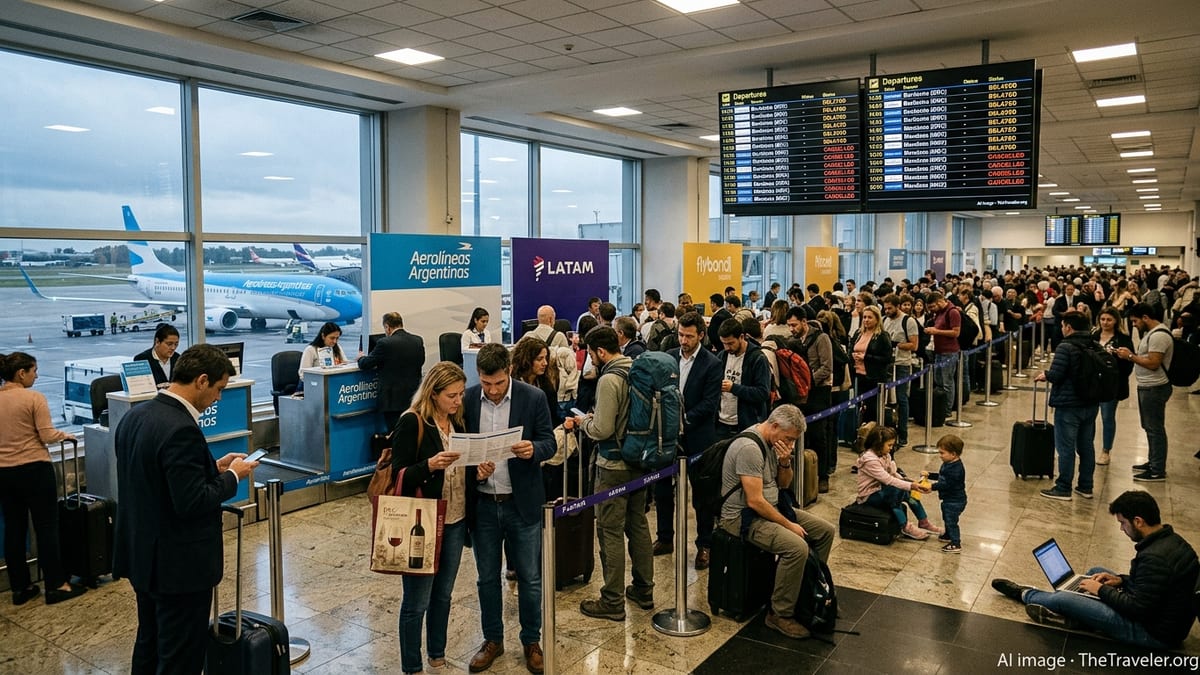
Air travel across Argentina experienced fresh disruption as Aerolineas Argentinas, LATAM, and Flybondi reported 31 delays and 24 cancellations affecting key hubs in Buenos Aires, Bariloche, and Mendoza, stranding domestic and international travelers and forcing last minute changes to holiday and business itineraries.
Get the latest news straight to your inbox!
Disruptions Hit Argentina’s Main Tourist and Transit Hubs
The latest round of operational disruption has concentrated on Argentina’s busiest aviation corridors, with flights into and out of Buenos Aires, the gateway for most international arrivals, bearing the brunt. Reports indicate that services connecting the capital with major leisure destinations such as San Carlos de Bariloche in Patagonia and the wine region of Mendoza have been particularly affected.
According to publicly available flight tracking and airport data, a combined total of 31 delayed departures and arrivals, along with 24 outright cancellations, impacted travelers over a compressed period. The majority involved domestic routes, but knock on effects were felt by passengers with onward international connections, especially those attempting same day transfers between Buenos Aires’ Ezeiza and Aeroparque airports.
The disruption comes during a period of sustained demand for internal flights in Argentina, as both local and foreign travelers rely heavily on air links to cover the country’s large distances. Seasonal flows into Bariloche for outdoor activities and into Mendoza for vineyard tourism have amplified the impact of any schedule instability, with even a modest number of cancellations quickly filling alternative flights.
Travel forums and social media posts from recent days describe long queues at check in counters, rebooking desks under pressure, and passengers scrambling to secure last seat availability on competitors when their original services were pulled from the schedule.
Aerolineas Argentinas, LATAM, and Flybondi Under Pressure
Aerolineas Argentinas, the national flag carrier and the largest operator on domestic routes, has faced a combination of schedule changes, congestion, and knock on delays in recent months, according to published coverage and traveler accounts. The current wave of disruptions again highlights how quickly issues at Buenos Aires can cascade into regional airports such as Bariloche and Mendoza.
LATAM, which connects Argentina to a broader South American network, has also reported irregular operations affecting some domestic and regional services. Publicly available information from previous operational updates shows the group periodically adjusting timetables and advising passengers to monitor their booking status closely when labor or operational pressures are expected.
Flybondi, the ultra low cost carrier that has expanded rapidly on domestic routes, is once more in the spotlight. Open data and consumer reports describe a history of frequent delays, extended tarmac waits, and cancellations, which have already resulted in regulatory scrutiny and fines in previous years. The latest cancellations in and out of Buenos Aires, Bariloche, and Mendoza are reinforcing perceptions among many travelers that itineraries involving Flybondi require extra margin for disruption.
Recent online testimonies from passengers in Argentina refer to missed connections, overnight airport stays, and last minute purchases of new tickets on competing airlines after Flybondi cancellations. While some customers report problem free journeys, the variability of experience is shaping traveler expectations and risk calculations, particularly for those with tight onward connections.
Weather, Staffing, and Operational Complexity Behind the Chaos
While no single cause has been identified for the cluster of 31 delays and 24 cancellations, the pattern aligns with a mix of factors that have been affecting Argentina’s domestic aviation sector. Seasonal weather in the Andes and Patagonia, including high winds, low visibility, and sudden storms, regularly disrupts operations at Bariloche and can affect Mendoza as well, forcing holding patterns or diversions that reverberate through the network.
In parallel, the reliance on tight turnarounds in a cost sensitive market leaves little room for recovery when one flight is delayed. Aircraft and crew scheduled to operate multiple legs between Buenos Aires, Bariloche, and Mendoza on the same day can quickly run into duty time limits and positioning problems once an early service is held on the ground.
Publicly available industry analyses have also pointed to broader staffing and infrastructure constraints in Argentine aviation. These range from pressure on air traffic control and ground handling resources to the limitations of airport facilities that are operating close to capacity at peak times. When airlines try to add more frequencies to meet tourism demand without a proportional expansion of supporting infrastructure, any spike in disruption tends to produce more visible chaos for passengers.
Regulatory requirements around passenger rights and minimum service standards add another layer of complexity. Airlines facing irregular operations must balance the need to maintain as much of the schedule as possible with obligations to re accommodate affected travelers, provide refunds, or arrange alternative transport options when flights are severely delayed or cancelled.
Travelers Scramble for Alternatives Between Buenos Aires, Bariloche, and Mendoza
As cancellations mounted, many passengers turned to same day or next day alternatives on rival carriers. Flight search data and anecdotal reports suggest that seats on Aerolineas Argentinas and LATAM departures from Buenos Aires to Bariloche and Mendoza tightened quickly, driving some travelers to accept less convenient itineraries or additional stops to reach their destinations.
Others shifted to entirely different modes of transport. Long distance buses remain a fallback for those needing to move between major cities when flights fail, although journey times from Buenos Aires to either Bariloche or Mendoza can stretch well beyond 12 hours. For some international visitors with limited vacation windows, such options are often impractical, prompting changes to hotel bookings and, in some cases, the abandonment of planned side trips.
Public commentary from travelers indicates that those with separate tickets, particularly on low cost carriers, faced the highest risk. When delays on one airline led to missed onward flights on another, passengers often found themselves purchasing replacement tickets at late booking prices. In contrast, those holding through tickets on a single airline or alliance had somewhat greater access to rebooking options within the same network.
The latest wave of disruption is also prompting renewed discussion within traveler communities about planning buffers in Argentina. Advice shared in online forums increasingly emphasizes leaving at least a full day between domestic flights and long haul departures, especially when travel involves Flybondi or multiple domestic legs through Buenos Aires.
What the Disruptions Mean for Upcoming Trips
For travelers with imminent plans to fly between Buenos Aires, Bariloche, and Mendoza, the recent disruptions serve as a warning to build in extra resilience. Publicly accessible data on airline performance and user generated reviews consistently show variability in on time performance across carriers and routes, with low cost operators frequently exhibiting the widest swings.
Travel planning resources recommend monitoring flight status closely in the 24 to 48 hours before departure and ensuring that airlines have up to date contact details to send notifications of schedule changes. Passengers concerned about potential cancellations increasingly favor fully flexible or semi flexible fares on key segments, even at higher prices, to preserve the ability to adjust plans without incurring substantial penalties.
Industry observers note that with domestic tourism remaining robust and airline capacity still catching up after previous downturns, pressure on Argentina’s internal routes is unlikely to ease in the short term. Until structural improvements in infrastructure, staffing, and operational resilience take hold, clusters of delays and cancellations like the current episode are expected to recur, particularly during peak seasons and adverse weather windows.
For now, travelers heading to Patagonia’s lakes, Andean vineyards, or city breaks in Buenos Aires are advised by widely shared guidance to treat internal flights as potential pressure points in their itineraries. Choosing carriers with stronger on time records where possible, allowing for missed connections, and securing comprehensive travel insurance are emerging as common strategies to mitigate the impact of sudden delays and cancellations across Argentina’s skies.