

More news on this day
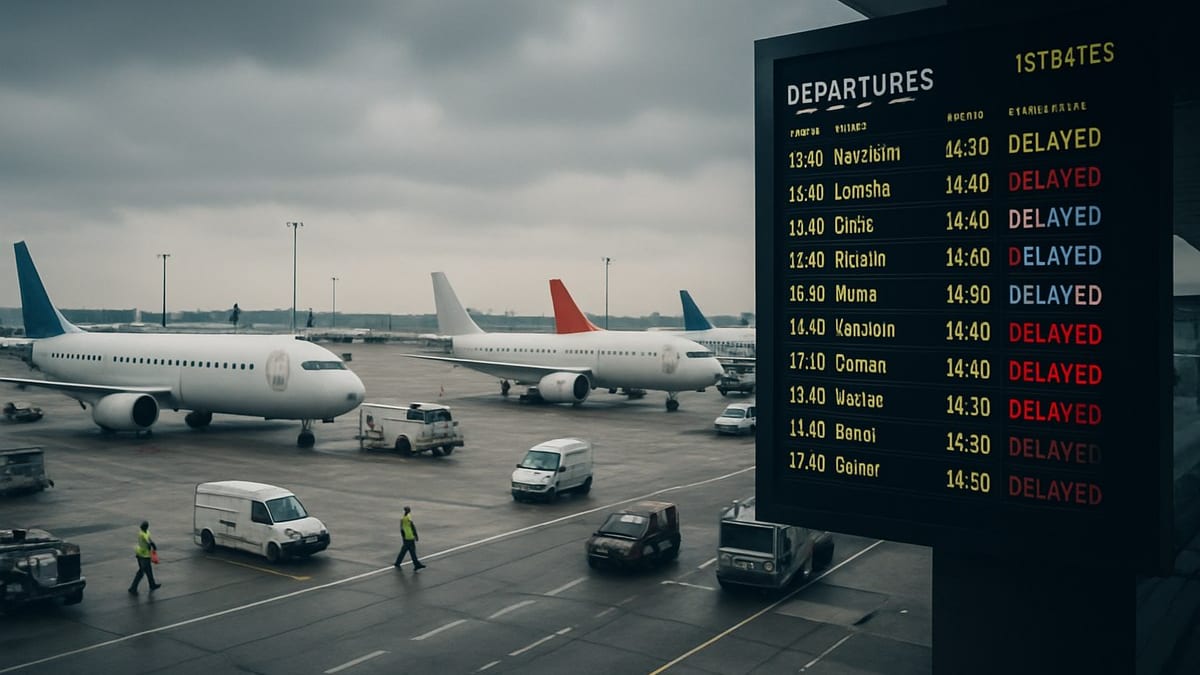
Hartsfield-Jackson Atlanta International Airport is facing another day of severe disruption as 73 flight cancellations and more than 300 delays snarl operations at the world’s busiest passenger hub, complicating travel plans across the United States and beyond.
Get the latest news straight to your inbox!
Fresh Disruptions at the World’s Busiest Hub
Publicly available data from flight-tracking services on April 7 indicate that Atlanta’s primary airport has recorded 73 canceled departures and arrivals, alongside roughly 300 to 330 delayed flights. The disruptions involve a mix of domestic and international routes, affecting connections across major U.S. cities and several European gateways.
Reporting from industry-focused outlets describes the cancellations as concentrated among large network carriers and their partners, including Delta Air Lines, American Airlines, Southwest Airlines, and select transatlantic operators serving Atlanta. Published coverage notes that the current round of disruption follows weeks of elevated delay volumes at major U.S. hubs during the busy spring and Easter travel period.
Travel and aviation reports frame the 73 cancellations in Atlanta as part of a broader national pattern, with thousands of flights delayed or canceled nationwide in recent days. However, the scale of Atlanta’s connecting traffic means relatively modest cancellation counts can still produce outsized knock-on effects for travelers.
Tracking platforms and recent operational tallies suggest that even when Atlanta avoids the highest national cancellation totals, the airport’s role as a central hub frequently turns local slowdowns into widespread missed connections, rolling delays, and extended crew and aircraft repositioning challenges.
Weather, Demand, and Staffing Create a Volatile Mix
Recent coverage links the Atlanta disruptions to a combination of unsettled spring weather systems, continued high passenger demand, and lingering staffing strains across parts of the aviation ecosystem. Thunderstorms, periods of low visibility, and heavy rain in the Southeast have prompted ground delay programs and temporary ground stops at various points in recent weeks, periodically constraining arrivals and departures at Hartsfield-Jackson.
Reports from late March and the Easter weekend describe storms sweeping through several major hubs, with Dallas, Chicago, Houston, and Atlanta all cited among airports experiencing elevated levels of delays and cancellations. In that context, today’s 73 cancellations in Atlanta are viewed as another flare-up in an already stressed operating environment rather than an isolated incident.
Airline and airport statements in prior disruptions this season have generally pointed to the compounding effect of weather-related pauses, air traffic control flow restrictions, and tight staffing at both airlines and security checkpoints. Publicly available advisories describe how a short ground stop or a burst of thunderstorms can quickly lead to aircraft and crews being out of position, leaving carriers struggling to restore normal schedules even after skies clear.
Industry data from recent years also show that Hartsfield-Jackson, as the country’s busiest passenger airport, routinely handles such high volumes that relatively small percentage increases in delays can translate into very large numbers of affected passengers. Analysts note that this dynamic appears to be repeating in the latest episode of flight chaos.
Ripple Effects Across Domestic and International Networks
The current disruption in Atlanta is sending ripples across airline networks, with routes to and from key cities including New York, Chicago, Miami, Orlando, and multiple European destinations among those cited in published coverage. As cancellations and long delays stack up at the hub, travelers find onward connections increasingly difficult to secure, particularly on already busy post-holiday and business travel days.
Travel news reports indicate that carriers with a significant presence in Atlanta, especially Delta and its international partners, are bearing a substantial share of the operational burden. With the airport functioning as a central connecting node, a cancellation in Atlanta often translates into a broken itinerary for passengers starting their journeys in smaller markets who rely on the hub to reach other domestic or overseas destinations.
Network analysts quoted in aviation coverage have repeatedly highlighted how disruption at Atlanta can have a disproportionate national impact. When aircraft and crews are tied up or out of position at the hub, the resulting schedule reshuffles can prompt secondary delays at spoke airports that otherwise are not experiencing any local weather or infrastructure issues.
As rolling delays build, publicly available flight logs show that some aircraft remain on the ground for extended periods awaiting slots, gates, or crew clearances. Those ground holds in turn reduce flexibility for airlines to recover quickly from earlier cancellations, prolonging the period of instability for travelers.
Passenger Experience: Long Lines, Tight Connections, Limited Options
Recent reporting on conditions inside Hartsfield-Jackson describes a familiar pattern for many passengers: long security lines at peak times, crowded concourses, and anxious waits at departure gates as delay estimates shift throughout the day. Earlier weeks saw reports of security queues stretching beyond an hour at the main checkpoint, along with extended waits at the north checkpoint, amplifying the stress of already disrupted flight schedules.
Social media posts and traveler accounts compiled by local and national outlets portray travelers facing missed connections, unexpected overnight stays, and repeated rebookings. Some report being moved across multiple flights in a single day as airlines attempt to consolidate lightly loaded services and prioritize aircraft for routes with the greatest operational importance or passenger volume.
In response to similar disruptions in recent weeks, major carriers have occasionally issued travel waivers for Atlanta-bound customers, allowing them to rebook without change fees within set date windows. While no uniform waiver policy has been reported for today’s specific event, past advisories underscore how frequently carriers must resort to flexible booking measures when disruption at the hub escalates.
Consumer advocates quoted in prior coverage have urged travelers using Atlanta to build in longer connection times when severe weather is forecast and to monitor airline apps closely for seat availability and rebooking options. The latest round of cancellations and delays reinforces that guidance, particularly during busy holiday and business travel periods when spare seats are limited.
Why Atlanta Keeps Appearing in Disruption Headlines
Data from recent disruption reports consistently place Hartsfield-Jackson near the top of national rankings for delayed flights during major weather or holiday events. Even when other hubs register higher outright cancellation counts on a given day, Atlanta often logs substantial delay totals due to its central role in domestic and international networks.
Aviation analysts note that the airport’s scale and connectivity are double-edged: the same traits that make Atlanta a powerful hub for efficient, one-stop itineraries also make it highly sensitive to any loss of capacity. When storms, staffing issues, or air traffic flow programs reduce runway or gate throughput, the hub structure magnifies the effect on passengers.
Recent national disruption tallies highlight that Atlanta’s congestion frequently coincides with strain at other large hubs, creating fewer opportunities for airlines to reroute passengers away from the worst-affected airports. This limited flexibility means that a cluster of 73 cancellations in Atlanta can contribute to broader network instability, especially when layered onto preexisting delays from earlier in the week.
With spring storm season intensifying and summer travel demand looming, today’s wave of disruptions at Hartsfield-Jackson underscores ongoing concerns about the resilience of U.S. air travel infrastructure. Industry observers suggest that without additional buffer in staffing, aircraft availability, and air traffic capacity, the country’s busiest hub is likely to remain a focal point whenever adverse weather or operational challenges arise.