

More news on this day
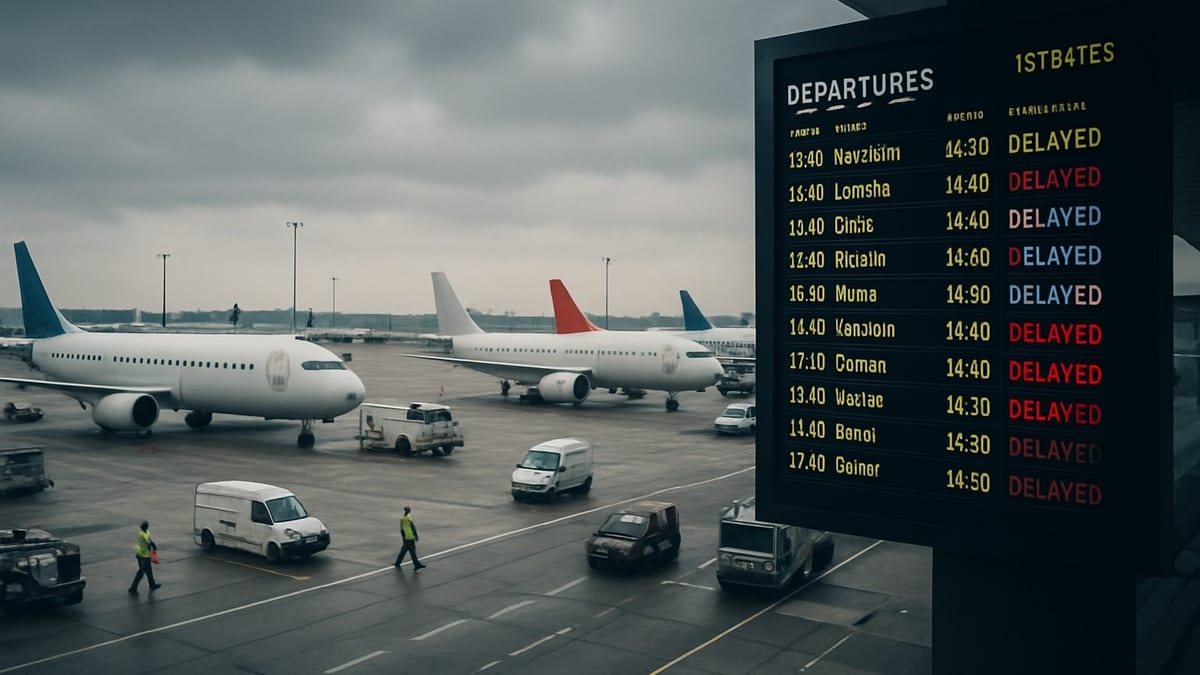
Hartsfield-Jackson Atlanta International Airport is grappling with another day of flight turmoil, as 73 cancellations and more than 300 delays ripple through one of the world’s busiest hubs and disrupt connections across the United States and overseas.
Get the latest news straight to your inbox!
Fresh Wave of Cancellations Hits Key Atlanta Hub
Newly compiled flight-tracking data for April 7 indicates that airlines operating at Hartsfield-Jackson have canceled 73 services and delayed more than 320, affecting routes throughout the domestic network as well as transatlantic links. Publicly available information points to Delta Air Lines and several partner and competitor carriers, including Air France, Southwest and American, among those adjusting schedules at short notice as operations tighten at the Atlanta hub.
The latest figures follow a similar pattern of disruption reported over recent days at Atlanta, with an earlier count of 76 cancellations and close to 300 delays on April 6. Reports from aviation-focused outlets note that recurring spring thunderstorms, heavy holiday demand and network congestion have combined to keep pressure on flight schedules, even when the city itself is not experiencing extreme conditions.
While Sunday’s nationwide travel picture shows dozens of airports affected, Atlanta’s role as a primary connecting hub for Delta and a major transit point for other carriers magnifies the impact of every scrapped or late flight. A canceled departure in Atlanta can quickly translate into missed onward connections in cities such as New York, Chicago, Miami and Orlando, multiplying disruption for travelers far beyond Georgia.
Weather, Holiday Crowds and Network Strains Collide
Industry coverage of the broader Easter-period travel rush highlights how volatile spring weather and peak passenger volumes have strained U.S. air travel. Over the long holiday weekend, data compiled from nationwide operations shows thousands of delays and well over 2,000 flight cancellations across the country, including at major hubs in Dallas, Chicago and Houston alongside Atlanta.
In Atlanta, reports from regional broadcasters and national outlets throughout March and early April have documented repeated weather-related interruptions. A series of storms in early March produced hundreds of cancellations and lengthy ground stops at Hartsfield-Jackson, while a severe ice event in late January led to nearly 1,200 flight cancellations in a single day and lingering schedule instability into the following week.
These episodes have left airlines operating with limited recovery time between disruptions. Analysts note that when aircraft and crews are already out of position from prior storms, even moderate weather or airspace restrictions can trigger a new round of last-minute cancellations. The 73 flight cancellations logged in Atlanta today appear to fit into that broader pattern of knock-on effects rather than a single, isolated incident.
Staffing Shortages Add to Operational Headwinds
Beyond the weather, operational and staffing constraints remain a critical factor behind Atlanta’s ongoing flight chaos. Aviation trade coverage of recent congressional hearings points to persistent air traffic controller shortfalls across the United States, with facilities that manage traffic into and out of Atlanta reported at staffing levels notably below targeted thresholds. That environment leaves less flexibility to absorb surges in traffic or to reroute flights around storm cells without causing broader schedule disruptions.
Inside the terminal, travelers over recent weeks have described long lines at security checkpoints and crowded gate areas as daily throughput climbs. Local media in Georgia have reported TSA wait times stretching past an hour at the main checkpoint on busy days, with airlines issuing travel advisories and temporary waivers to allow passengers to shift flights when possible. When security bottlenecks intersect with already fragile flight schedules, late-arriving passengers can miss boarding windows, leading to rebookings that further strain seat availability on remaining flights.
Observers note that staffing challenges extend to ground handling, maintenance and customer service jobs that keep a complex hub running smoothly. During earlier weather events this year, airlines at Hartsfield-Jackson cited slowed de-icing operations, limited gate availability and longer turnaround times as factors contributing to waves of cancellations. The 73 cancellations registered today arrive against that backdrop of tight staffing and elevated demand, where even minor delays can cascade into larger operational problems.
Ripple Effects for Domestic and International Travelers
The latest disruption in Atlanta is being felt well beyond the city’s perimeter. Flight-status snapshots for April 7 show affected services spanning key domestic routes, including connections to New York, Chicago and Florida destinations, as well as long-haul services linking Atlanta with European cities. With Delta using Atlanta as its principal hub and European partners such as Air France also operating key transatlantic links from the airport, any cut in daily frequencies can quickly reverberate across entire route networks.
Travel-industry coverage indicates that hundreds of passengers are facing missed connections, extended layovers and, in some cases, overnight stays as they wait for available rebookings. When disruptions stack across multiple days, as they have this week, seats on later flights become increasingly scarce, limiting options for travelers hoping to make up lost time. Those on complex itineraries involving regional feeder flights into Atlanta are particularly vulnerable, as a single cancellation at the hub can derail several linked segments.
For airlines, the operational and financial toll mounts with each new round of cancellations. Carriers must reposition aircraft, adjust crew schedules and provide accommodation or alternative transport in some cases, all while managing higher fuel and staffing costs. The situation in Atlanta illustrates how one constrained hub experiencing 73 cancellations in a single day can create outsized consequences across domestic and international travel patterns.
What Today’s Chaos Signals for Spring and Summer Travel
Today’s wave of cancellations at Hartsfield-Jackson underscores a warning sign for the fast-approaching summer peak. Recent analyses from aviation data providers show that flight cancellations across major U.S. hubs have risen significantly year-on-year, with Atlanta frequently appearing near the top of disruption rankings whenever severe weather sweeps across the Southeast.
As airlines plan schedules for late spring and summer, industry observers suggest that hubs like Atlanta may continue to experience pressure whenever storms intersect with heavy travel days. With air traffic control staffing still rebuilding, airport security resources stretched and carriers operating tight timetables, there is limited slack in the system to absorb shocks. The 73 cancellations at Hartsfield-Jackson today serve as another example of how quickly those vulnerabilities can surface.
For travelers, the evolving pattern in Atlanta points to a season where preparation and flexibility may be essential. Public guidance from travel publications and consumer advocates increasingly encourages passengers using major hubs to build longer connection times, monitor flight status closely and consider early departures on days with forecast storms. While today’s disruption at Hartsfield-Jackson may ease as the week progresses, the episode adds to a growing record of volatile operations at one of the country’s most important aviation hubs.