

More news on this day
Hundreds of passengers were stranded across Argentina on Sunday as a wave of operational disruptions hit Buenos Aires’ Aeroparque Jorge Newbery, Ezeiza International, and San Carlos de Bariloche airports, with reports indicating at least 151 delayed and 11 canceled flights affecting major carriers and key domestic and international routes.
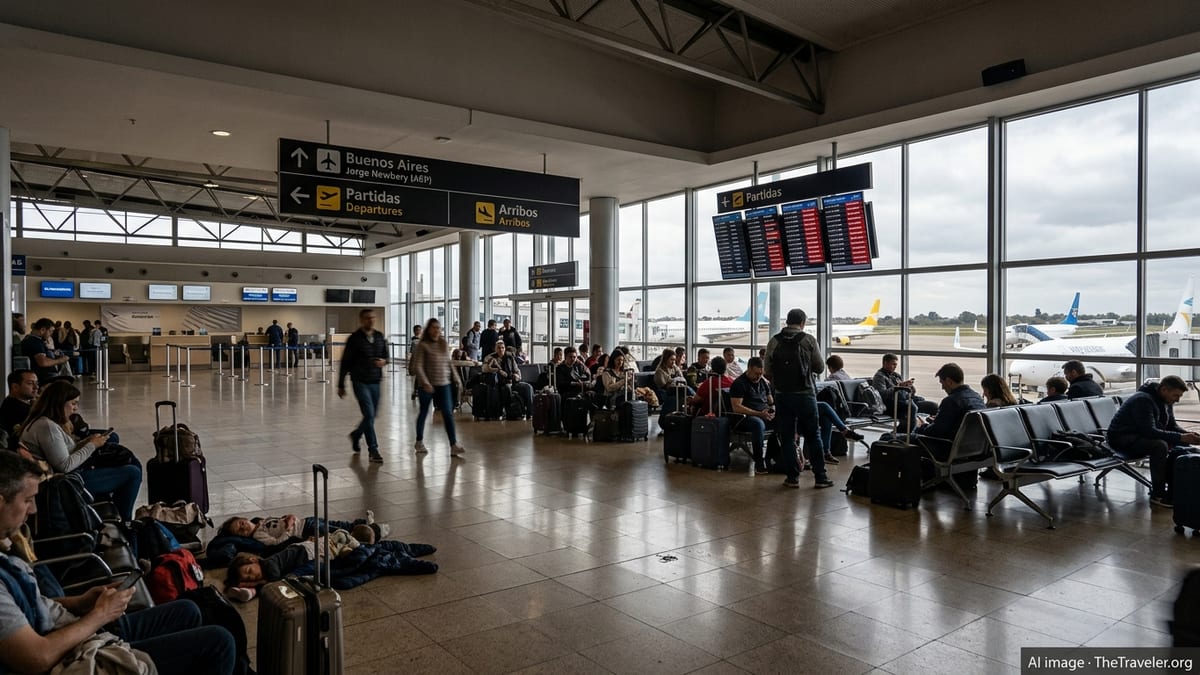
Wide Ripple Effect Across Argentina’s Main Air Hubs
Publicly available airport board data and local coverage indicate that the disruptions began building in the early hours, with knock-on effects throughout the day at Aeroparque Jorge Newbery and Ezeiza International Airport in Buenos Aires, as well as at Bariloche’s Teniente Luis Candelaria Airport. The three airports form a critical backbone for both Argentine domestic connectivity and international traffic to North America and Europe.
The combined total of at least 151 delayed operations and 11 outright cancellations represents a significant share of the day’s scheduled flights at these hubs, leading to crowded terminals, long lines at check-in counters, and rebooking queues. The pattern of delays suggests a cascading effect, where early operational issues quickly translated into missed aircraft rotations and crew schedule complications.
Information available from flight-tracking dashboards shows that delays were not concentrated on a single time band but spread across morning, afternoon, and evening departures and arrivals. The result was a steady accumulation of stranded travelers, including those attempting onward connections to Patagonia, as well as passengers arriving from or heading to long-haul services.
While precise passenger counts are still being tallied, typical load factors on trunk routes between Buenos Aires and major Argentine cities, along with international services, indicate that the disruptions likely affected thousands of travelers in total, with several hundred stuck in terminals for extended periods at any given time.
Key Airlines Impacted: Aerolíneas Argentinas, Flybondi, JetSMART and Others
The day’s irregular operations affected a cross-section of carriers, including flag carrier Aerolíneas Argentinas and low-cost operators Flybondi and JetSMART, which together handle a large portion of Argentina’s domestic market and a growing share of regional traffic. Additional regional and international airlines operating through Ezeiza were also caught in the disruption pattern, particularly those linking Buenos Aires with major North American and European gateways.
According to published schedules and live departure boards, the highest concentration of delays appeared on heavily trafficked domestic routes, such as Buenos Aires to Bariloche and other Patagonia destinations, as well as shuttle-style flights between Aeroparque and cities including Córdoba, Mendoza, and Rosario. For Aerolíneas Argentinas, these routes are central to its role in connecting the capital with the rest of the country, while Flybondi and JetSMART rely on them as core low-cost corridors.
Low-cost operators have drawn scrutiny in recent seasons for operational reliability, and publicly available consumer reports continue to highlight long delays and sudden schedule changes on some services. However, the current wave of disruptions is not limited to a single airline, suggesting broader systemic pressures on Argentina’s aviation network, from aircraft availability and maintenance planning to congestion and staffing at major hubs.
For affected passengers, the practical impact was similar regardless of the carrier: rebooked flights hours or even a full day later, uncertainty around missed connections, and in some cases the need to seek last-minute accommodation or alternative transport within Argentina.
Domestic Links to Patagonia Hit Hard
Bariloche, one of the country’s most important leisure gateways, was among the airports hardest hit. As the main entry point to northern Patagonia’s lake district, Bariloche relies on frequent links to Buenos Aires to support both local tourism and residents’ access to the capital. Delays and cancellations on the Bariloche routes resulted in crowded departure halls and long waits for information as aircraft rotations fell behind schedule.
Publicly accessible airline timetables show that flights between Buenos Aires and Bariloche are typically scheduled in dense banks during peak travel periods, which leaves limited room to absorb extended disruptions. When one rotation fails to depart on time, the same aircraft is often scheduled for subsequent sectors, causing a domino effect that pushes later flights further into delay.
The situation also impacted travelers connecting in Buenos Aires from Bariloche to other Patagonian cities, such as El Calafate, Ushuaia, and Trelew. With many of these routes operating only a few times per day, a missed connection can easily translate into a lost travel day or the need for costly same-day rebooking on alternative carriers, when available.
Tourism operators monitoring the situation noted that such irregularities can have an outsized impact on short itineraries, particularly for international visitors who plan tight schedules around fixed return dates. Even a single missed Bariloche flight can mean lost hotel nights, canceled excursions, and rearranged ground transport in remote areas.
Knock-On Disruptions for North America and Europe Services
Although the majority of delays were registered on domestic and regional flights, the impact quickly spread to international connections at Ezeiza, Argentina’s main long-haul gateway. Travelers connecting from delayed domestic services into transatlantic or transcontinental flights faced tight or missed connections, particularly on routes to major hubs in North America and Europe.
Publicly available flight-tracking data shows that many long-haul departures operate within narrow connection windows tied to domestic feeder flights from Aeroparque and other Argentine cities. When those feeder services run significantly late, passengers can arrive at Ezeiza after check-in or boarding has closed, forcing them to seek rebooking options on already busy long-haul routes.
Some travelers arriving into Buenos Aires on overnight flights from North America and Europe also found their onward domestic connections disrupted. With morning wave departures from both Aeroparque and Bariloche running late or being canceled, passengers who had expected a same-day arrival in Patagonia or other provinces faced extended waits in Buenos Aires or were required to accept next-day rebookings.
In a context where transatlantic and transcontinental seats remain in high demand, even modest disruption at the domestic level can make it harder to secure space on alternative flights, increasing stress and costs for affected passengers and complicating recovery for airlines managing their networks.
Uncertain Outlook and Advice for Travelers
At present, available information points to a confluence of operational challenges rather than a single, clearly defined cause. Factors cited in recent coverage of Argentina’s aviation sector include tight fleet utilization, infrastructure pressures at busy airports, and periodic labor-related slowdowns, all of which can make the system more vulnerable to sudden spikes in disruption.
Given the scale of the latest irregular operations across Aeroparque, Ezeiza, and Bariloche, travelers planning imminent trips through these airports are being encouraged by public advisories and travel forums to build extra buffer time into itineraries, especially when attempting same-day domestic and international connections. Allowing longer layovers between flights can reduce the risk of missed long-haul services when domestic sectors run late.
Published guidance from consumer organizations and travel specialists commonly recommends that passengers verify flight status repeatedly in the 24 hours before departure, use airline apps where available, and keep essential items such as medication, documents, and a change of clothes in carry-on bags in case of extended delays. For those heading to high-demand destinations like Patagonia during peak periods, purchasing flexible fares or travel insurance with disruption coverage can offer additional protection.
While airlines are working to clear backlogs and stabilize schedules, the events of the day highlight the fragility of tightly timed domestic and international connections in Argentina’s aviation system, and underscore the importance for travelers of building resilience into their plans when flying through Buenos Aires and Bariloche.