

More news on this day
Air travel in China faced fresh disruption this week as domestic carriers Tibet Airlines, China Southern Airlines and China Eastern Airlines recorded dozens of cancellations and hundreds of delays across major hubs including Beijing and Guangzhou, stranding passengers and rippling through onward connections across the country.
Get the latest news straight to your inbox!
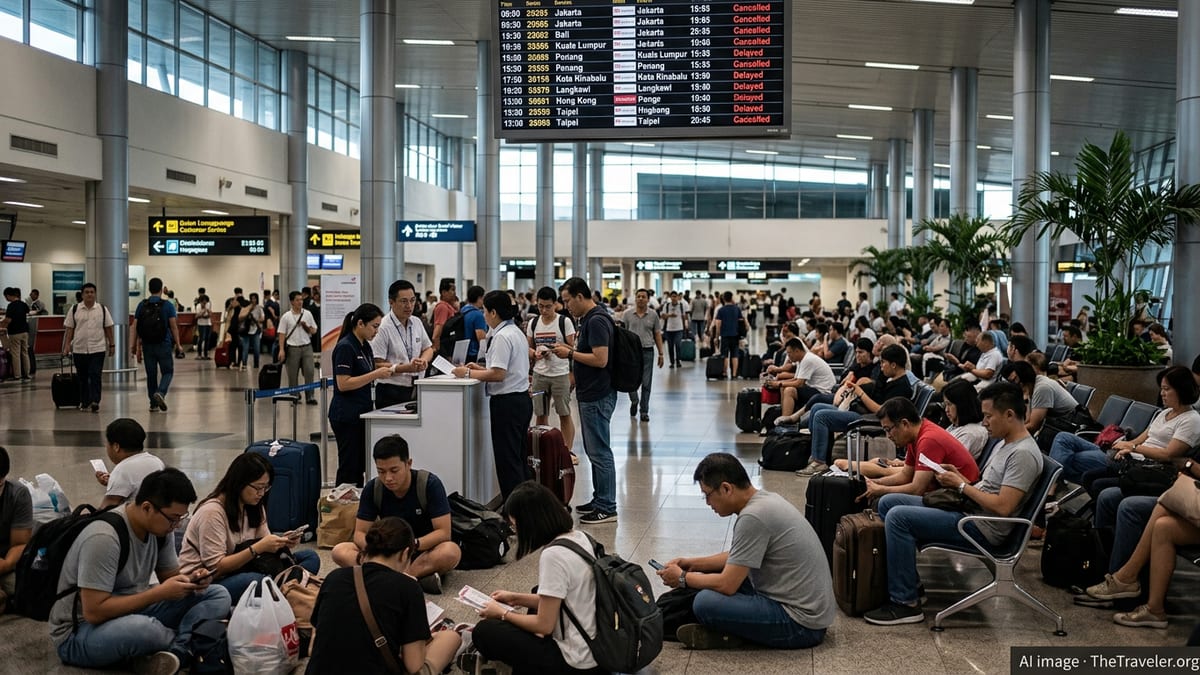
Multiple Carriers, One Difficult Travel Day
Publicly available airline and airport data for early April 2026 indicate that Tibet Airlines, China Southern Airlines and China Eastern Airlines have together accounted for a notable cluster of disrupted services, with reports pointing to 44 flights cancelled and 482 delayed across their combined operations. While these figures represent only a fraction of total daily movements in China’s vast domestic network, they have had an outsized impact on travelers whose itineraries depend on tight connections through key hubs.
China Eastern, listed under the code CES in airline reference material, operates extensive services into Beijing and other northern gateways, while China Southern, widely known by the code CSN, is a dominant presence in southern centers such as Guangzhou and Shenzhen. Tibet Airlines, identified in international registers with the ICAO code TBA, typically runs a smaller network focused on the Tibetan Plateau and interior Chinese cities, but disruptions on its routes can severely limit options in regions with fewer alternative flights.
Travel industry coverage in recent days has already highlighted growing operational strain at several Chinese airports, including Beijing and Guangzhou, where carriers face congestion, shifting schedules and aircraft arriving out of position. These pressures set the backdrop for the latest wave of cancellations and delays that has left passengers attempting to rebook or reroute at short notice.
Although the headline numbers may appear modest in comparison with the thousands of daily departures across China, the concentration of 44 cancellations and 482 delays among a small group of carriers and routes has amplified the sense of disruption, particularly for travelers relying on early April departures to make international connections or reach domestic holiday destinations.
Beijing and Guangzhou Feel the Strain
Beijing’s dual-airport system at Capital and Daxing has been a focal point for disruption. Recent monitoring of China Eastern’s schedules shows cancellations on selected services into the capital, while broader aviation commentary continues to describe chronic congestion in Beijing’s airspace. When flights are removed from the schedule or significantly delayed, knock-on effects include missed connections and overcrowded rebooking desks as travelers seek scarce open seats later in the day.
Further south, Guangzhou Baiyun International Airport, a major base for China Southern, has seen its own share of operational challenges. Aviation analysts and travel-focused publications have described how even a small wave of late-arriving aircraft can cascade into extensive delays for departures, particularly during peak evening banks when domestic and regional flights are tightly sequenced. Passengers connecting through Guangzhou from secondary cities or from international gateways have reported longer-than-expected layovers and uncertainty about boarding times.
The latest cluster of disruptions involving CSN, CES and TBA adds to a pattern observed in recent travel-industry reporting, where China’s busiest hubs periodically experience sharp spikes in delays. On days when weather, airspace constraints and stretched ground resources converge, even flights that ultimately operate can depart hours late, contributing to the 482 delayed services now being cited across the three carriers.
For affected travelers, Beijing and Guangzhou are often only one leg of a longer journey. A cancellation on a domestic feeder flight into the capital or a delay departing Guangzhou can cause missed onward services to other Chinese cities or to destinations in Asia and Europe, leaving passengers to negotiate new routings or overnight stays with carrier representatives.
Secondary Cities and Regional Links Also Disrupted
While the spotlight frequently falls on the big hubs, the current wave of cancellations and delays has also created bottlenecks in secondary cities and regional airports. Tibet Airlines, operating from bases such as Lhasa and Chengdu, serves routes where flight frequencies are lower and road or rail alternatives can be limited. When TBA services are cancelled or heavily delayed, passengers may face long waits for the next available departure, particularly on high-altitude or weather-sensitive routes.
China Eastern and China Southern both run extensive domestic networks that link major hubs to mid-sized cities and tourist destinations. Travel media reports have pointed out that during periods of disruption, these thinner routes are especially vulnerable, as airlines often prioritize restoring high-demand trunk services first. As a result, travelers flying to or from smaller airports may find that cancelled flights are not immediately replaced, stretching the impact of a single operational decision over several days.
Recent analyses of regional traffic patterns in China suggest that when a carrier cancels a round-trip service on a spoke route, crew and aircraft may be left out of position for subsequent rotations. This can extend the ripple effect beyond the initial 44 cancellations, contributing indirectly to the tally of 482 delayed flights recorded across the three airlines. Passengers whose flights still appear as “operating” can nonetheless experience lengthy hold times on the tarmac or repeated schedule revisions.
The disruption has coincided with a period of solid demand for domestic travel, according to aviation-focused outlets that track booking data. Higher load factors make same-day reaccommodation more difficult, especially on leisure-heavy routes where advance sales are strong and spare seats are limited, increasing the likelihood of overnight stays or multi-stop rerouting.
What Travelers Are Experiencing on the Ground
Social media posts and traveler forums describe scenes of crowded departure halls, long lines at check in and service counters, and frequent gate changes at Beijing, Guangzhou and several regional airports. Passengers on TBA, CSN and CES flights report receiving rolling delay notifications, with departure times revised multiple times in a single afternoon as airlines adjust to aircraft availability and air traffic control slots.
Some recent accounts highlight how travelers who built conservative connection times into their itineraries were still caught out when delays stretched to three hours or more. In several cases shared online, domestic flights arriving late into Beijing or Guangzhou left passengers with insufficient time to clear transfer formalities before onward departures closed, even when those onward flights themselves departed behind schedule.
Air travel commentators note that while operational disruptions of this scale are challenging for any airline, the complexity of China’s domestic network can intensify passenger frustration. Hubs like Beijing and Guangzhou handle dense waves of departures to dozens of destinations within short windows. When aircraft rotations are disrupted, options for simple “one-hop” rebooking might quickly disappear, forcing travelers into multi-leg routings or overnight stops that add cost and uncertainty.
At the same time, consumer-focused advice platforms continue to emphasize the importance of monitoring flight status through airline apps and official airport feeds rather than relying exclusively on third-party trackers. During recent disruptions at Chinese hubs, travelers who followed updates directly from China Southern, China Eastern or Tibet Airlines typically received earlier notice of gate changes and revised boarding times.
How Passengers Can Navigate Ongoing Volatility
Given the recent pattern of cancellations and delays across TBA, CSN and CES flights, travel specialists suggest that passengers transiting Beijing, Guangzhou and other busy Chinese hubs in the coming days build additional buffers into their plans. This can include scheduling longer layovers, avoiding tight same-day connections to long haul departures, and considering earlier flights in the day when possible.
For travelers who have not yet departed, publicly available guidance from aviation consumer groups recommends checking the operating carrier’s website or app frequently in the 24 hours before travel. If a flight shows repeated schedule changes or appears as “cancelled,” passengers are generally advised to contact the airline or their booking platform promptly to explore rebooking options before alternative flights fill up.
Those already on the road and facing same-day disruption may find that airport service desks are under heavy pressure when large numbers of flights are delayed. Some trip-planning resources indicate that using telephone hotlines or in-app customer service channels can sometimes lead to faster rebooking, particularly for China Southern and China Eastern, which operate extensive call center and digital support infrastructure.
Industry observers caution that short-term volatility in flight operations can persist even after the most acute disruption has passed, as airlines work through aircraft and crew imbalances. Travelers across China in the near term, especially those flying with Tibet Airlines, China Southern or China Eastern through Beijing and Guangzhou, may therefore wish to treat schedules as subject to change and plan accordingly.