

More news on this day
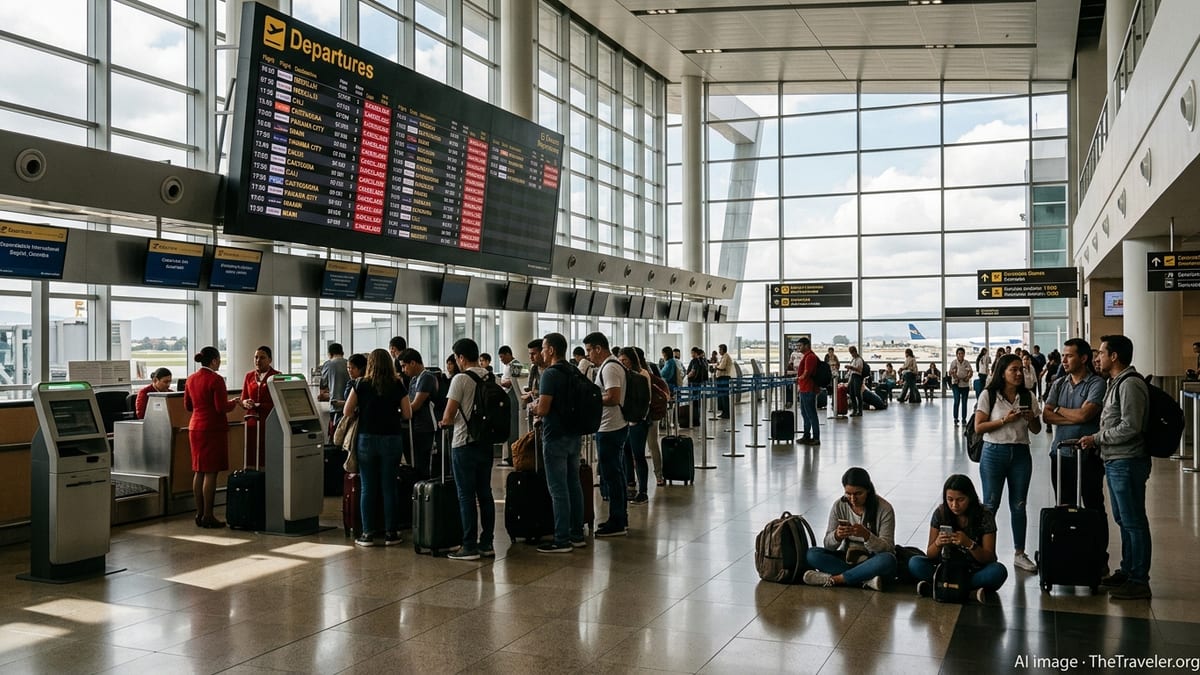
Travelers across Colombia are facing fresh disruption after more than 20 flights operated by Avianca and ARE Airlines were canceled, affecting major hubs including Bogotá, Medellín, Cali and Cartagena, as well as several international connections.
Get the latest news straight to your inbox!
What Is Behind the Latest Wave of Cancellations?
Recent operational adjustments by airlines serving Colombia have resulted in a cluster of short-notice flight cancellations concentrated at the country’s busiest airports. Publicly available information on flight-status boards and schedule trackers shows that more than 20 departures and arrivals operated by Avianca and ARE Airlines were withdrawn over a short window, with knock-on effects for connecting services.
The majority of the affected flights were scheduled through Bogotá’s El Dorado International Airport, the main domestic and international hub in Colombia. Additional disruptions were reported on routes linking Medellín, Cali and Cartagena, along with select international services that rely on Bogotá as a transfer point. While detailed reasons for each canceled flight have not been published in a single statement, patterns typically point to a combination of aircraft availability, crew scheduling constraints and demand-driven timetable changes.
Data compiled from airline timetables and airport information screens indicates that the cancellations are dispersed across both domestic point-to-point services and longer-haul connections. This mix suggests that the disruption is linked less to a single weather or safety incident and more to broader operational recalibration within the networks of Avianca and ARE Airlines.
The episode follows a period of volatility in Colombia’s aviation market, where carriers have been balancing expansion of routes with cost pressures and evolving travel demand. For passengers, the practical result is a higher risk of last-minute schedule changes, particularly on routes funneled through Bogotá and Colombia’s main coastal and regional gateways.
Key Routes and Airports Affected in Colombia
Bogotá has borne the brunt of the latest disruption, reflecting its role as the primary connecting hub. Domestic flights linking the capital with Medellín, Cali and Cartagena have seen a notable share of cancellations, according to airport departure and arrival boards. These routes typically handle strong business and leisure demand, meaning even a small number of withdrawn flights can lead to crowding on remaining services.
In Medellín, disruption has centered on José María Córdova International Airport, which handles most of the city’s commercial traffic. Some affected flights were Bogotá connections, while others linked Medellín directly with Cartagena and other Colombian cities. Travelers attempting to connect onward to international flights via Bogotá have been particularly exposed, as a canceled domestic leg can break the through-journey.
Cali and Cartagena have each reported multiple cancellations tied to Avianca and ARE Airlines schedules. In Cali, these cancellations have mainly impacted business travelers and those connecting from the southwest of the country, while Cartagena’s status as a major tourism hub means holidaymakers and cruise-linked visitors have also faced last-minute adjustments.
Reports from international flight trackers further indicate that certain cross-border services using Colombia as a transit point have been touched by the disruption. When a key domestic feeder flight is removed from the schedule, passengers booked on onward flights to other Latin American or European gateways can find themselves forced into rebooking or overnight stays, even when their long-haul flight itself remains confirmed.
Impact on International Connections and Long-Haul Itineraries
Because Bogotá is a central transfer point for connections between North America, Europe and South America, any tightening of domestic capacity quickly translates into international complications. Published coverage of recent aviation developments in the region notes that carriers have been fine-tuning long-haul schedules and reallocating aircraft, a process that can temporarily reduce flexibility when unexpected issues arise.
The latest cancellations involving Avianca and ARE Airlines have created pressure on itineraries that rely on tight domestic-to-international connections. Travelers originating in Medellín, Cali or Cartagena and connecting in Bogotá for flights to cities such as Madrid, Miami or Mexico City are especially vulnerable when their first leg is withdrawn. Even when airlines offer alternative routings, seating on remaining flights can be limited, increasing the likelihood of significant delays.
Some international routes have also been directly affected where entire services were removed from the timetable rather than just feeder segments. For example, when a Colombia–Europe or Colombia–regional route is canceled outright, passengers often must be rebooked via third-country hubs or on different departure days. This can complicate travel plans that include onward rail or cruise connections, or time-sensitive events such as conferences and tours.
Travel industry analysts highlight that Colombia’s aviation sector has recently experienced rapid changes, including the exit or consolidation of some low-cost competitors and the expansion plans of major carriers. In this context, even short bursts of cancellations serve as a reminder that network resilience remains a work in progress, particularly at peak travel times and on popular tourist corridors.
What Travelers Flying Through Colombia Should Do Now
Given the recent pattern of cancellations, passengers with upcoming travel involving Bogotá, Medellín, Cali or Cartagena are being urged by consumer advocates and travel agents to monitor their bookings closely. Public guidance from airports and airlines stresses the importance of checking flight status on the day of travel and enabling app or email notifications in case of late changes.
Travelers holding tickets on Avianca, ARE Airlines or itineraries that include codeshare segments are encouraged to review fare rules and conditions of carriage to understand their options if a flight is canceled. In many cases, passengers may be eligible for free rebooking on the next available service or, where delays are significant, a refund. Those with separate tickets for onward journeys, such as independently booked international legs or hotels, should pay particular attention to minimum connection times and consider leaving extra buffers.
Travel planners recommend arriving at the airport earlier than usual when flying through Colombia’s main hubs during periods of disruption. Early arrival can improve the chances of being accommodated on alternative flights if a cancellation occurs shortly before departure. It also provides more time to adjust plans if security lines or check-in counters become congested as airlines consolidate passengers from multiple canceled services onto fewer departures.
Passengers who rely on tight connections or have fixed-time commitments may also want to discuss contingency options with their travel providers. This could include flexible date changes, adding an overnight stop in Bogotá, or selecting itineraries that allow more generous layovers between domestic and international segments. Travel insurance policies that cover missed connections and additional accommodation costs can offer an extra layer of protection, provided travelers review coverage limits and claim requirements in advance.
Outlook for Colombian Air Travel in the Coming Weeks
While the current wave of more than 20 cancellations has disrupted travel plans in the short term, schedule data and industry commentary suggest that airlines are working to stabilize operations in Colombia. Network adjustments are common at the end of seasonal periods or following shifts in fleet deployment, and the recent disruption appears to be part of a broader recalibration rather than a complete breakdown in service.
Avianca remains one of Colombia’s primary carriers, with a dense network linking Bogotá to Medellín, Cali, Cartagena and numerous regional cities, as well as onward connections across the Americas and Europe. ARE Airlines, which appears in international airline listings associated with Colombia, continues to operate a much smaller footprint but can play a crucial role on specific routes where alternatives are limited. As both carriers fine-tune their schedules, travelers may see a mix of expanded offerings on some corridors and reduced frequencies on others.
Observers of Colombia’s aviation market point out that the country’s air travel demand has been resilient, fueled by domestic tourism, business travel and the growth of international visitors. This underlying demand provides incentives for airlines to restore reliability quickly after periods of disruption. However, ongoing cost pressures, regional geopolitical uncertainties and aircraft supply constraints mean that sporadic cancellations and timetable shifts are likely to persist.
For now, travelers planning journeys through Bogotá, Medellín, Cali or Cartagena should treat schedules as subject to change and build flexibility into their itineraries wherever possible. Keeping contact details up to date with airlines, monitoring flight status regularly and considering backup plans for critical trips can help mitigate the impact of any further adjustments as Colombia’s carriers navigate this latest phase of operational turbulence.