

More news on this day
Hundreds of travelers in Colombia have faced hours-long waits and missed connections after a wave of 104 flight delays and 32 cancellations hit major airports in Bogotá, Medellín, Bucaramanga, and Cartagena, disrupting operations at carriers Avianca, Viva Air, LATAM, and Wingo and highlighting persistent fragilities in the country’s air travel system.
Get the latest news straight to your inbox!
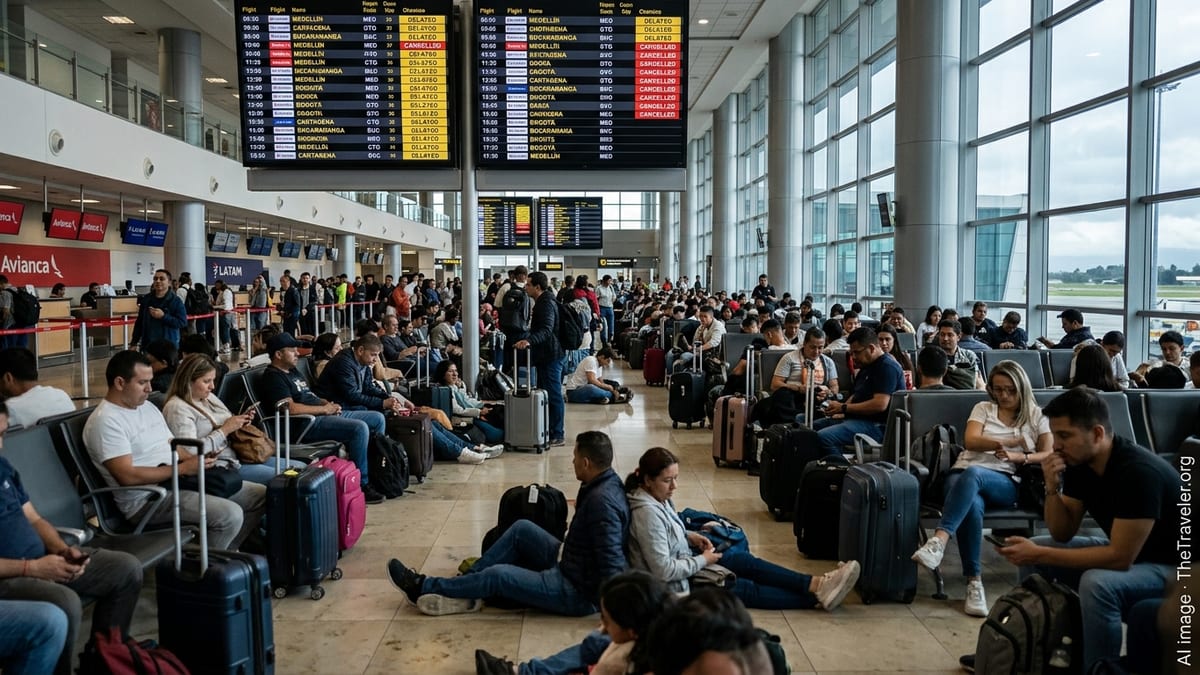
Widespread Disruptions Across Colombia’s Main Air Hubs
The latest wave of delays and cancellations has rippled through some of Colombia’s busiest airports, including Bogotá’s El Dorado, Medellín’s José María Córdova, Cartagena’s Rafael Núñez, and Bucaramanga’s Palonegro. These hubs are critical domestic and regional connectors, handling millions of passengers annually and serving as main bases for Avianca, LATAM Colombia, Wingo, and, until its collapse, ultra-low-cost operator Viva Air.
Reports from monitoring platforms and local media indicate that at least 104 flights experienced significant delays while 32 were canceled outright, leaving passengers stranded in terminals or scrambling to rebook on alternative services. The disruptions have primarily affected domestic routes linking Bogotá with secondary cities such as Medellín, Cartagena, and Bucaramanga, as well as some international connections routed through the capital.
While the precise breakdown by airline varies across different published tallies, Avianca and LATAM Colombia appear to carry a large share of the impacted operations due to their extensive domestic networks and concentration of flights at El Dorado. Wingo, which operates a point-to-point low-cost model, has also been caught up in the turbulence, particularly on leisure-heavy routes to and from Cartagena. For many travelers, the stranded hours have revived memories of the shock collapse of Viva Air in 2023, which left hundreds of thousands of ticket holders facing sudden cancellations.
Operational Strains and Legacy of Viva Air’s Exit
Publicly available information points to a complex mix of factors behind the disruptions, including tight scheduling, operational bottlenecks at congested airports, and the lingering aftershocks of Viva Air’s market exit. When Viva Air suspended flights in February 2023, regulators reported that more than 400,000 passengers were directly affected, and key trunk routes suddenly lost capacity. Since then, larger competitors, particularly Avianca and LATAM, have absorbed aircraft and routes but have struggled at times to keep operations resilient during peak demand or adverse conditions.
Industry data and congressional reports in Colombia have documented how Viva Air’s collapse contributed to a spike in complaints about cancellations and delays, with Avianca, LATAM, and Wingo all facing heightened scrutiny for how they manage rebookings, refunds, and customer communication. Although the current wave of 104 delays and 32 cancellations does not stem from a single abrupt shutdown, it has landed in a sector that many passengers already perceive as fragile and unpredictable.
Analysts say Colombia’s strong post-pandemic rebound in air travel, combined with structural constraints such as limited runway capacity at El Dorado and weather-related disruptions on Andean routes, has left airlines little room for error. Any knock-on issue, whether staffing constraints, maintenance rotations, or airport congestion, can cascade quickly into system-wide delays, particularly on high-frequency domestic corridors like Bogotá–Medellín and Bogotá–Cartagena.
Passenger Impact and Consumer Rights Under Colombian Rules
The disruption has had immediate consequences for travelers, from missed business meetings and family events to forfeited hotel nights and tour bookings. Social media posts and local coverage describe lines snaking through terminal check-in areas and boarding gates as passengers seek explanations, meal vouchers, or rerouting options. Many of those stranded have reported limited real-time updates and challenges securing timely assistance through call centers or digital channels.
Colombian regulations set out specific obligations for airlines when flights are delayed or canceled, especially in cases where the cause lies within the carrier’s control. Guidance published by travel and consumer outlets notes that airlines must generally offer rebooking at no additional cost on the next available flight or refund the ticket value if the passenger chooses not to travel. When delays stretch for several hours, travelers may also be entitled to care measures such as refreshments, communications support, or accommodation, depending on the length and nature of the disruption.
However, the practical experience often diverges from the formal rules. Previous enforcement actions and legal documents from Colombian oversight bodies highlight recurring issues: incomplete or confusing information about passenger rights, slow response to complaints, and disagreements over whether a given delay counts as an extraordinary circumstance beyond the airline’s responsibility. The fresh round of 104 delays and 32 cancellations is likely to generate another wave of claims and test the effectiveness of existing consumer protection frameworks.
Avianca, LATAM, Wingo and the Competitive Landscape After Viva Air
The carriers most closely associated with the latest disruptions are also the principal players in Colombia’s reshaped aviation market. Avianca, one of Latin America’s largest and oldest airlines, dominates traffic at Bogotá and connects the country to major cities across the Americas and Europe. LATAM Colombia, part of the larger LATAM group, has expanded its presence on domestic trunk routes and competes directly with Avianca on key city pairs. Wingo, a low-cost brand that grew out of Copa’s Colombian operation, focuses on budget-conscious travelers on domestic and regional routes.
Viva Air’s collapse removed a major ultra-low-cost competitor from this landscape, and its former routes and aircraft have since been redistributed, in part, among surviving airlines. Regulatory and legislative records show that the episode prompted a review of how competition and consumer rights are managed in Colombia’s aviation sector, including concerns about concentration of market power at El Dorado and the vulnerability of travelers when a single carrier suddenly exits.
In the current disruption, publicly available coverage has pointed to Avianca and LATAM as handling the bulk of affected passengers due to their scale, while Wingo’s smaller network means fewer total flights but potentially higher impact per route when a cancellation occurs. The continued reference to Viva Air in public debate, despite its grounding, underscores how strongly that collapse still shapes perceptions of reliability and choice in Colombia’s skies.
What Travelers Can Do When Flights Are Delayed or Canceled
For passengers caught in the most recent wave of delays and cancellations, understanding available options can make a significant difference. Travel and consumer advisories in Colombia recommend that travelers first document the disruption by keeping boarding passes, taking screenshots of flight status information, and noting any messages received from the airline. This documentation can support later claims for rebooking, refunds, or compensation where applicable.
Specialist travel publications advise that if a disruption is not caused by extraordinary events such as severe weather or airspace closures, travelers may have stronger grounds to seek compensation or at least a no-cost change to another flight. In practice, this often means persistence at the airport counter or through multiple contact channels, as airlines prioritize re-accommodating large numbers of passengers during operational irregularities.
Consumer advocates also encourage passengers to familiarize themselves with airline policies and national regulations before travel, particularly in a market like Colombia’s where rapid growth, past airline failures, and recurring bottlenecks have made disruptions more visible. With 104 delays and 32 cancellations concentrated across four major cities, the latest episode reinforces both the importance of resilient airline operations and the need for clear, enforceable protections when things go wrong.