

More news on this day
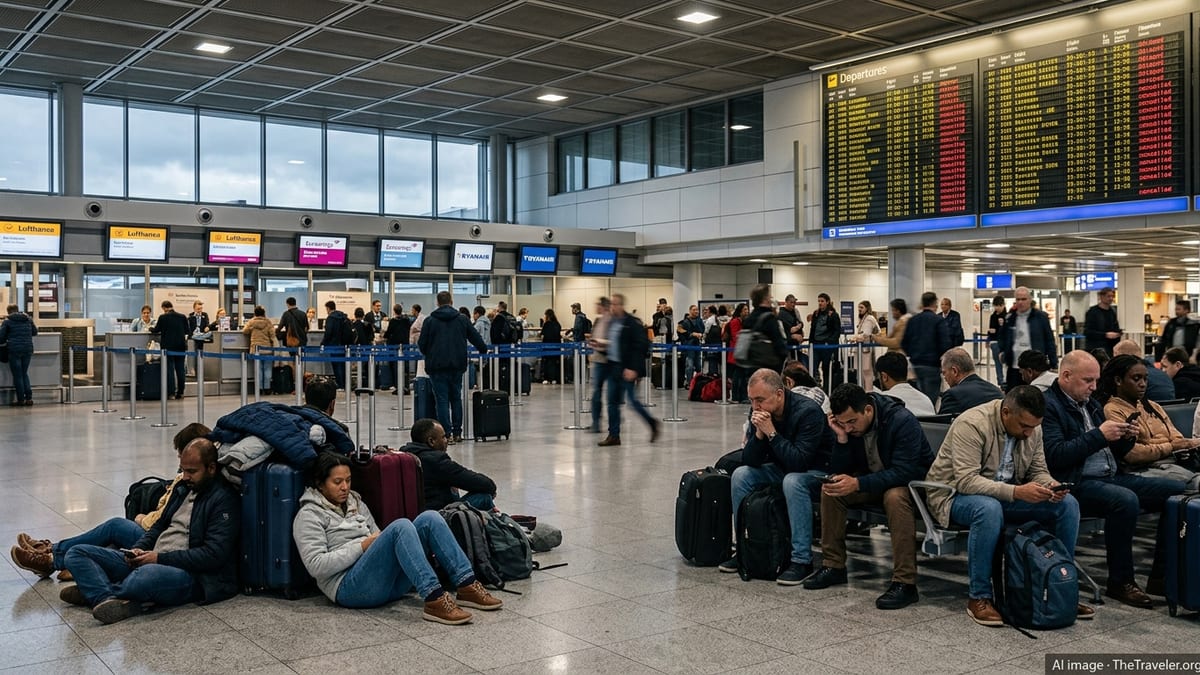
Hundreds of air passengers have been left stranded across Germany as major disruption at Frankfurt and Munich airports led to 344 delayed and at least 11 cancelled flights, snarling operations for Lufthansa, Eurowings, Ryanair and several other carriers.
Get the latest news straight to your inbox!
Major Hubs See Ripple Effects Across Europe
Frankfurt and Munich, Germany’s two busiest international gateways, experienced extensive operational disruption as delays and cancellations spread through tightly packed schedules. Publicly available flight-tracking data showed 344 services running late and at least 11 outright cancellations across German airports, with the heaviest concentration at these two hubs.
The disruption affected a mix of short-haul and long-haul routes, with flights to and from other major European cities facing knock-on delays. As aircraft and crews fell out of position, later rotations also ran behind schedule, magnifying the impact well beyond the original set of affected departures.
Lufthansa, which relies on Frankfurt and Munich as its primary hubs, appeared among the most heavily impacted, alongside Eurowings and low-cost rival Ryanair. Additional regional and international airlines using the same airports as transfer points also experienced schedule disruptions as arrival and departure slots compressed.
Travel analysts frequently note that even relatively short interruptions at slot-constrained airports such as Frankfurt can trigger system-wide ripple effects. When recovery windows are limited, delays on one route quickly cascade onto subsequent flights, leaving passengers far from their intended destinations by the end of the day.
Hundreds of Travellers Stranded Overnight
The scale of the delays left hundreds of travellers facing missed connections, unplanned overnight stays and long waits in terminal buildings. Reports from passengers and publicly shared images from the terminals described crowded departure halls and long queues at service counters as travellers tried to rebook or obtain information about alternative options.
Night-time operating restrictions at many German airports complicated recovery efforts. With strict curfews limiting takeoffs and landings during late hours, airlines had fewer opportunities to operate replacement flights or reposition aircraft, prolonging the disruption into the following morning for some routes.
Stranded passengers reported sleeping on terminal seats, using jackets and luggage as makeshift pillows while waiting for updated departure times. Families with small children and older travellers appeared particularly affected as limited seating and late-night food options in closed concessions made already lengthy waits more difficult.
For some long-haul travellers whose connections through Germany were disrupted, the delays translated into missed onward flights to Asia, North America and the Middle East. Rebooking these complex itineraries often required routing through different hubs the following day, further extending travel times and creating additional pressure on already busy services.
Lufthansa, Eurowings, Ryanair and Others Face Pressure
The disruption placed renewed scrutiny on the resilience of schedules at Europe’s largest airlines. Lufthansa’s heavy dependence on Frankfurt and Munich for connecting traffic meant many of its passengers were vulnerable to knock-on effects once operations started to slip behind. Eurowings, the group’s low-cost subsidiary, also saw disruption on intra-European routes.
Ryanair services touching German airports were similarly affected where aircraft rotations intersected with congested time periods. Although point-to-point carriers can, in some cases, reroute aircraft more flexibly than hub-based airlines, the combination of slot limitations, curfews and crew-hour restrictions limited recovery options.
Publicly available information from prior disruption events at German airports shows that airlines typically respond by consolidating flights, prioritising long-haul services and rebooking short-haul passengers onto later departures where possible. In practice, this can mean certain routes see a higher share of cancellations or severe delays, particularly during off-peak times when spare capacity is limited.
The latest disruption is expected to feed into ongoing debates within Germany and across Europe about staffing levels, infrastructure capacity and schedule planning at major hubs. Industry observers have repeatedly highlighted that sustained high utilisation, combined with periodic strikes, weather events or technical issues, leaves little margin for error.
Knock-On Disruption Beyond Frankfurt and Munich
Although Frankfurt and Munich bore the brunt of the day’s problems, secondary airports across Germany and neighbouring countries experienced follow-on effects. Flights from smaller German cities connecting through these hubs encountered late arrivals or missed onward connections, while some services from other European gateways landed off-schedule as they waited for slots to become available.
For travellers starting their journeys outside Germany, the disruption often became apparent only after they had already departed, with gate or in-flight announcements indicating altered connection plans. In several cases, incoming passengers were rebooked mid-journey onto alternative routes that bypassed Frankfurt or Munich in favour of other European hubs.
Rail operators and intercity coach companies in Germany typically see increased demand during major aviation disruptions, as some passengers opt to complete segments of their journey by land. Early indications suggested higher passenger volumes on key rail corridors linking Frankfurt, Munich and other major cities, mirroring patterns observed during prior large-scale flight interruptions.
The spillover into surface transport highlights how closely linked Germany’s aviation network is with its broader mobility system. When core hubs struggle to maintain schedules, the pressure frequently shifts onto trains, buses and car-rental providers, creating wider travel headaches even for those not directly booked on affected flights.
What Travellers Can Expect in the Coming Days
Operational disruption of this scale rarely resolves immediately, and residual delays are likely to continue while airlines reposition aircraft and crews and work through backlogs of displaced passengers. Travellers booked through Frankfurt or Munich in the short term may continue to see altered departure times, equipment changes or re-routing through alternative hubs.
Publicly available guidance from airlines and airports in similar situations generally advises passengers to monitor their booking status frequently, use digital channels where possible and allow additional time at the airport. Those with tight connections, separate tickets or complex itineraries often face the highest risk of missed onward travel and may wish to seek rebooking options that provide longer buffers.
Consumer-rights information in Europe indicates that passengers affected by extensive delays or cancellations within carriers’ control may be eligible for assistance such as meals, accommodation and, in some cases, financial compensation. However, the exact support available depends on factors including the cause of disruption, flight distance and length of delay at arrival.
As airline and airport operations gradually stabilise, attention is expected to focus on lessons for future resilience planning. The latest wave of delays and cancellations underscores how quickly conditions at a small number of critical hubs can leave hundreds of travellers stranded across an entire region, turning routine journeys into prolonged odysseys.