

More news on this day
Passengers traveling through Iceland in late March 2026 are facing another wave of disruption, as a series of cancellations by Icelandair and the successor to Iceland Express leaves travelers stranded at Keflavik, Reykjavik, and Akureyri airports and interrupts key links to London, Liege, Akureyri, Egilsstaðir, and other destinations.
Get the latest news straight to your inbox!
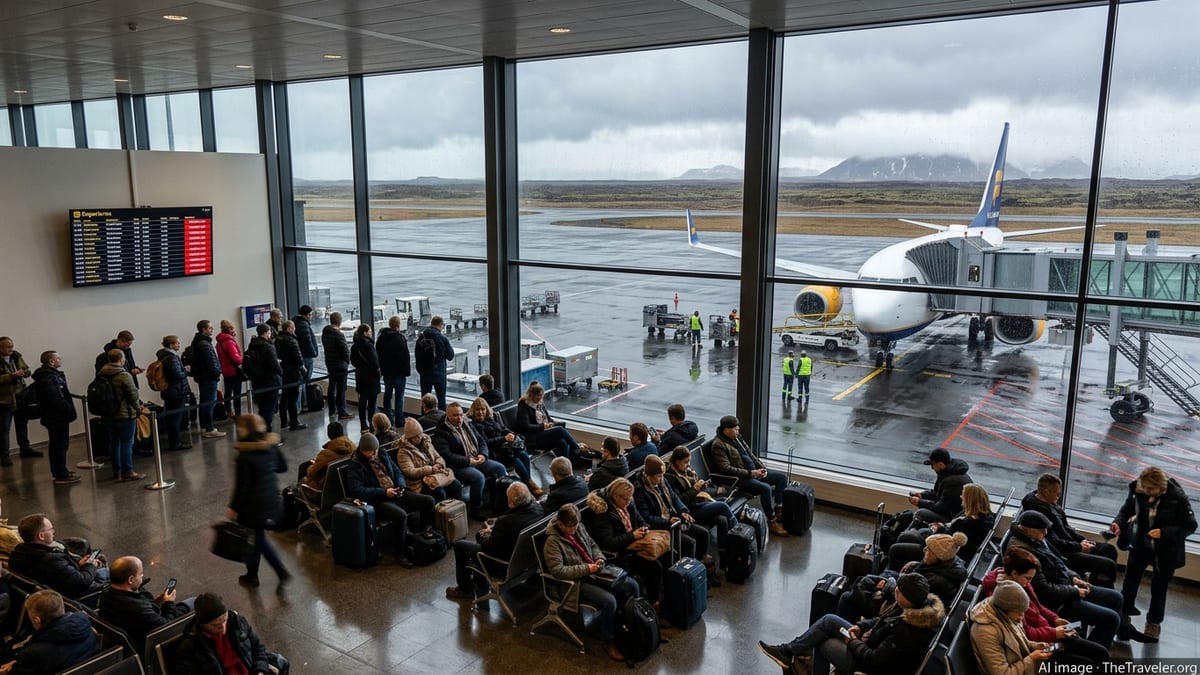
Wave of Cancellations Hits Iceland’s Main Gateways
Recent days have brought renewed instability to Iceland’s air network, with reports indicating that a dozen or more flights tied to Icelandair and services historically marketed under the Iceland Express banner have been removed from schedules or cancelled at short notice. The disruptions are centered on Keflavik International Airport, the country’s primary international hub, but are also affecting Reykjavik’s domestic airport and Akureyri in the north.
Industry and passenger reports describe a pattern of short-notice schedule changes on routes linking Iceland with major European cities such as London and Liege, alongside adjustments on domestic services connecting Reykjavik with Akureyri and Egilsstaðir. In several cases, passengers arrived at the airport or checked their flights online only to find that departures had disappeared from the day’s operations or were marked cancelled with limited rebooking guidance.
The latest turbulence comes on top of a winter season already marked by severe weather, high winds, and infrastructure pressures on the Reykjanes peninsula, which have periodically affected access to Keflavik and contributed to delays and cancellations. Publicly available flight statistics suggest that overall traffic at Keflavik and Iceland’s regional airports has continued to grow year on year, increasing the impact when irregular operations occur.
While Iceland Express as an independent low-cost carrier ceased operating earlier in the 2010s, its legacy routes and brand associations continue to surface in public discussion, particularly when Iceland’s point-to-point leisure traffic between Europe and Iceland is hit by service disruptions. Some travelers still use the Iceland Express name informally to describe services now operated by other Icelandic carriers.
Key Routes Affected: London, Liege, Akureyri, and Egilsstaðir
Among the most closely watched cancellations are those impacting links between Iceland and major European gateways. Recent coverage of air travel in and out of Keflavik highlights repeated disruptions on routes serving cities such as London and Liege, with certain flights removed from daily rotations or replaced by reduced-capacity services. These changes have complicated connections for travelers using Iceland as a stopover between North America and Europe, as well as for visitors planning short breaks in Reykjavik.
Cargo and combination passenger operations involving Liege, an important European logistics hub, have also seen cancellations listed in airport departure and arrival information. Although cargo-focused route data do not capture the full passenger picture, they underscore the sensitivity of Iceland’s connectivity to even small schedule shifts on specialized routes.
On the domestic side, Icelandair-branded services between Reykjavik’s city airport and regional towns such as Akureyri and Egilsstaðir are a lifeline for residents and visitors alike. Published route information confirms that these airports rely heavily on a small number of daily flights. When just one or two of those services are cancelled, the effect can cascade through local tourism bookings, business travel, and onward international journeys.
Akureyri and Egilsstaðir also serve as diversion and relief airports when conditions at Keflavik deteriorate. In practice, this means that when Keflavik is hit by storms, strong crosswinds, or operational constraints, flights may be rerouted to these regional fields. If those flights are subsequently cancelled or cannot continue to their planned destination, passengers can find themselves stranded far from their intended route with limited overland options in winter conditions.
Weather, Volcanic Activity, and Operational Pressures
Weather remains one of the most significant drivers of flight disruption in Iceland. Early March 2026 brought powerful winds to Keflavik, leading to the cancellation of several Icelandair morning departures to major European cities and the delay of at least ten further flights, according to local media coverage. Similar storm systems can quickly ripple through domestic schedules, affecting Reykjavik, Akureyri, and smaller regional airports.
Beyond day-to-day weather, the ongoing seismic and volcanic activity on the Reykjanes peninsula has placed additional pressure on the road and infrastructure corridor linking Reykjavik and Keflavik. While the main international airport has generally remained open, the need to monitor lava flows, gas emissions, and potential road closures has forced airlines and airport operators to maintain contingency plans for rapid schedule changes or diversions.
Operational and commercial factors are also playing a role. In recent months, reports on Icelandair and other carriers serving the country have highlighted a series of strategic adjustments, including seasonal route changes, capacity reductions on underperforming sectors, and a refocusing of networks toward higher-yield transatlantic and leisure traffic. These moves can translate into thinner schedules on marginal routes, which become more vulnerable to cancellation when aircraft or crew imbalances arise.
Travelers attempting to connect via Iceland have reported on social platforms and aviation forums that a single cancellation in the network can mean a 24-hour or longer delay, particularly when flights operate only a few times per week. In such cases, passengers may face unexpected overnight stays, missed cruises, and lost prepaid accommodation, even when the original disruption stems from weather or safety considerations.
Passenger Rights and What Stranded Travelers Can Expect
For passengers caught up in the current wave of cancellations, understanding rights and entitlements is essential. Public guidance on European air passenger rules indicates that flights departing from Iceland fall under a regulatory framework similar to that applied in the European Union. This typically provides compensation in some circumstances, as well as obligations for airlines to offer care, such as meals and accommodation, during extended delays.
However, eligibility for financial compensation often depends on the cause of the disruption. When cancellations result from extraordinary circumstances such as severe weather, airspace closures, or certain types of safety-related events, published guidance suggests that carriers may not be required to pay standardized cash compensation, even though they remain responsible for providing rerouting or refunds. This distinction can be confusing for travelers already dealing with stress and uncertainty at the airport.
Reports from recent cases involving Icelandair show a mixed picture for affected customers. Some travelers describe receiving hotel stays, meals, and eventual reimbursement for incidental expenses after delays of 24 hours or more. Others report lengthy waits for responses to claims, partial coverage of costs, or disputes over whether a given disruption qualifies as extraordinary. Processing times for compensation and reimbursement applications can stretch over several weeks or even months.
Passengers stranded at Keflavik, Reykjavik, or Akureyri are generally advised in public-facing consumer guidance to keep all receipts for food, transport, and accommodation, document any written communication from their airline, and submit formal claims through official channels. Travel insurance, where purchased, may offer an additional layer of protection, particularly for non-refundable hotels, tours, or cruise departures missed because of flight cancellations.
Planning Ahead as Iceland’s Peak Travel Season Approaches
The latest cancellations come just as Iceland enters the shoulder period leading into its busy summer travel season, when visitor numbers to Keflavik, Reykjavik, Akureyri, and Egilsstaðir typically rise. Traffic statistics for late 2025 point to robust demand across the country’s airports, suggesting that any future disruptions could affect a growing number of passengers.
Travel industry analysts note that Iceland’s role as a transatlantic stopover hub magnifies the impact of even a limited number of cancellations. A single scrapped flight between Keflavik and a major North American or European city can disrupt not only origin and destination traffic, but also travelers connecting between continents via Iceland. When domestic links to Akureyri or Egilsstaðir are also affected, entire itineraries may need to be rebuilt.
Publicly available advice from airlines and consumer organizations consistently emphasizes the importance of monitoring flight status closely before leaving for the airport, particularly during periods of strong winds, blizzards, or heightened volcanic alert. Travelers are often encouraged to allow extra connection time, consider flexible tickets when possible, and ensure that contact details are up to date in airline booking systems so that schedule changes trigger timely notifications.
For now, the situation at Keflavik, Reykjavik, and Akureyri remains fluid, with reports indicating that cancellations and delays are occurring in clusters rather than as a sustained shutdown of operations. Even so, the experience of stranded passengers in recent weeks highlights the fragility of Iceland’s air links when weather, infrastructure risks, and tight airline schedules converge, and it underscores the need for travelers to build contingency plans into any journey involving this North Atlantic hub.