

More news on this day
Travelers bound for Iraq faced mounting disruption on March 7 as at least 28 flights operated by Pegasus Airlines, Royal Jordanian, EgyptAir, Qatar Airways, Emirates and other carriers to Baghdad and Erbil were cancelled amid an abrupt extension of airspace restrictions linked to escalating regional tensions.
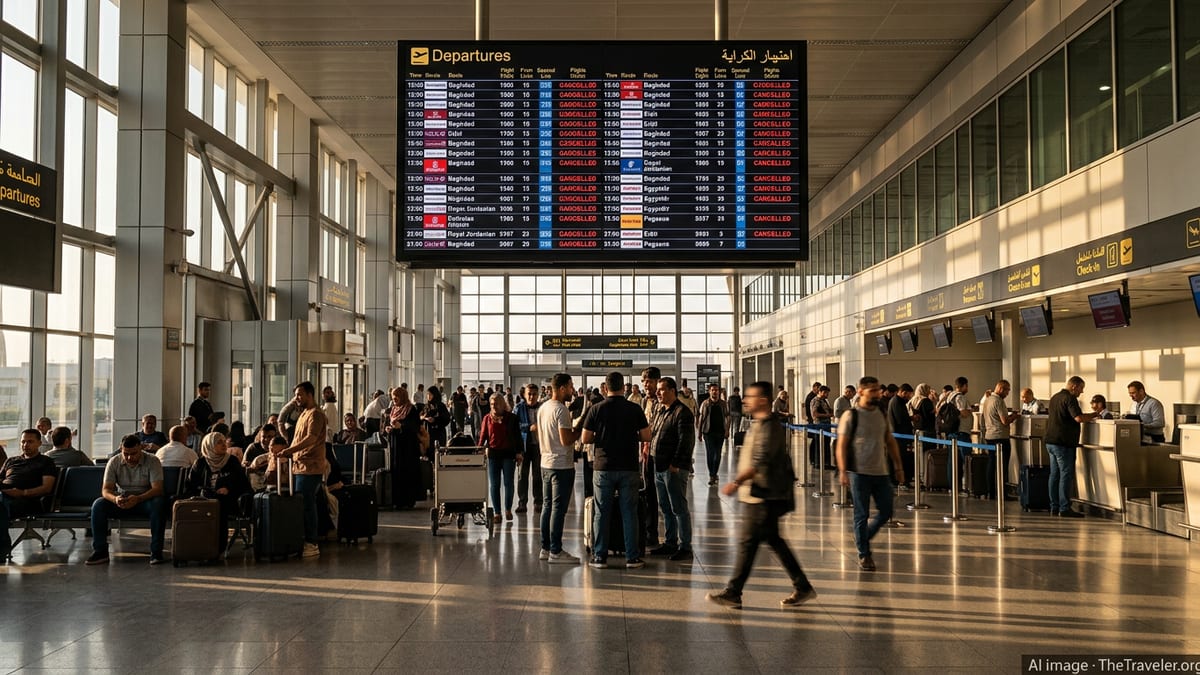
Airspace Closures Push Iraq Back Into Isolation
The latest wave of cancellations followed a decision by Iraqi authorities to extend a full closure of the country’s airspace for an additional 72 hours, effectively halting most international traffic into Baghdad and Erbil. The move, announced early Saturday, came as governments and airlines reassessed overflight risks across a corridor that has become one of the world’s most volatile.
Baghdad International Airport and Erbil International Airport, normally key gateways for business travelers, aid workers and members of the Iraqi diaspora, saw large portions of their departure boards turn red. With multiple carriers suspending operations simultaneously, seats on the few remaining services via alternative hubs quickly became scarce and often prohibitively expensive.
Aviation authorities in Iraq framed the shutdown as a necessary safety measure in light of increased drone and missile activity in the region. Industry analysts noted that while short-term closures are not unusual during spikes in tension, the breadth of the current suspension has revived memories of previous periods when Iraq found itself effectively cut off from much of the global air network.
Major Regional Carriers Pull Back From Baghdad and Erbil
Turkey’s Pegasus Airlines was among the first to scrub services linking Istanbul with northern Iraq, cancelling multiple rotations to both Baghdad and Erbil after the airspace extension was confirmed. The low-cost carrier has in recent years become a vital lifeline for Iraq-based travelers seeking affordable connections to Europe and Asia via Istanbul’s Sabiha Gökçen Airport.
Royal Jordanian also pulled a series of flights between Amman and the two Iraqi cities, temporarily pausing what is normally one of the most heavily trafficked regional corridors. Pre-disruption schedules showed Royal Jordanian operating more than 30 weekly services into Iraq, underscoring how deeply the cancellations are being felt by passengers who rely on the airline for onward links to Europe and North America.
EgyptAir, which only days earlier moved to extend suspensions to Baghdad and Erbil as part of a broader halt affecting 11 regional destinations, maintained its standstill on Iraqi routes. Passengers ticketed from Cairo to Iraq reported being offered rebooking options at later dates or travel vouchers, but many said alternative itineraries now involve lengthy detours through airports that are themselves under operational strain.
Qatar Airways, Emirates and Gulf Hubs Under Pressure
Gulf carriers, which have long marketed their hubs as dependable bridges between Iraq and the rest of the world, are contending with an unusually fluid operating environment. Qatar Airways has kept regular services to Baghdad and Erbil on hold as Qatari airspace remains partially restricted and overflight permissions across neighboring territories fluctuate, forcing the airline to prioritize limited relief operations for stranded travelers with Doha as their final destination.
Emirates, which only recently restarted a reduced schedule after earlier suspensions to several conflict-affected markets, has again been pushed into ad hoc adjustments affecting its Iraq-bound flights. While the Dubai-based carrier is operating select services on alternative routings where possible, passengers with bookings to Baghdad and Erbil over the coming days are being advised to check their flight status frequently, with many departures already cancelled or flagged for last-minute changes.
Additional disruption is radiating across the wider Gulf as other airlines, including Oman Air and regional low-cost operators, cancel rotations to Baghdad in response to airspace bottlenecks. With key hubs such as Dubai and Doha simultaneously adjusting schedules to comply with safety directives, ripple effects are being felt on connecting itineraries far beyond the Middle East, from European capitals to Southeast Asia and North America.
Travelers Face Long Re-Routings and Limited Options
The combined total of 28 cancellations across Pegasus Airlines, Royal Jordanian, EgyptAir, Qatar Airways, Emirates and several smaller operators on Saturday alone has left hundreds of passengers scrambling for alternatives. At Baghdad International Airport, travelers reported queues at airline transfer desks and information counters as people sought refunds, hotel vouchers and new itineraries.
For many, the most immediate consequence has been uncertainty. Some passengers with urgent travel plans have managed to rebook via Turkish or European carriers still operating limited services into Iraq using altered flight paths, but those seats have been snapped up quickly. Others now face waits of several days before they can secure a confirmed departure into either Baghdad or Erbil.
Travel agents in Amman, Istanbul and Cairo said they were juggling rebookings for Iraq-bound clients while also fielding new questions from would-be travelers unsure whether to proceed with upcoming trips. Corporate travel managers have begun postponing nonessential visits, while humanitarian organizations with staff rotations scheduled through Baghdad and Erbil are exploring contingency plans via alternative entry points into the region.
Unclear Timeline for Normal Operations to Resume
Airlines have so far offered only limited clarity on when full schedules to Iraq might be restored. The current 72-hour airspace extension, if not renewed, would theoretically allow some flights to resume later next week, but carriers have been cautious about committing to firm restart dates given the fast-evolving security picture.
Industry observers say that even once restrictions are eased, the return to normality is likely to be gradual. Carriers must assess insurance coverage, crew duty-time limitations and aircraft positioning, all while coordinating with air traffic authorities on revised routings that avoid active conflict zones. Some airlines may initially operate only a fraction of their pre-disruption frequencies to Baghdad and Erbil.
For travelers, that means the current turmoil could extend beyond the official end of the airspace closure. Experts recommend that passengers with upcoming bookings to Iraq stay in close contact with their airline or travel provider, avoid same-day airport arrivals without confirmed departures, and remain prepared for further schedule changes as regional tensions continue to reverberate across the Middle East’s already stretched aviation network.