

More news on this day
Travelers across Japan and on transpacific routes are facing mounting disruption after a new wave of flight cancellations by Japan Airlines, All Nippon Airways, United Airlines, Jetstar Japan and other carriers, affecting services to and from Boston, Tokyo, Osaka and a string of domestic destinations including Okinawa, Ishigaki, Miyako and Akita.
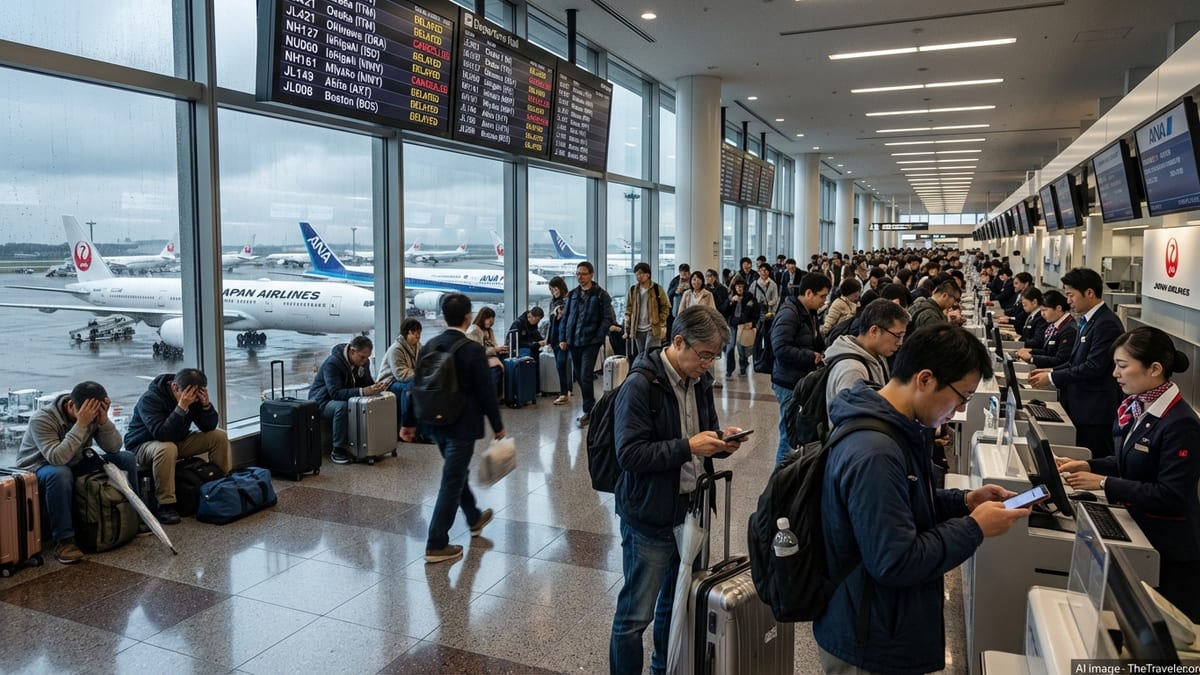
Fresh Cancellations Hit Japan’s Busy Winter Travel Period
The latest round of schedule disruptions has rippled through Japan’s aviation network during an already pressured winter season. In recent days, regional aviation trackers and travel-industry outlets have reported dozens of cancellations and extensive delays across Asia, with Japanese hubs such as Tokyo’s Haneda and Narita again featuring prominently. While some of the disruption is shared with neighboring markets in China, Indonesia and Taiwan, a significant portion is being felt by passengers starting or ending their journeys in Japan.
Japan’s two largest full-service carriers, Japan Airlines (JAL) and All Nippon Airways (ANA), along with low-cost operator Jetstar Japan and several foreign airlines, have each cut or rescheduled flights as they contend with adverse winter weather, congestion at major airports and ongoing operational challenges. For travelers, the impact is most visible in unexpected cancellations, last-minute rebookings and longer travel times, especially on connecting itineraries.
Although not on the scale of pandemic-era shutdowns, the current pattern of disruption is proving particularly frustrating because of its patchwork nature. Entire routes are not being suspended wholesale; instead, airlines are selectively canceling or consolidating individual services on high-demand days, making it difficult for passengers and travel agents to predict which departures will actually operate as planned.
Industry data over the past two weeks points to more than 200 cancellations and nearly 1,000 delays across Asia in a single day at the peak of the disruptions, with Japanese carriers and airports among those heavily affected. For Japan-bound tourists and domestic travelers alike, that has translated into crowded terminals, long queues at customer service counters and a scramble for scarce alternative seats on remaining flights.
Transpacific Routes to Boston and Beyond Face Knock-on Effects
While much of the current turbulence is centered on Asian regional and domestic services, long-haul passengers are not immune. Connections between Japan and the United States, including key services linking Tokyo to Boston, have experienced schedule changes, elongated journey times and, in some cases, outright cancellations.
Japan’s flag carrier JAL and US-based United both serve Boston with itineraries that rely on smooth operations at Japanese gateways and their North American partners. When domestic or regional flights into Tokyo run late or fail to operate, it can cascade into missed connections for transpacific departures. Airlines have responded with protective cancellations, re-accommodating passengers on later flights or routing them through alternative hubs such as New York, Chicago or Los Angeles.
Travel agents report that some passengers bound for Boston from secondary Japanese cities like Osaka, Sapporo or Fukuoka have seen their plans upended when feeder flights into Tokyo were canceled at short notice, breaking carefully timed same-day connections. Others have found that while their long-haul segment to the US is still operating, they are now spending extra hours in transit because earlier domestic legs were consolidated or delayed.
For business travelers, especially those on tight itineraries built around early-week meetings in New England, the unpredictability is proving costly. Some have opted to depart a day earlier than usual, trading an extra night in a hotel for greater certainty that they will reach Boston on time. Airlines, meanwhile, are encouraging customers to monitor their booking status frequently and sign up for real-time alerts, as departure times and aircraft assignments continue to shift.
Weather, Congestion and Operational Strain Combine
Behind the cancellations lies a familiar mix of causes. A patch of winter weather affecting the Tokyo area earlier this month triggered a wave of travel waivers by international carriers, including United, which allowed passengers to change tickets without fees for travel through Haneda and Narita over several days. That initial bout of snow and low visibility reduced runway capacity, forcing airlines to thin out schedules.
The weather issues have collided with broader operational strains across Asian aviation. Air traffic levels have rebounded strongly, but staffing, aircraft availability and maintenance slots remain tight. Airlines such as ANA and JAL have restored much of their international and domestic capacity but face little slack in their systems when storms, technical issues or crew-related constraints arise. Even isolated events, such as a long-haul jet returning to Tokyo after an in-flight technical alert, can ripple through schedules for hours as aircraft and crew rotations are reworked.
Japanese low-cost carriers, including Jetstar Japan, also operate dense schedules with short turnarounds, leaving minimal room to absorb delays. When congestion builds at busy hubs like Narita or Kansai International near Osaka, these airlines can be among the first to cancel or retime services in order to reset operations. Industry analysts say that while safety standards remain stringent, the pressure to keep aircraft flying close to full capacity means any disruption quickly translates into cancellations.
In parallel, regional weather systems across East and Southeast Asia have brought turbulence, heavy rain and occasional strong winds to airports in Beijing, Jakarta and other key cities. As aircraft and crew rotate through these networks, delays in one country are being exported to another, creating a rolling series of late arrivals into Japan and subsequent missed slots for takeoff.
Domestic Links to Okinawa, Ishigaki, Miyako and Akita Disrupted
Within Japan, some of the most acute inconvenience is being felt on domestic routes that are lifelines for residents and tourists heading to island and regional destinations. Flights between mainland hubs such as Tokyo and Osaka and the southern prefecture of Okinawa, including popular island airports at Naha, Ishigaki and Miyako, have seen intermittent cancellations and delays as carriers juggle aircraft and crew.
These routes are vital for both tourism and local communities, particularly during the peak winter escape period when travelers from colder parts of Japan head south for milder weather. A canceled evening flight from Tokyo to Ishigaki, for instance, can strand passengers overnight on the mainland, as many of the smaller island airports have limited late-night operations and restricted accommodation options nearby.
In northern Japan, services to Akita and other regional cities have faced their own weather-related challenges. Heavy snow and low ceilings can quickly degrade airport operating conditions, forcing diversions or cancellations even when aircraft and crews are available. For travelers, this means that last-minute disruptions are more common on these sectors than on more temperate routes, and rebooking options are often limited because of lower flight frequencies.
Local tourism operators in both Okinawa and the Tohoku region report that a portion of winter bookings has been affected by these irregular operations, with some visitors shortening stays or switching to alternative transport modes such as shinkansen rail where feasible. However, for islands without rail access, air travel remains the only practical option, magnifying the impact when flights are scratched.
Jetstar Japan and Partner Airlines Under the Microscope
Low-cost carrier Jetstar Japan has drawn particular attention following recent reports highlighting its role in a series of cancellations and delays affecting passengers in Tokyo and other Asian hubs. Although the absolute number of canceled Jetstar Japan flights remains modest relative to the wider network, the airline’s position as a key budget option on domestic and short-haul international routes means that disruptions are keenly felt.
Complicating matters, Jetstar Japan is in the midst of a strategic transition as Qantas prepares to divest its stake and the carrier moves toward a new Japan-centered ownership and branding structure alongside partner Japan Airlines. While official communications stress that day-to-day operations and existing bookings will be maintained during the transition period, the backdrop of corporate change has raised questions among some travelers about future route stability and service levels.
Industry observers note that the low-cost model, with its focus on high aircraft utilization and tight turnaround times, can create vulnerability when airports experience congestion or weather-related capacity cuts. When slots are reduced, it is often the shorter, lower-yield flights that airlines prune first, leading to cancellations on routes such as Tokyo to regional Japanese cities or nearby Asian destinations.
For now, Jetstar Japan and its partners are emphasizing that safety and regulatory compliance are non-negotiable, and that cancellations are preferable to stretching crews or aircraft beyond safe operating limits. Nonetheless, frequent flyers say they are factoring in a higher risk of disruption when booking with budget carriers in the current environment, and in some cases are paying more to secure seats on full-service airlines perceived as having more operational resilience.
Passenger Experience: Long Queues, Confusion and Costly Workarounds
On the ground, the human cost of the disruption is playing out in lengthy customer-service lines, packed departure lounges and rushed changes of plan. At Tokyo’s Narita and Haneda airports, travelers have described scenes of confusion as departure boards refresh with updated times and canceled flight notices, while airline staff field a steady stream of rebooking requests.
For some international passengers, particularly those connecting from domestic services to long-haul flights, a single cancellation has led to unexpected overnight stays in airport hotels or the need to buy new tickets altogether when original itineraries no longer align. While major airlines such as JAL, ANA and United typically provide support when disruptions are within their control, weather-related events can limit the level of mandated compensation, leaving some travelers out of pocket.
Families traveling with children and older passengers have been among the most affected, as longer waiting times in terminals and late-night schedule changes strain stamina and patience. Travel insurance is playing a larger role, with insurers reporting a rise in claims related to missed connections, extended hotel stays and alternative transport costs.
Digital tools have helped somewhat, with many travelers relying on airline apps and messaging services to receive cancellations and rebooking offers more quickly than traditional airport announcements. However, language barriers and patchy Wi-Fi access at crowded gates can still impede communication, particularly for foreign tourists unfamiliar with Japanese airport procedures.
How Airlines and Travelers Are Responding
Airlines operating in and out of Japan are attempting to strike a balance between maintaining ambitious winter schedules and building in enough flexibility to recover quickly from inevitable weather and congestion shocks. Carriers have deployed larger aircraft on some routes to consolidate passengers from multiple canceled flights and have adjusted departure times to align with periods of more reliable runway availability.
Proactive measures also include the issuance of travel waivers, which allow customers booked on potentially affected flights to change dates without additional fees or fare differences. Such waivers have been particularly common around forecast snow events in the Tokyo region, giving passengers the option to move trips earlier or later in order to avoid the worst disruptions.
Travel experts advise Japan-bound visitors and domestic travelers to build more slack into their itineraries in the current environment. That can mean arriving in Tokyo a day before a crucial long-haul connection, choosing mid-morning flights that are less vulnerable to knock-on delays from the previous day, or considering rail alternatives for certain domestic legs, especially on the busy Tokyo–Osaka corridor.
For those heading to islands like Okinawa, Ishigaki and Miyako, booking the earliest possible departure of the day and having a contingency plan for accommodation on the mainland if things go wrong can reduce stress. Keeping digital copies of travel documents, monitoring weather forecasts and signing up for airline notification services are now considered essential practices rather than optional extras.
Outlook: A Fragile Recovery Facing Ongoing Tests
The current pattern of flight cancellations and delays in Japan underscores how fragile the post-pandemic recovery in air travel remains, even as passenger numbers approach or surpass previous peaks. Network planners at airlines like JAL, ANA, United and Jetstar Japan must balance strong demand and tight capacity with the reality that winter storms, airspace bottlenecks and operational hiccups can quickly unravel carefully constructed timetables.
In the near term, the risk of further disruption will likely remain elevated through the remainder of the winter season and into early spring, when weather patterns are still changeable and infrastructure at some airports is being stretched. Regulators and airport operators are closely watching how airlines manage crew duty limits, maintenance intervals and slot utilization, mindful of recent crises in other markets where aggressive scheduling has led to widespread breakdowns.
For travelers, the message is one of cautious optimism. Japan continues to offer extensive connectivity, both domestically and internationally, and most flights are still operating broadly as planned. Yet the recent wave of cancellations affecting routes from Boston to Tokyo, Osaka, Okinawa, Ishigaki, Miyako, Akita and other destinations is a reminder that flexibility and preparation are crucial components of modern air travel.
As airlines refine their schedules and invest in more resilient operations, the expectation is that disruption will gradually ease. Until then, passengers flying to, from or within Japan are being urged to stay informed, allow extra time and treat confirmed bookings as plans that may still change under the pressure of weather, congestion and the complex realities of today’s global aviation network.