

More news on this day
Flight disruptions rippled across Charleston, Atlanta, New York, and Charlotte in late March, as dozens of delays and cancellations collided with already strained air travel systems, unsettling both leisure and business itineraries at the tail end of a turbulent winter.
Get the latest news straight to your inbox!
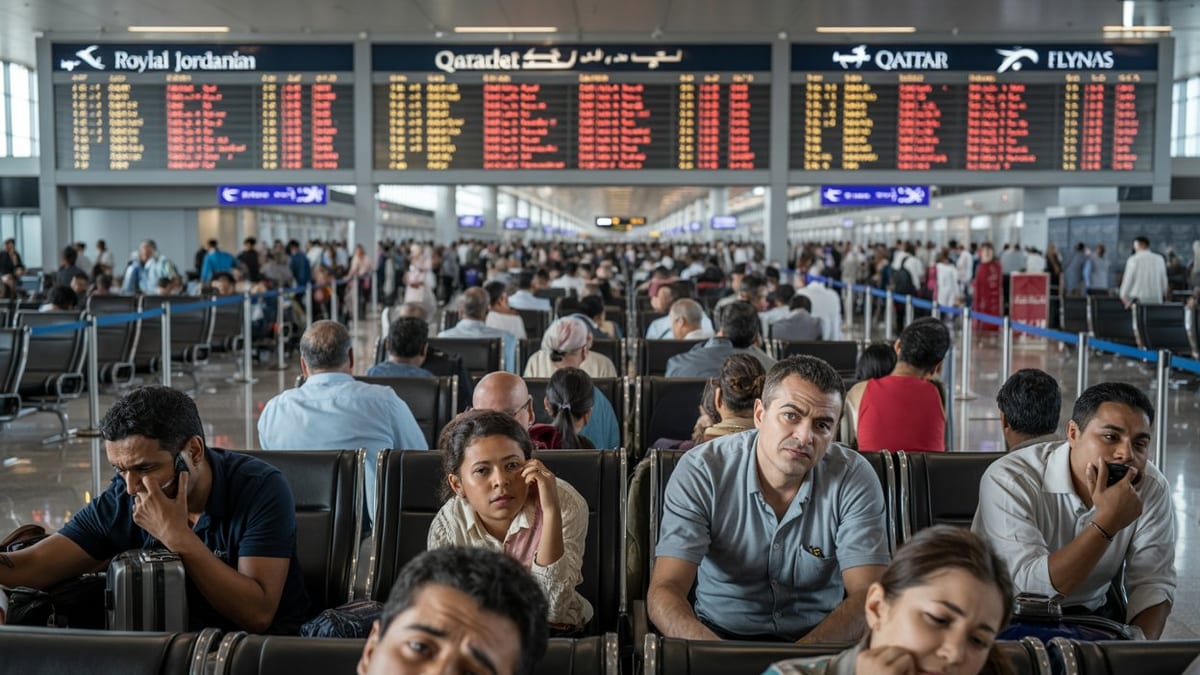
From 34 Charleston Disruptions to a Wider Network Shock
Publicly available airport and operations data on March 31 show Charleston International Airport recording 28 delayed departures and 6 cancellations, a concentrated cluster of 34 schedule disruptions that helped trigger knock-on effects across connecting hubs. Travel industry coverage indicates that these interruptions affected services of major US carriers, including regional partners that route traffic through Atlanta and Charlotte, amplifying the reach of what began as a local problem.
Although the Charleston numbers appear modest compared with large national meltdowns earlier in the year, the timing is critical. The affected flights sit at the intersection of spring break demand and lingering winter-weather recovery, which means even a few cancellations can strand passengers overnight or wipe out same-day connections through Atlanta and New York.
Tourism analysts note that Charleston’s role as both a destination and a feeder airport magnifies the impact. When outbound flights from the city are delayed or axed, travelers frequently miss long-haul departures at major hubs, forcing rebookings that push congestion into the following days and further stress airline schedules.
For local tourism businesses in Charleston, including hotels, restaurants, and tour operators, these 34 disrupted operations represent more than an operational statistic. Industry observers point out that last-minute cancellations often translate into empty hotel rooms, shortened stays, and rearranged events, costs that are difficult to recoup once high-demand weekends pass.
Atlanta and Charlotte: Weather, Volume, and a Fragile System
In Atlanta and Charlotte, the latest wave of delays has arrived on the heels of a difficult winter. National coverage of the January and February storms documented repeated ground stops and heavy cancellation days at both Hartsfield-Jackson Atlanta International Airport and Charlotte Douglas International Airport. Those events left airlines with thin buffers in aircraft and crew availability as they moved into March.
Charlotte in particular has been repeatedly exposed. A February snowstorm brought hundreds of cancellations in and out of the city, while a separate winter system in early 2026 disrupted operations across North Carolina and surrounding states. As airlines reshuffled aircraft and crew to rebuild schedules, they entered spring with tight margins for error, meaning later disruptions can more easily cascade.
Recent guidance shared via national public radio and local outlets highlights how some carriers have been issuing airport-specific waivers for Atlanta and Charlotte, allowing travelers to modify plans without standard change penalties when conditions deteriorate. These waivers, while helpful for passengers able to move travel dates, also underscore the expectation among airlines that further instability at these hubs is likely.
Travel forums and consumer advisories from March describe passengers in Atlanta reporting multi-hour waits, missed international connections, and last-minute cancellations that required full itinerary rewrites. These accounts are consistent with a system that is still recalibrating from winter shocks while accommodating robust demand from both vacation and corporate travelers.
New York’s LaGuardia Collision and Ongoing Ripples
New York’s role in the disruption picture is shaped heavily by the recent closure of LaGuardia Airport following a fatal collision between a regional jet and a fire truck on March 2. Aviation records describe it as the first fatal incident at LaGuardia in decades and note that the airport faced a temporary shutdown and prolonged ground delay programs as investigators worked and operations were restructured.
Travel magazines and airline bulletins published since then show that carriers serving LaGuardia, including major US airlines, rolled out flexible rebooking policies and change-fee waivers through late March. While LaGuardia has reopened, operational alerts continue to forecast residual delays and occasional cancellations as staggered schedules and ongoing safety reviews ripple through the network.
The accident has reinforced LaGuardia’s status as a critical pressure point in the national system. Even relatively small reductions in capacity at the airport can lead to missed connections and rolling delays at other hubs. Charleston-originating passengers booked through New York, for instance, have faced tight connection windows or re-routes onto later flights, with business travelers particularly affected when same-day round trips became impossible.
Lower Manhattan and Midtown hotel operators, as well as event venues that rely on predictable arrival patterns for conferences and client meetings, are now contending with more last-minute itinerary changes. Industry commentary suggests some companies are temporarily shifting sensitive meetings to virtual formats or scheduling them in cities with less constrained airport operations.
Tourism, Conferences, and the Cost of Uncertainty
The combination of localized disruptions in Charleston with broader instability in Atlanta, New York, and Charlotte is landing at a difficult moment for US tourism. Data from recent airline disruption reports and travel trade publications portray a sector still absorbing the financial and operational shock of major winter storms and airspace-related disruptions earlier in 2026, including days with thousands of cancellations nationwide.
For leisure travelers headed to Charleston’s historic districts or New York’s cultural attractions, the most visible consequence is often a lost day of vacation or a shortened weekend. Tourism boards and local businesses are increasingly emphasizing flexible booking policies and travel insurance options in their marketing, signaling an awareness that volatility is becoming part of the planning equation rather than an exception.
Business travel faces a different set of pressures. Corporate travel managers handling routes that funnel through Atlanta, Charlotte, and New York report rising use of backup itineraries, including earlier departures to protect critical meetings and more same-day change activity as conditions evolve. Conference organizers are also monitoring airport reliability when deciding where to place large events, weighing the draw of major hubs against the risk of cascading delays.
While the absolute number of disrupted flights in Charleston on March 31 might seem limited, the wider pattern of repeated disturbances in interconnected hubs is reshaping behavior. Analysts caution that persistent uncertainty can have a chilling effect on discretionary travel and may nudge some companies toward longer-term reductions in nonessential trips, particularly when virtual alternatives are viable.
What Travelers Can Expect Next
Forecasts for the coming weeks suggest that weather-related volatility across the eastern United States will gradually ease as winter systems recede, but operational strains may linger. Airlines continue to rebuild crew rotations, reposition aircraft, and adjust schedules in response to the storms, the LaGuardia collision, and the localized wave of Charleston disruptions.
Passenger advocacy groups and consumer resources point travelers toward the US Department of Transportation’s cancellation and delay dashboards and airline-specific travel advisories as key tools for navigating this environment. Recent public guidance underscores the importance of monitoring flight status in real time, enabling airline app notifications, and understanding individual carriers’ policies on rebooking, vouchers, and overnight accommodations.
In key hubs such as Atlanta and Charlotte, travelers are being encouraged by travel experts to arrive earlier than usual, particularly during peak morning and late-afternoon banks when any small schedule slip can trigger a chain reaction of delays. For itineraries routed through New York, many advisers now recommend longer connection windows or, where possible, routing through secondary hubs during periods of known strain.
For now, the 34 disruptions in Charleston function as a visible flashpoint in a larger story of fragility in US air travel. As airlines, airports, and regulators work through the aftermath of a punishing winter and a high-profile accident in New York, the balance between robust demand and operational resilience remains precarious, with travelers and the tourism economy bearing the immediate consequences.