

More news on this day
Hundreds of travelers were left sleeping in terminals or scrambling for last minute hotel rooms this week as at least 26 flight cancellations and 86 delays disrupted operations across Mexico’s busiest tourist and business gateways, including Cancun, Mexico City, Monterrey, Guadalajara and Puerto Vallarta, with low cost carriers VivaAerobus, Volaris and Spirit among the most affected airlines.
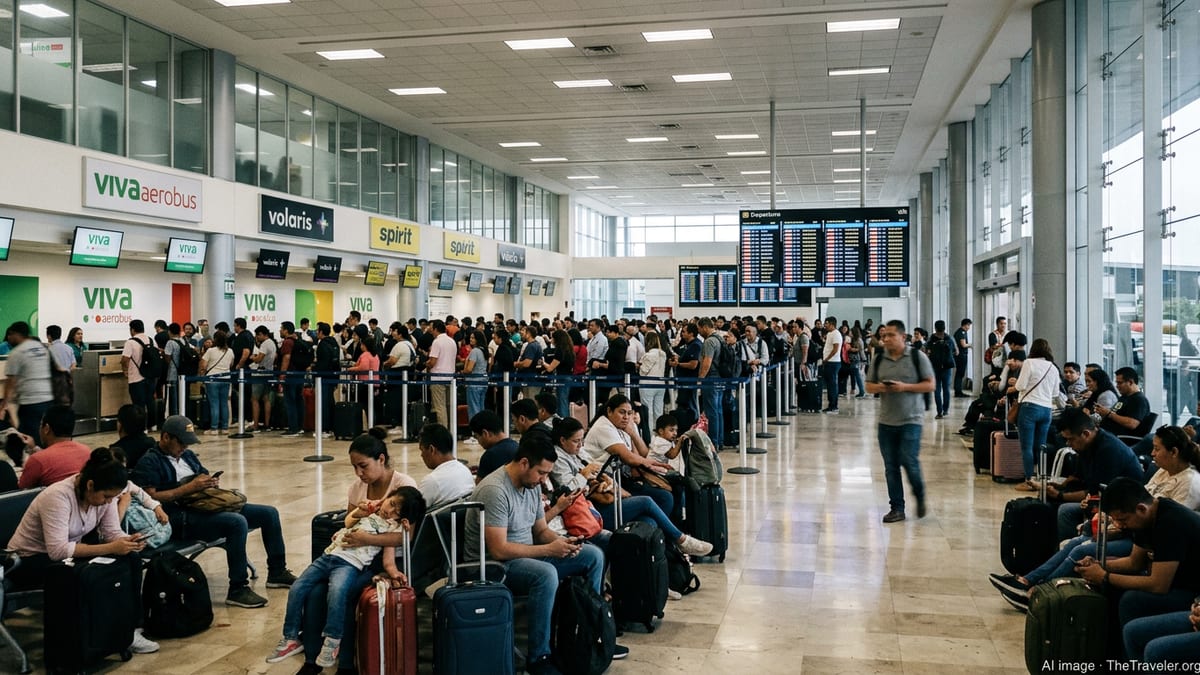
Widespread Disruptions Hit Mexico’s Key Hubs
Operational problems and knock on delays rippled through Mexico’s aviation system, with cancellations and late departures reported from the Caribbean beaches of Cancun to the industrial hub of Monterrey and the Pacific resorts of Puerto Vallarta. Airport information boards showed clusters of red and orange alerts as morning schedule issues cascaded into the afternoon and evening, leaving aircraft, crews and passengers out of position.
According to airport and airline data reviewed on Wednesday, at least 26 flights were cancelled and around 86 were delayed across multiple airports in a single operational window, a significant disruption for a network heavily dependent on tight turnarounds. While no single carrier accounted for all of the problems, low cost operators that dominate Mexico’s domestic market, including VivaAerobus and Volaris, featured prominently among the affected services, alongside US based budget airline Spirit on cross border routes.
The impact was particularly visible at major hubs such as Mexico City International Airport and Mexico City’s newer Felipe Ángeles facility, where slot constraints mean even minor timetable changes can quickly trigger long queues for takeoff and landing. In tourist centers like Cancun and Puerto Vallarta, the schedule chaos translated directly into lost beach time for leisure travelers and missed connections for those linking to long haul flights.
Passengers Sleep in Terminals as Rebooking Options Shrink
For many passengers, the numbers on departure boards translated into hours of uncertainty. With spare seats scarce during Mexico’s high travel season, travelers reported being offered rebooking options one or even two days later, or being told to check back repeatedly at service counters in the hope of last minute openings.
At Cancun International Airport, some families laid out jackets and beach towels on the floor near check in islands as they waited overnight for morning flights after evening departures to Monterrey and Mexico City were cancelled. Others clustered around charging stations in the domestic departures area, trying to rebook via airline apps that were struggling with high traffic.
In Guadalajara and Puerto Vallarta, social media posts showed long lines at VivaAerobus and Volaris counters, with passengers holding paper boarding passes for flights that had first been delayed and then cancelled outright. Several travelers said they were advised to seek hotel rooms at their own expense and claim limited reimbursement later, while others opted to purchase new tickets on rival carriers or even long distance buses to reach central Mexico.
Low Cost Carriers Under Pressure Amid Tight Schedules
The disruption highlights how exposed Mexico’s low cost model has become to any shock, whether operational, weather related or linked to the broader security situation in parts of the country. VivaAerobus and Volaris, which together carry the majority of domestic passengers in Mexico, typically operate dense schedules using narrow turnaround margins at key airports such as Mexico City, Monterrey, Cancun, Guadalajara and Puerto Vallarta.
When one or two early flights go out late or are cancelled due to crew constraints, technical issues or airspace restrictions, subsequent sectors can quickly be affected. With limited spare aircraft and high load factors, there is little slack in the system to absorb disruption, meaning passengers can face delays stretching into many hours.
Spirit, which connects US cities with Mexican beach destinations and major hubs, has also been grappling with knock on effects from weather and congestion in US airspace. When those delays compound with issues on the Mexican side, point to point leisure routes can be among the first to be trimmed, leaving travelers stranded at vacation destinations or at Mexico City while attempting to connect onward.
Security Tensions and Infrastructure Limits Add to Strain
The latest wave of cancellations and delays comes at a sensitive moment for Mexico’s aviation and tourism sectors. Recent cartel related unrest and security operations, particularly in Jalisco state, have already led to temporary suspensions of some flights to and from Guadalajara and Puerto Vallarta on previous days as airlines evaluated conditions on the ground and on key highways leading to the airports.
Even as most services have gradually resumed, lingering operational constraints and crew repositioning challenges have made schedules fragile. Any additional disruption, from thunderstorms on the Caribbean coast to low visibility in Mexico City, can tip an already stretched network back into widespread delays, as was the case during the latest operational window that stranded hundreds of passengers.
The situation also underlines structural limitations at some of Mexico’s busiest airports, including runway and terminal capacity at Mexico City’s main international gateway and rapid growth outpacing infrastructure in leisure markets such as Cancun and Puerto Vallarta. Industry analysts have warned that without significant investment and more resilient scheduling, peaks in travel demand will continue to expose passengers to elevated risks of disruption.
Airlines Offer Waivers and Urge Travelers to Monitor Flights
As the day wore on, airlines moved to contain the fallout. VivaAerobus and Volaris opened customer service channels for same day changes on affected routes, while Spirit and other carriers operating from US cities to Cancun and western Mexico reiterated that passengers on cancelled flights were eligible for refunds or rebooking at no additional fare difference in specified travel windows.
However, with many flights already heavily booked, rebooking often meant accepting late night departures, red eye flights or connections through secondary hubs rather than the original nonstop services. Some passengers complained that meal and hotel vouchers were limited or inconsistently offered, a recurring point of tension in Mexico’s deregulated low cost environment.
Travel advisers recommend that passengers with upcoming trips to Cancun, Mexico City, Monterrey, Guadalajara or Puerto Vallarta build extra buffer time into itineraries, especially when connecting to international long haul services. They also urge travelers to download airline apps, enable notifications and check flight status repeatedly in the 24 hours before departure, as same day schedule changes and rolling delays remain common when the system is under strain.