

More news on this day
Hundreds of travelers were stranded across Mexico this week as disruption at the international airports in Cancún and Monterrey triggered delays to 141 flights and the cancellation of eight services, snarling connections to Mexico City and several major United States gateways.
Get the latest news straight to your inbox!
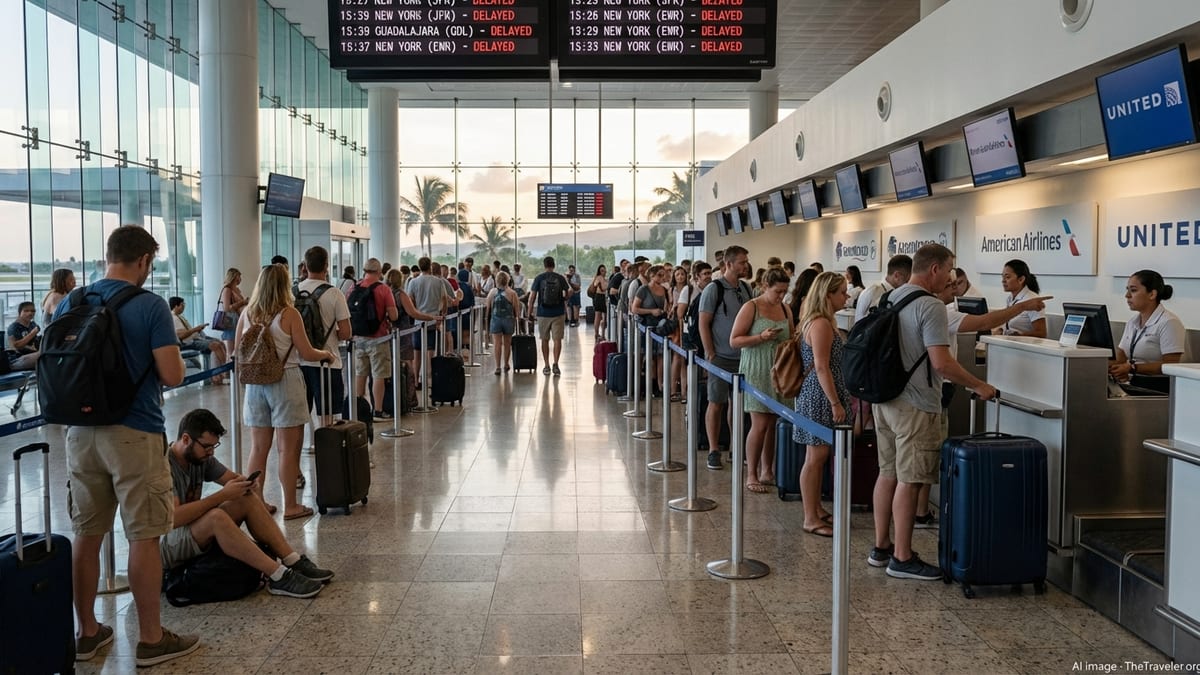
Widespread Delays Ripple Across Key Mexican Hubs
Flight-tracking data and airport-status dashboards show that a wave of operational problems at Cancún International Airport and Monterrey International Airport left passengers facing hours-long waits, rolling departure changes and, in some cases, unexpected overnight stays. The disturbances were concentrated on heavily used domestic and transborder routes linking the resorts and industrial centers of Mexico with major U.S. cities.
According to publicly available information from airline schedules and airport boards, a combined 141 flights were reported delayed and eight services canceled over a short window, affecting operations by American Airlines, Aeromexico, Southwest and several other carriers. The knock-on effect extended to partner and codeshare flights, compounding disruption for travelers with onward connections.
Published coverage indicates that the disruption did not stem from a complete airport shutdown but from a mix of congestion, aircraft and crew rotations, and weather or airspace constraints on key corridors. As delays accumulated through the day, aircraft and crews fell out of position, forcing airlines to push back more departures or consolidate services.
The problems came at a time when cross-border demand for leisure and business travel between Mexico and the United States remains high, leaving many flights operating close to capacity. This limited the ability of carriers to absorb displaced passengers on later departures, intensifying the sense of uncertainty inside terminals.
Major Airlines Hit on Mexico City, New York and Houston Routes
American Airlines and Aeromexico, two of the largest operators on Mexico–United States routes, featured prominently among the delayed and canceled flights listed on airport information screens. Southwest Airlines, along with low-cost Mexican carriers, also saw schedules affected on links between Cancún, Monterrey and major hubs such as Houston and Mexico City.
Routes connecting Mexico City with Cancún and Monterrey are among the country’s busiest, and publicly available statistics show strong traffic volumes on links from Mexico City to Houston and New York. When flights at Cancún and Monterrey slipped behind schedule, passengers heading for or returning from the capital often lost their onward connections to U.S. cities, leading to rebookings and unplanned overnight stays.
Travelers flying between Cancún and the United States faced particular challenges where direct services to New York, Houston and Los Angeles were delayed or canceled. For some, alternative itineraries involved re-routing through Mexico City or another Mexican hub on Aeromexico or a partner airline, adding extra segments and long layovers to journeys that normally take only a few hours.
Southwest’s point-to-point model also came under strain, with delayed departures from Mexico affecting later rotations back into the U.S. domestic network. Even when flights eventually departed, missed ground-time windows at connecting airports meant further schedule adjustments, and in some cases, passengers faced same-day destination changes or forced overnights.
Disruption Spreads to Los Angeles and Domestic Mexican Links
Los Angeles, one of the most important gateways between the United States and Mexico, also felt the impact. Published route information shows frequent services from LAX to Mexican destinations including Cancún and Mexico City, many of them operated or marketed by the same airlines entangled in the Cancún and Monterrey delays.
When departures from Mexico ran significantly behind schedule, aircraft scheduled to operate evening or overnight flights to Los Angeles arrived late, pushing back departure times and disrupting carefully planned crew rosters. For travelers, that meant late-night gate changes, crowded boarding areas and, in more severe cases, missed morning connections from Los Angeles to other U.S. cities.
Within Mexico, secondary city links, including services between Cancún and Monterrey, were not spared. Flight-status listings show multiple delays on these routes, which are commonly used by both domestic vacationers and international travelers stitching together complex itineraries across the country. Each delayed domestic segment increased the likelihood of missed long-haul departures to the United States.
As schedules slipped, some airlines prioritized maintaining core trunk routes while trimming or combining lower-frequency services. That operational triage helped prevent further cascading disruption but left certain passengers with fewer immediate options and forced them to accept longer reroutes or travel on different days.
Passenger Rights and What Stranded Travelers Can Expect
The episode has renewed attention on passenger protections in Mexico, where consumer regulations set out minimum standards of care in cases of long delay or cancellation. Guidance from Mexico’s federal consumer agency emphasizes that airlines operating in Mexican territory must offer assistance that can include refreshments, communications services and, in certain circumstances, accommodation and alternative transport.
In practice, travelers experienced a patchwork of responses as carriers balanced legal requirements, internal policies and operational realities. Some passengers were moved onto later flights or rerouted through alternative hubs such as Mexico City or Guadalajara. Others reported longer waits as heavily booked services left limited spare capacity to absorb those affected by cancellations.
Public information from airline advisories stresses that passengers impacted by significant schedule changes should proactively confirm their rebooking status via airline apps, customer-service phone lines or official airport information screens. Because large disruption events can cause call centers and help desks to become overwhelmed, digital self-service tools are often the fastest way to secure a new itinerary.
Travel specialists note that travelers with tight deadlines, such as work obligations or fixed cruise departures, are particularly vulnerable to cascading delays on busy cross-border routes. They recommend building additional time into itineraries that rely on same-day connections through Mexican gateways during peak travel periods.
Ongoing Vulnerabilities in a Stressed Cross-Border Network
The difficulties at Cancún and Monterrey highlight broader fragilities in the Mexico–United States air travel system, where strong demand, dense schedules and tight staffing leave little room for error. Recent seasons have seen weather events, airspace restrictions and infrastructure constraints trigger similar large-scale disruption across North American airports.
Industry data and previous episodes described in public reporting indicate that when a heavily used leisure destination such as Cancún suffers multiple hours of delays, the aftershocks can last for days as aircraft and crews work their way back into normal rotations. The same dynamic applies to Monterrey, a key business and industrial center whose links to U.S. hubs support both corporate travel and cross-border trade.
For now, operations at both airports appear to be stabilizing, with flight-status boards showing a gradual reduction in the number of heavily delayed departures. However, the latest disruption serves as a reminder for travelers heading to or from Mexico City, New York, Houston, Los Angeles and Cancún that even a localized episode at one or two airports can quickly spill across the wider network.
Consumer advocates suggest that, in a landscape of recurrent operational strain, passengers flying on these routes consider flexible tickets, robust travel insurance and itineraries with generous connection windows. Such measures cannot prevent mass delays or cancellations, but they can soften the impact when events like the latest Cancún and Monterrey disruption leave hundreds of travelers unexpectedly grounded.