

More news on this day
Hundreds of passengers were left in limbo across the Middle East on Tuesday as El Al, Emirates and FlyDubai scrubbed 66 flights and delayed 107 more, choking off connections through key hubs in Tel Aviv, Dubai and beyond just as airlines were beginning to rebuild services after a week of severe regional disruption.
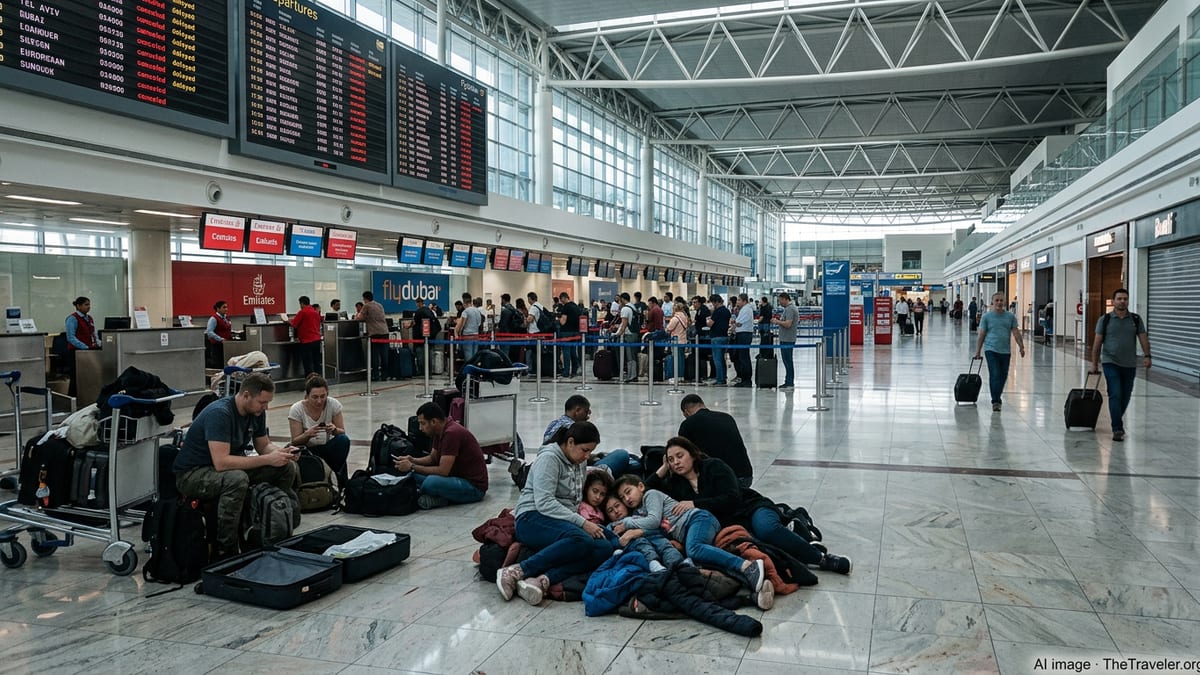
Fresh Wave of Disruptions Hits Recovering Flight Schedules
The latest round of cancellations and delays comes at a delicate moment for air travel in the region. After days of near-total shutdowns linked to the widening conflict involving Iran, major Middle Eastern carriers had only just begun restoring limited passenger services. Airlines had been operating reduced schedules and special repatriation flights to clear backlogs when Tuesday’s disruption added a new layer of uncertainty for travelers.
Operational data from regional airports shows at least 66 flights operated by El Al, Emirates and FlyDubai were canceled within a 24 hour window, while a further 107 were delayed, many by several hours. Most affected services were clustered around Tel Aviv’s Ben Gurion Airport and Dubai International Airport, both vital transfer points for Europe–Asia and transcontinental itineraries. Knock-on effects were reported at other hubs including Doha, Abu Dhabi, Amman and Istanbul as aircraft and crews fell out of position.
Industry analysts say the figures likely understate the true scale of the disruption, since many affected passengers had already been rebooked, rerouted or opted to postpone their travel altogether following earlier rounds of turbulence in regional scheduling. Airlines are also continuing to adjust timetables on short notice as airspace restrictions shift from day to day.
Tel Aviv and Dubai at the Center of Travel Turmoil
In Israel, El Al passengers arriving at Ben Gurion Airport on Tuesday morning found departure boards flickering with cancellations to destinations in Europe and North America. Security-driven airspace adjustments and route changes have forced the carrier to consolidate some services and suspend others entirely, leaving travelers with few immediate alternatives as foreign airlines extend their own suspensions to Tel Aviv.
Dubai, normally one of the world’s most reliable mega-hubs, has also been thrown off balance. Emirates and FlyDubai, which share the city’s main airport, reported a mix of outright cancellations and rolling delays on services across the Gulf, to South Asia, and on busy trunk routes to Europe. Even as Emirates moves back toward more than half of its usual capacity and talks of a full network restoration in the coming days, the practical reality for many travelers on Tuesday was long queues at transfer desks and uncertainty over when they would actually depart.
Airlines are juggling aircraft availability, crew duty limits and shifting no-fly zones that have forced lengthy detours around sensitive areas of airspace. These changes add flight time, burn more fuel and compress tightly planned rotations, leaving carriers with little slack to absorb additional disruptions once schedules start to unravel.
Passengers Face Long Delays, Confusion and Limited Options
For stranded passengers, the statistics translate into sleepless nights on terminal benches, hastily arranged hotel stays and missed connections that can cascade across multi-leg journeys. In Dubai, travelers reported being rebooked two or three days later on already packed flights, while others were offered convoluted routes via secondary hubs in Europe or Asia as airlines tried to bypass the most congested points.
With demand far outstripping the limited number of available seats, last minute alternatives on other carriers have been scarce and expensive. Travel agents say premium cabins on remaining services from the Gulf and Tel Aviv are selling out quickly, with economy passengers often facing waiting lists. Families, elderly travelers and those with urgent medical or work commitments have been pleading for priority as airlines work through long queues of disrupted customers.
Information has been another source of frustration. Although carriers are urging passengers to rely on official channels and refrain from heading to the airport without confirmed rebookings, fast-changing updates and overloaded call centers have left many unsure whether to wait, cancel or attempt a different route home. Some airports have set up dedicated help desks for stranded travelers, but bottlenecks remain common at check in and ticketing counters.
Airlines Adjust Policies as Conflict Keeps Region on Edge
In response to the rolling disruption, airlines across the Middle East have expanded flexible booking and waiver policies. Emirates and FlyDubai are allowing many passengers whose flights were canceled or significantly delayed to rebook without change fees or to request refunds, particularly for tickets issued before the latest escalation. El Al and other regional carriers have introduced similar measures, although exact rules vary by route and travel date.
Airlines have also been mounting additional repatriation services where airspace and safety conditions permit, focusing on high demand corridors such as routes between the Gulf and Europe, South Asia, and major North American gateways. These flights, often announced at short notice, have helped some stranded tourists and expatriate workers return home but have not yet cleared the backlog created by days of mass cancellations.
Despite tentative signs of improvement as certain airspace corridors reopen, carriers continue to warn that schedules remain subject to sudden change. Flight-tracking data still shows elevated levels of disruption across hubs in the United Arab Emirates, Israel, Qatar and neighboring states, and several international airlines are maintaining extended suspensions to Tel Aviv, Dubai and Beirut into mid March.
What Travelers Should Expect in the Coming Days
Travel experts say passengers booked to transit through Middle Eastern hubs over the next week should prepare for ongoing volatility, even if headline capacity figures improve. Reduced frequencies, consolidated flights and tighter crew scheduling mean that any fresh security incident, technical problem or weather delay could quickly ripple across already fragile networks.
Those with imminent itineraries involving Tel Aviv, Dubai or other regional airports are being urged to check flight status repeatedly, sign up for airline notifications and consider proactively rebooking to later dates if their journey is not time critical. Where possible, travelers may wish to route via alternative hubs outside the most affected airspace, though options are limited and may come with added cost and travel time.
For now, the experience of hundreds of passengers caught up in Tuesday’s 66 cancellations and 107 delays underlines how exposed global travel remains to the shifting security map in the Middle East. As airlines such as El Al, Emirates and FlyDubai work to stabilize their operations, passengers are likely to need patience, flexibility and a willingness to adapt plans right up to the moment of departure.