

More news on this day
Thousands of passengers were left stranded in Warsaw and Kraków on Thursday as Lufthansa, Qatar Airways, Ryanair and FlyDubai suspended 29 flights and triggered cascading delays across Poland’s busiest air corridors, amid widening disruption linked to airspace restrictions over the Middle East and operational knock-on effects across Europe.
Get the latest news straight to your inbox!
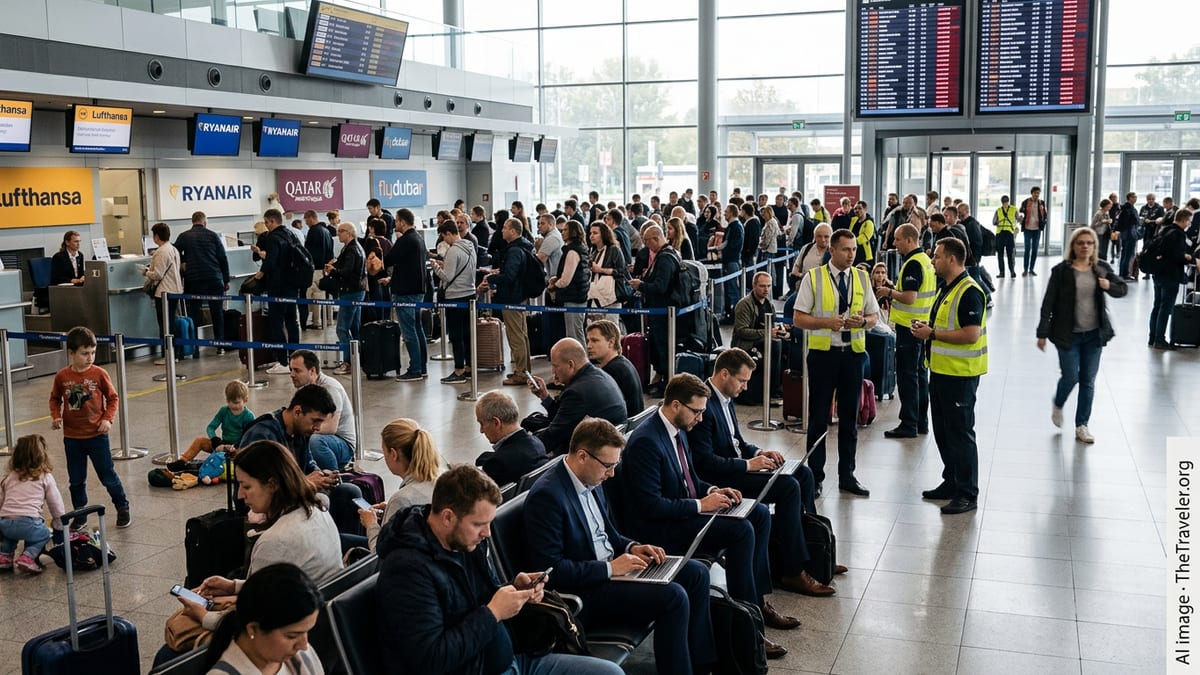
Major Carriers Pull Services From Key Polish Hubs
By midday Thursday, departure boards at Warsaw Chopin Airport and Kraków John Paul II International Airport showed wave after wave of cancellations on routes operated by Lufthansa, Qatar Airways, Ryanair and FlyDubai, according to airport and airline status updates. The suspensions affected a mix of European feeder routes and long-haul connections via Gulf hubs, abruptly severing links that tens of thousands of passengers rely on every week for business and leisure travel.
Lufthansa halted a series of rotations between Warsaw, Kraków and its German hubs, including Frankfurt and Munich, after wider scheduling disruptions tied to congestion and diversions across European airspace. Ryanair, Poland’s largest low cost carrier by passenger numbers, scrubbed multiple departures serving London, Dublin and regional airports, compounding an already difficult winter of delays and staffing pressures reported across European networks.
FlyDubai shelved services from Warsaw and Kraków to Dubai as the carrier continued to operate a reduced schedule through the Gulf, with aircraft and crews redeployed to priority corridors. Qatar Airways, which in recent seasons had steadily built its presence in the Polish market with daily links from Warsaw and several weekly flights from Kraków to Doha, suspended selected rotations as it navigates ongoing regional airspace closures and capacity constraints.
In total, 29 flights linked to the four carriers were cancelled over the course of the day, with dozens more delayed, some by more than three hours. Aviation analysts noted that while the absolute number of flights may appear modest, the impact is magnified because many of these services connect Polish travelers onward to global long haul destinations.
Middle East Airspace Crisis Ripples Into Central Europe
The disruption in Poland is the latest visible sign of how airspace restrictions in the Middle East are radiating into flight schedules thousands of kilometers away. Since late February, closures and military no fly zones around key corridors serving Doha, Dubai and other Gulf hubs have forced airlines to cancel, reroute or dramatically curtail services, creating bottlenecks that are now being felt at European origin airports.
Qatar Airways has been particularly affected, operating only a limited number of repatriation style flights through authorised corridors while its usual global network remains heavily constrained. That has left the carrier with fewer aircraft and crew cycles available for secondary European cities, including Warsaw and Kraków, leading to last minute cancellations that catch passengers off guard at check in.
FlyDubai and other Gulf based carriers have also warned of reduced operations and longer routings on certain sectors into Europe, stretching already tight schedules. As aircraft are held in holding patterns, rerouted around closed airspace, or repositioned to larger hubs for stranded passenger relief flights, secondary city links are often the first to be trimmed.
European carriers have not been spared either. Lufthansa and other network airlines have reported growing punctuality challenges across the continent as they absorb diverted long haul flights and rework rotations to avoid conflict zones. On Thursday, that strain materialised in Poland in the form of cancellations and rolling delays on key intra European connections.
Passengers Face Long Queues, Limited Information and Costly Workarounds
Inside Warsaw Chopin’s departure hall, long queues formed at airline service desks from the early morning as news of the cancellations filtered through. Families bound for holiday connections in Asia and the Indian Ocean, students returning to universities in Western Europe, and business travelers aiming for same day meetings all found themselves in the same slow moving lines, clutching paper boarding passes that were suddenly useless.
Many passengers reported difficulty reaching airline call centres or rebooking portals during the peak of the disruption. With Qatar Airways and FlyDubai prioritising previously stranded travelers for the few seats available on outbound flights from the Gulf, onward options for those starting their journeys in Poland were scarce. Some travellers resorted to purchasing entirely new itineraries on alternative carriers at short notice, often at steep last minute fares.
At Kraków airport, ground staff encouraged affected passengers to remain in the terminal only if they already had confirmed rebookings, to ease congestion in the relatively compact departures area. Others were directed to nearby hotels or advised to return home and monitor their airline’s app or text alerts for updated travel plans, though many complained that notifications arrived only after they had already reached the airport.
Consumer rights specialists reminded travellers that under European Union regulations, most passengers on flights cancelled at short notice are entitled to re-routing or a refund, and in some cases compensation, depending on the cause of the disruption and the operating carrier. However, they cautioned that processing such claims can take weeks, particularly during large scale disruption events affecting multiple airlines and jurisdictions.
Warsaw and Kraków Feel the Strain on Strategic Routes
The timing of Thursday’s disruption was especially painful for Poland’s two primary international gateways. Warsaw Chopin Airport, the country’s main hub, has seen steady growth in recent years as global carriers deepen their presence in Central and Eastern Europe. Lufthansa and Ryanair rank among the top foreign airlines by passenger volumes, while Gulf carriers such as Qatar Airways and FlyDubai play an outsized role in connecting Polish travellers to Asia, Africa and Australasia via their home hubs.
Routes from Warsaw and Kraków to Frankfurt, Munich, Doha and Dubai are regarded as strategic for both business and leisure demand. They feed corporate travel between Poland and Western Europe, funnel tourists to long haul winter sun destinations, and support the country’s growing diaspora. When these services are suspended, even temporarily, pressure quickly builds on remaining flights, which sell out days in advance and leave little flexibility for rebookings.
Regional airports that rely on Warsaw and Kraków as onward gateways also feel the knock on effect. Passengers originating in cities such as Rzeszów or Gdańsk often connect through the capital or Kraków to reach long haul flights. If a Lufthansa or Qatar Airways departure from Warsaw is scrubbed, those travellers may find that their entire multi segment itinerary unravels, with limited alternatives available the same day.
Local tourism operators warned that repeated waves of such disruptions could erode confidence among foreign visitors considering Poland for short city breaks or conference travel. While many recognise that the root causes lie far beyond Poland’s borders, the immediate experience for travellers is tied to what happens at Warsaw and Kraków’s airports.
Airlines Promise Recovery While Advising Passengers to Brace for More Turbulence
By late afternoon, some carriers signalled that operations would gradually stabilise over the coming days, but they also cautioned that schedules remain highly fluid and subject to change at short notice. Airline operations teams continue to juggle aircraft availability, crew duty hour limits and evolving airspace restrictions, leaving little margin for error if additional geopolitical or weather related shocks occur.
Passengers booked to travel to or from Poland in the next week were urged to monitor their flight status frequently, use airline apps to enable push notifications, and avoid heading to the airport without a confirmed, operating flight. Travel agents reported a spike in requests from corporate clients for flexible tickets and alternative routings that bypass Gulf hubs, even if that means longer travel times or higher fares.
For now, aviation analysts say the events in Warsaw and Kraków are a stark reminder of how interconnected global air travel has become. A decision by regulators to close a stretch of airspace thousands of kilometres away can, within hours, strand travellers in Central Europe and scramble carefully choreographed schedules at airlines across three continents.
As Lufthansa, Qatar Airways, Ryanair and FlyDubai work through backlogs of stranded passengers and reposition aircraft, travellers in Poland are being advised to prepare for a period of lingering uncertainty. Even as the immediate shock of 29 cancelled flights fades from departure boards, the underlying pressures on the global aviation system show few signs of easing.