

More news on this day
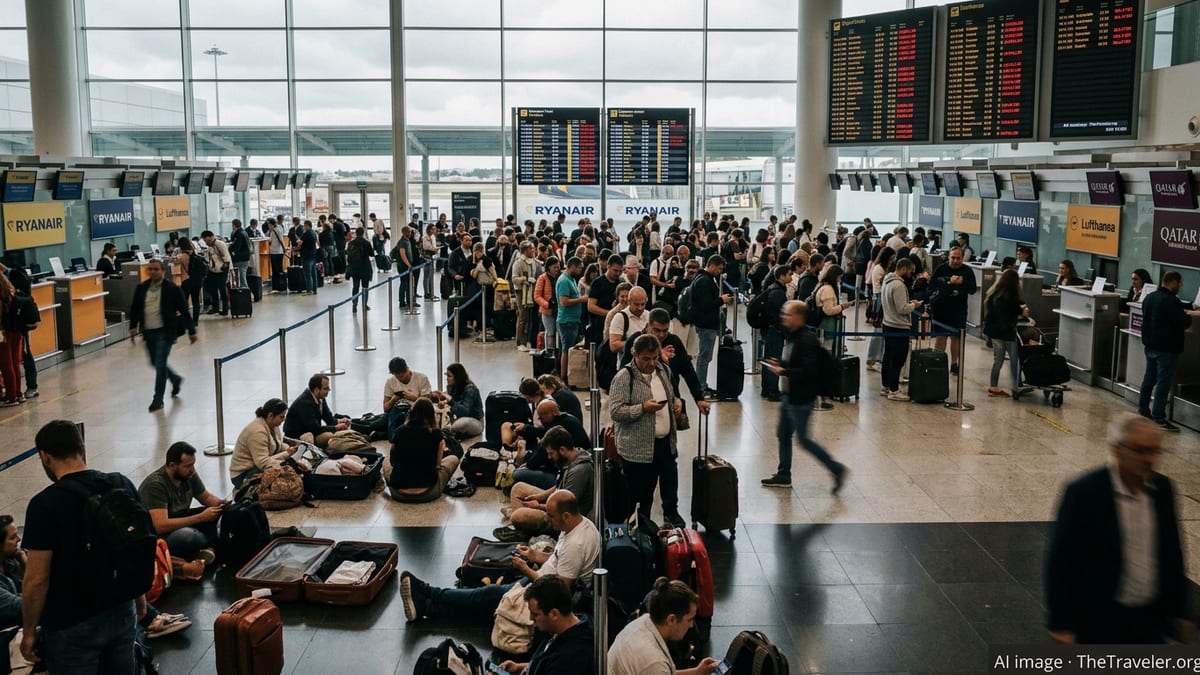
Portugal’s two busiest airports, Lisbon and Porto, faced heavy disruption on Thursday as Ryanair, Lufthansa and Qatar Airways grounded around 20 flights and triggered dozens more delays, snarling key routes and stranding passengers at the height of the spring travel period.
Get the latest news straight to your inbox!
Wave of Cancellations Hits Key European Links
Operational turbulence across several European hubs spilled into Portugal on March 12, as airlines scrambled to adjust schedules and navigate knock-on delays. Ryanair, Lufthansa and Qatar Airways collectively cancelled around 20 services touching Portuguese routes, while many more flights departed late, affecting connections across the continent.
Industry data and airport boards showed that a combination of congestion in neighboring Spain, capacity adjustments and broader rerouting by Gulf carriers had a direct impact on Lisbon and Porto. Flights linking Portugal with major hubs such as Frankfurt, Madrid and Doha were among those affected, with rotations scrubbed or pushed back by several hours.
While the number of outright cancellations remained limited compared with peak disruption in larger European markets, the concentration of affected flights on high-demand routes amplified the impact. Travelers reported last-minute gate changes, rolling departure times and long queues at service desks as airlines struggled to rebook passengers.
The situation comes on top of already tighter schedules for the late winter and early spring period, leaving carriers with less slack to absorb disruptions. For many passengers, a single cancelled flight or extended delay in Lisbon or Porto translated into missed long-haul connections and unexpected overnight stays.
Ryanair Cuts Expose Strains in Portugal’s Aviation Market
Ryanair, which has been vocal for months about rising airport charges in Portugal, again found itself at the center of attention. The carrier has already announced substantial capacity reductions in the country for 2026, targeting routes including services touching Lisbon and Porto, as it protests higher fees and new taxes at Portuguese airports.
On Thursday, the airline grounded several rotations involving Portugal as part of a wider pattern of short-haul cancellations in Iberia. The disruptions added to passenger unease about the reliability of upcoming schedules, particularly for budget-conscious travelers who depend on Ryanair’s dense network for intra-European connections.
Executives at the airline have repeatedly warned that higher aeronautical charges, alongside a new travel tax and increased air navigation fees, make it harder to sustain low fares on key routes. For destinations like Lisbon and Porto, which rely heavily on low-cost carriers to feed tourism demand, even a modest reduction in Ryanair capacity can trigger sharp price swings and fuller remaining services.
Travel agents in Portugal reported a spike in last-minute requests to switch from affected Ryanair flights to alternative carriers operating similar routes. However, with peak dates and limited seat availability, many customers found themselves forced into inconvenient routings or higher fares.
Lufthansa and Qatar Airways Disrupt Long-Haul Connections
Lufthansa and Qatar Airways cancellations created particular challenges for travelers relying on Lisbon and Porto for long-haul connections. Several flights tied to Frankfurt and Doha were withdrawn or heavily delayed, fracturing complex itineraries that depended on smooth transfers through those hubs.
Lufthansa’s cancellations rippled through the trans-European network, as missed connections in Frankfurt affected onward travel to North America, Asia and other parts of Europe. For Portuguese travelers and visitors alike, the loss of a single daily connection often meant a 24-hour delay in reaching their final destination.
Qatar Airways has been operating a reduced schedule since a late February airspace closure in its home market forced the carrier to suspend or heavily modify many flights. Although the airline has been gradually rebuilding operations through a combination of limited services and repatriation-focused rotations, traffic between Doha and European capitals, including Lisbon, remains highly vulnerable to short-notice changes.
Passengers booked on Portugal-linked Qatar Airways flights described a patchwork of solutions, from complete cancellations and refunds to rebookings via alternative European gateways. Some were re-routed through Madrid, Frankfurt or other hubs, only to encounter additional congestion caused by the same wave of delays and cancellations affecting Europe’s major airports.
Passengers Face Long Queues, Rebooking Headaches and Unclear Information
At Lisbon Airport, screens filled with a mix of delayed and cancelled flights as travelers lined up at airline counters seeking answers. Many reported long waits to speak with customer service agents and difficulties reaching call centers, particularly for carriers grappling simultaneously with disruptions across multiple countries.
For those dealing with cancellations, the key immediate question was whether to accept rebooking, seek refunds or arrange their own travel and claim reimbursement later. Consumer groups reminded passengers departing from Portugal that EU air passenger rights rules apply, entitling many to assistance and, in some cases, monetary compensation, depending on the cause of the disruption.
In Porto, where capacity is more limited than in Lisbon, options for same-day rebooking were often scarce. Travelers heading to business meetings, cruise departures or family events reported being forced to reroute via distant hubs or delay trips by several days. Hotel desks near the airport did brisk trade as stranded passengers scrambled for accommodation.
Uncertainty over the duration of Qatar Airways’ reduced schedule further complicated decision-making for long-haul passengers. Some travelers chose to proactively switch to other carriers serving Portugal, even when their original flights had not yet been officially cancelled, in order to avoid last-minute surprises.
Tourism Industry Braces for Knock-On Effects
The disruption arrives at a sensitive moment for Portugal’s tourism industry, which has been counting on strong spring and summer bookings following record visitor numbers in recent years. Lisbon and Porto serve as key gateways not only for city breaks but also for onward travel to coastal resorts and wine regions.
Hoteliers and tour operators warned that repeated waves of flight cancellations and delays, even if modest in scale, risk eroding traveler confidence. Tour groups, in particular, are vulnerable to late schedule changes, with missed first nights or shortened itineraries eating into already tight margins.
Industry analysts noted that structural tensions in Portugal’s aviation market, including disputes over airport charges and limited runway capacity, leave the country exposed to wider European and global shocks. When airlines like Ryanair, Lufthansa and Qatar Airways adjust operations at short notice, the impact on Portugal can be disproportionately felt because of the heavy reliance on a small number of key routes and hubs.
For now, authorities and tourism bodies are urging passengers to monitor flight status closely, allow extra time at airports and maintain flexible itineraries wherever possible. With the situation around Gulf airspace and European congestion still evolving, travelers passing through Lisbon and Porto are being advised to expect continued volatility in the days ahead.