

More news on this day
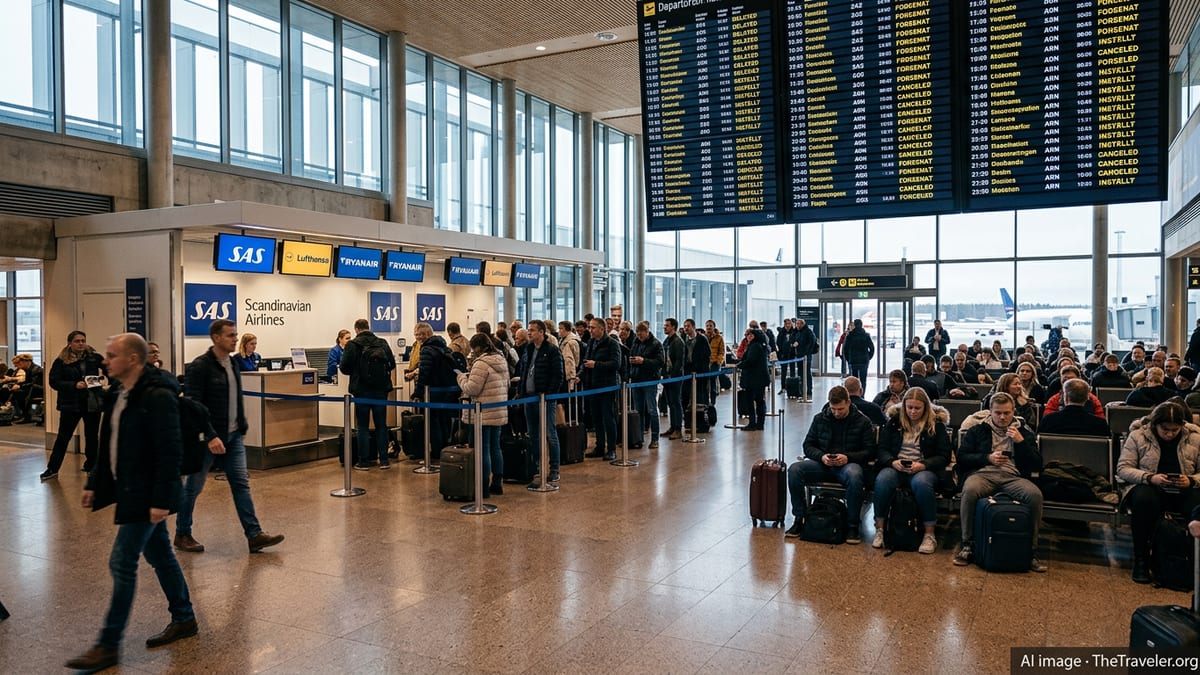
Air passengers across Sweden faced mounting disruption today as a wave of delays and cancellations swept airports in Stockholm, Gothenburg, Malmö, and Uppsala, with 63 flights delayed and 25 scrubbed from the schedule, hitting carriers including Lufthansa, SAS, and Ryanair.
Get the latest news straight to your inbox!
Major Swedish Hubs Grapple With Widespread Disruption
The disruption affected services at Stockholm Arlanda and Bromma airports, Gothenburg Landvetter, Malmö Airport, and traffic linking nearby Uppsala, straining operations at some of Sweden’s busiest aviation gateways. Morning and early afternoon departures were particularly impacted, as airlines and airport operators worked to absorb schedule changes and reassign aircraft and crews.
While exact passenger numbers were still being compiled, aviation analysts estimated that several thousand travelers either saw their plans upended or faced significant delays. Queues built quickly at check in and customer service desks as travellers sought rebooking options, compensation information, and clarity on connecting flights across Europe.
Operational knock on effects were reported on both domestic and international routes, with some services forced into extended ground holds and others turning back to gates for revised departure slots. Airport authorities urged travelers to allow additional time at terminals and to rely on official airline channels for the latest status updates.
Lufthansa, SAS and Ryanair Among Hardest Hit Airlines
Flag carrier SAS, low cost giant Ryanair, and German airline Lufthansa were among the most affected operators, according to preliminary airport data and flight tracking services. The three carriers collectively handle a large share of Sweden’s European connectivity, meaning disruptions quickly rippled beyond national borders into key hubs in Germany, the United Kingdom, and southern Europe.
Passengers reported a mix of rolling delays, day of departure cancellations, and last minute gate changes. Some travelers on Lufthansa and SAS services were rebooked via alternative European hubs or onto partner airlines under existing codeshare agreements, while Ryanair customers were largely offered later departures on the same route or refunds in line with carrier policy.
The disruption added fresh strain to an already challenging early year for European aviation, with recurrent weather events, air traffic control capacity constraints, and periodic industrial action in several countries combining to keep on time performance under pressure. For many Swedish travelers, today’s events marked yet another reminder of how quickly regional issues elsewhere in Europe can cascade into local flight schedules.
Weather, Airspace Bottlenecks and Operational Strains Blamed
Early indications from airline and airport sources pointed to a combination of adverse weather patterns in parts of northern Europe, congestion in key air corridors, and ongoing staffing challenges in some operational roles as contributing factors. While conditions at Swedish airports remained largely manageable, flow restrictions and slot limitations in neighboring regions forced airlines to adjust rotations and reduce frequencies on short notice.
Industry observers noted that tight winter schedules, lean staffing rosters, and limited spare aircraft capacity continue to leave carriers with little room to recover once early morning flights fall out of sequence. A delayed inbound aircraft to Stockholm or Gothenburg can quickly trigger downstream delays on departures to destinations across the continent, as crews and equipment miss their scheduled connections.
Airlines have been under pressure to rebuild networks to meet persistent leisure and business demand, even as recruitment and training pipelines for pilots, cabin crew, ground handlers, and air traffic controllers lag behind pre pandemic norms. In this context, even relatively modest bouts of bad weather or airspace disruption can have an outsized effect on daily punctuality.
Passengers Face Long Queues and Rebooking Challenges
At Stockholm Arlanda, Sweden’s primary international hub, travellers described long but generally orderly lines at customer service counters, with some waits stretching beyond an hour during peak periods. Similar scenes were reported at Gothenburg Landvetter and Malmö, where staff worked to prioritise passengers with imminent long haul connections or limited onward options.
Many travellers turned to airline mobile apps and digital self service tools to request rebooking or refunds, but not all found quick solutions. Where seats on later flights were scarce, some passengers opted to reroute via alternative European hubs or to travel by rail or coach for shorter regional journeys. Others chose to extend hotel stays in Sweden while monitoring the evolving situation.
Consumer rights advocates reminded affected passengers that European air passenger protection rules can entitle travellers to meals, accommodation, re routing and, in some cases, financial compensation when flights are heavily delayed or cancelled, depending on the cause and notice period. Passengers were urged to keep boarding passes, booking confirmations, and receipts for any additional expenses incurred during their disruption.
Airlines and Airports Work to Stabilise Schedules
By late afternoon, operational teams at affected Swedish airports were focused on restoring stability to evening waves of departures and overnight aircraft positioning. Additional staff were deployed in terminal areas to assist delayed passengers, while airlines coordinated with partners in Europe to secure replacement crews and aircraft where possible.
Airlines emphasised that safety remained the overriding consideration in any decision to delay or cancel flights, even as they acknowledged the frustration experienced by stranded and delayed customers. Several carriers extended flexible rebooking policies, waiving change fees for eligible tickets and encouraging non essential travellers to move journeys to less congested days where possible.
Looking ahead to the coming days, both airlines and airport authorities signalled that some residual delays and schedule adjustments could persist as aircraft and crew rotations return to normal. Travellers booked to fly from Stockholm, Gothenburg, Malmö, or Uppsala were advised to closely monitor their flight status, arrive early at the airport, and prepare for potential queues at security and boarding while the system works through the latest disruption.