

More news on this day
Hundreds of travelers were left stranded in Switzerland on March 31 as a fresh wave of flight cancellations and delays swept through Zurich and Geneva, disrupting services operated by Scandinavian Airlines, Pegasus Airlines, Kuwait Airways and several other major carriers.
Get the latest news straight to your inbox!
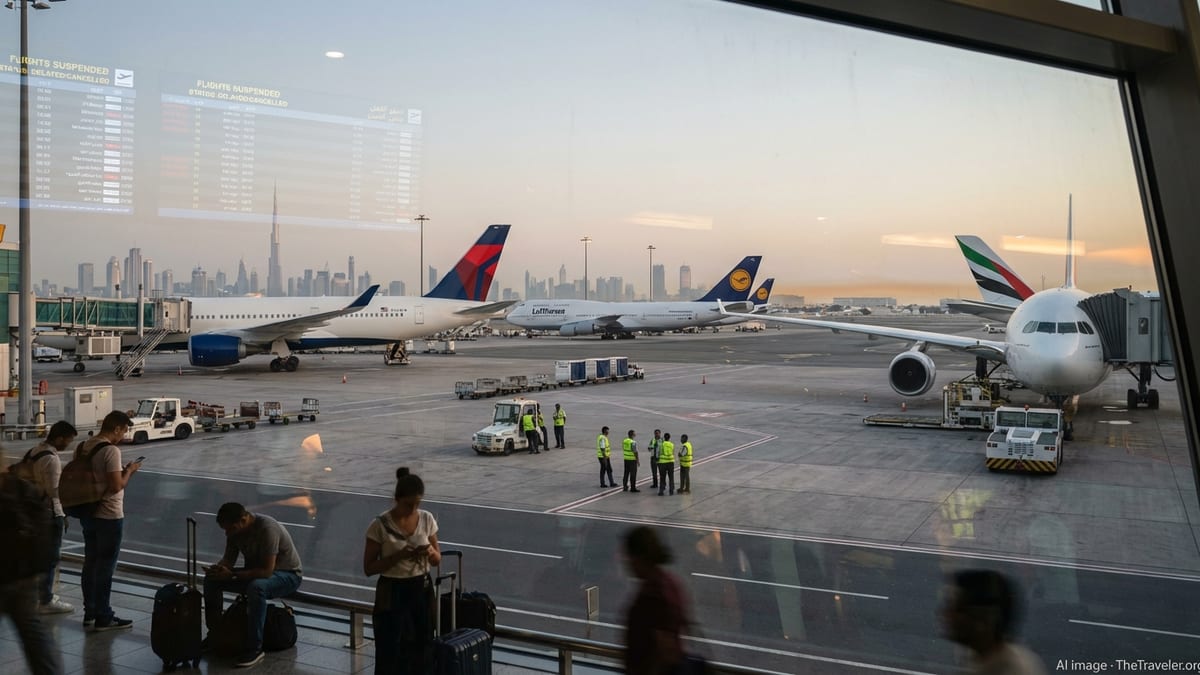
Eight Flights Suspended as Disruptions Intensify
According to published operational data and industry reporting, at least eight flights involving Scandinavian Airlines, Pegasus Airlines, Kuwait Airways and other international carriers serving Zurich Airport and Geneva Airport were suspended on March 31. The cancellations came on top of a heavy load of delayed services, compounding travel disruption that has built up across Europe in recent days.
Travel-focused outlets tracking day-of-operation movements in Switzerland reported that the suspended flights affected both short haul and medium haul routes, including services linking Zurich and Geneva with key hubs in Germany, France, Turkey and the Middle East. These suspensions followed a broader pattern of interruptions across the continent, where airports in Germany, the United Kingdom, France and Türkiye have all experienced elevated numbers of cancellations and delays in the past 48 hours.
Publicly available airport information indicates that Zurich and Geneva have been contending with knock-on effects from earlier disruptions, including weather-related issues in central Europe and wider schedule instability linked to airspace restrictions and higher fuel prices. The latest eight cancelled flights involving Scandinavian Airlines, Pegasus Airlines and Kuwait Airways were described by aviation trackers as part of this wider operational strain, rather than isolated incidents.
Reports from passenger monitoring services and industry dashboards suggest that the volume of delays far outstripped outright cancellations, with many departures pushed back by more than an hour. Nonetheless, the targeted suspension of a small cluster of flights on busy routes had an outsized impact, leaving aircraft out of position and creating bottlenecks at peak times.
Zurich and Geneva Bear the Brunt
Zurich Airport, Switzerland’s largest international hub, has been one of the focal points of the latest disruption. Data compiled by European travel news outlets on March 31 highlights Zurich among a group of major hubs experiencing significant same-day scheduling challenges, alongside Frankfurt, London, Paris, Istanbul and others. In that wider European picture, Zurich has reported a mix of late departures, diversions and selective cancellations that are affecting both European and intercontinental networks.
Geneva Airport, a key gateway for leisure and diplomatic travel, has also faced a wave of delays and scattered cancellations. Earlier seasonal reports from Geneva have pointed to vulnerabilities when operations are disrupted for even a few hours, with long queues and baggage backlogs developing quickly. The current situation is more diffuse, spread across the day, but passengers are still encountering extended waits and short-notice changes to boarding times.
Travel and tourism media note that Switzerland’s role as a connecting point for flights between North America, the Middle East and the rest of Europe amplifies the impact of even a limited number of cancellations. When flights to or from Zurich and Geneva are suspended, travelers often miss onward connections in cities such as Frankfurt, Paris or Istanbul, forcing rebookings that can ripple through airline networks for days.
Operational statistics shared in industry coverage suggest that, when counted across all airlines, Zurich and Geneva together have recorded dozens of delays and more than ten cancellations within a single 24 hour period, with the eight suspended flights highlighted for Scandinavian Airlines, Pegasus Airlines, Kuwait Airways and others forming a visible subset of a more extensive disruption profile.
Airlines Under Pressure Across Europe
The difficulties affecting Scandinavian Airlines, Pegasus Airlines and Kuwait Airways services to and from Switzerland form part of a broader European aviation landscape under strain. Travel and Tour World and other sector publications report that, on March 31 alone, hundreds of cancellations and several thousand delays have been logged across key airports in Germany, Türkiye, the United Kingdom, Italy and Switzerland.
These reports describe a combination of factors, including severe weather episodes earlier in the week, congestion management measures at busy hubs and continued rerouting around conflict-affected airspace in parts of the Middle East. While the precise cause of each individual flight suspension differs, the cumulative effect has been a reduction in schedule resilience, leaving airlines with less room to recover when new issues arise.
Scandinavian Airlines, which operates important links between Nordic capitals and Swiss airports, has been cited in European media coverage related to recent cancellations in France and other markets, reflecting the cross-border nature of the disruption. Pegasus Airlines, a major Turkish low cost carrier, and Kuwait Airways, a key operator on Middle Eastern routes, have also appeared in regional reporting that tracks how airlines from multiple countries are recalibrating schedules and, in some cases, trimming frequencies.
Analysts quoted in aviation industry commentary note that when several carriers on overlapping routes reduce or suspend flights, passengers have fewer immediate rebooking options, intensifying the impact of each cancellation. In Switzerland, where international services are heavily relied upon for business, diplomatic and leisure travel, that effect is being felt acutely by travelers departing from or transiting through Zurich and Geneva.
Passengers Face Long Waits and Limited Options
For travelers on the ground, the suspension of eight flights combined with widespread delays has translated into long waits in terminal buildings and crowded customer service counters. Passenger accounts gathered by travel forums and social media monitoring, as well as aggregated delay data, point to queues forming early in the morning and persisting throughout the day as people attempt to secure alternative itineraries.
Publicly available guidance from airports and airlines continues to advise travelers departing Zurich and Geneva to check flight status regularly, arrive early and be prepared for last minute gate or timing changes. Travel media also recommend that passengers familiarize themselves with carrier policies on rebooking, refunds and duty of care, particularly for disruptions starting or ending in the European Union or Switzerland, where specific compensation and assistance rules may apply.
Accommodation availability has emerged as another pressure point. As cancellations have accumulated over several days across Europe, hotels near major airports such as Zurich and Geneva have reported higher occupancy levels, according to hospitality industry summaries. With eight flights suspended and many others delayed, some travelers have been required to extend stays unexpectedly or relocate to other cities while awaiting new connections.
Consumer advocacy organizations cited in regional coverage encourage travelers to retain documentation, including boarding passes, booking confirmations and receipts for meals or accommodation, to support any future claims. However, they also highlight that claims procedures can take time, especially when airlines are handling a large volume of cases simultaneously after a period of widespread disruption.
Continuing Uncertainty for Early April Travel
Although the most recent wave of cancellations and delays has been concentrated around March 31, aviation data providers caution that schedules across Europe may remain volatile into early April. Airlines facing higher operating costs and lingering capacity constraints are continuing to adjust timetables, which can lead to further short notice changes on routes to and from Switzerland.
In this environment, travelers planning to use Zurich or Geneva as departure points or transfer hubs in the coming days are being advised by travel information services to build additional time into their itineraries, avoid tight connections where possible and monitor airline notifications closely. Some carriers are also offering limited flexibility, such as free date changes on specific routes, as they seek to manage demand and reduce congestion on oversubscribed flights.
Sector analysts following European aviation developments suggest that a sustained return to more stable on time performance will depend on several external factors, including weather patterns, air traffic control capacity and geopolitical conditions affecting overflight rights. Until those pressures ease, Switzerland’s main airports are expected to remain vulnerable to sudden bouts of disruption similar to the one that has left travelers stranded in Zurich and Geneva at the end of March.
For now, the situation underscores how quickly conditions can deteriorate when multiple airlines, including Scandinavian Airlines, Pegasus Airlines and Kuwait Airways, adjust or suspend services at short notice. With eight flights cancelled and many more delayed, the experience of stranded passengers in Switzerland illustrates the fragility of a European air travel system still working to absorb a complex series of shocks.