

Hundreds of passengers were left stranded across major European cities on Tuesday as a fresh wave of cancellations and delays involving Scandinavian Airlines, Pegasus Airlines and Air France disrupted travel from Stockholm and Helsinki to Istanbul, Paris, Venice, Prague and beyond.
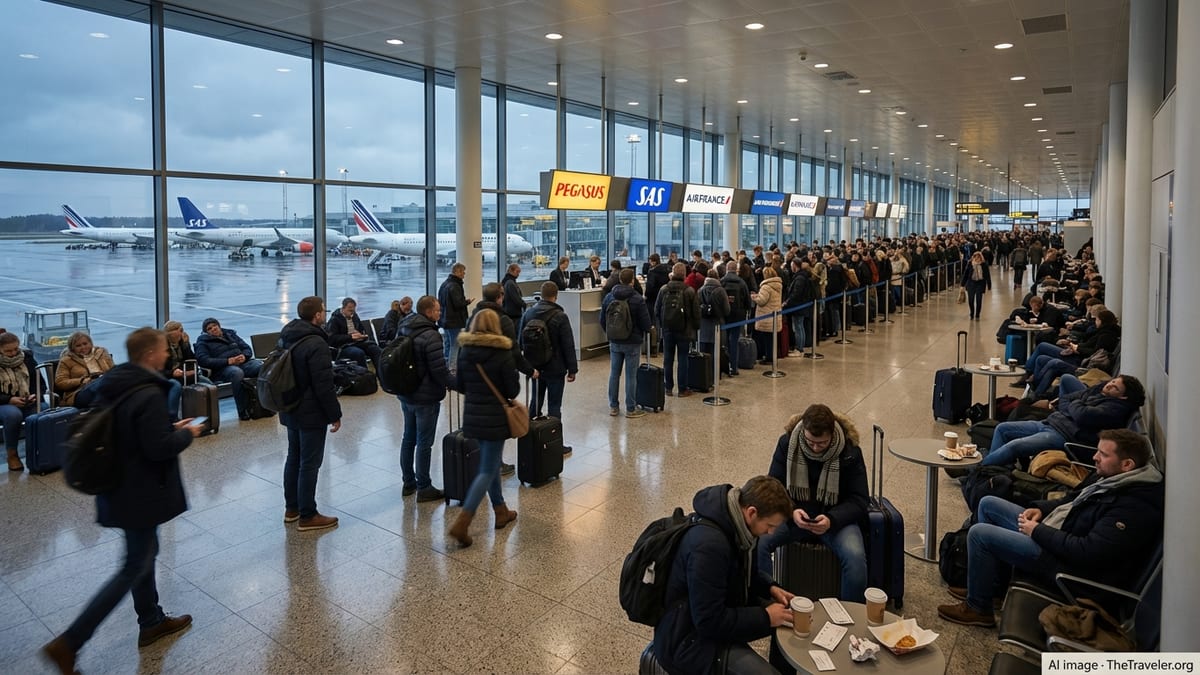
Patchwork of Disruptions Across Europe
The latest disruption unfolded on February 17 across a patchwork of European hubs already strained by a turbulent winter season for aviation. While overall traffic remained below the worst days of recent weeks, targeted cancellations and more than 180 delays on routes involving Scandinavian Airlines, Pegasus Airlines and Air France were enough to paralyze journeys for hundreds of holidaymakers and business travelers.
Operational data and airport reports from the past several days show that Europe has repeatedly struggled with high volumes of delayed flights, with France, Sweden, Finland, Turkey and Italy among countries facing frequent bottlenecks at key hubs such as Paris, Stockholm and Istanbul. Against that backdrop, Tuesday’s route-specific disruptions, clustered around a handful of carriers and city pairs, created outsized knock-on effects for connecting travelers.
In practice, the impact extended far beyond the cities directly named in flight logs. Passengers originating in smaller regional airports, including secondary Scandinavian and Central European gateways, found themselves stranded mid-journey in intermediate hubs such as Stockholm Arlanda, Helsinki Vantaa and Paris Charles de Gaulle after missed connections and last-minute schedule changes.
Although total cancellations for the day remained limited compared with some recent Europe-wide meltdowns, the combination of six scrubbed departures and a wave of delays proved enough to throw tightly timed itineraries off course, especially for travelers relying on evening connections and same-day turnarounds.
Key Airlines Under Pressure
Scandinavian Airlines, Pegasus Airlines and Air France were among the carriers most visible to affected passengers on Tuesday. Each airline entered the day with already stretched winter operations following weeks of weather-related slowdowns, staffing pressures and airspace constraints affecting Europe’s dense network of short and medium-haul routes.
Scandinavian Airlines, which uses Stockholm, Copenhagen and Oslo as core hubs, has been hit repeatedly in recent weeks when disruptions at one Nordic gateway ripple quickly through the rest of its timetable. Flight data and recent airport statistics show SAS among the most frequently delayed carriers during Northern Europe’s winter storms and operational bottlenecks, setting the stage for Tuesday’s added schedule strain.
In Turkey, Pegasus Airlines, headquartered at Istanbul’s Sabiha Gokcen Airport, has been operating near peak capacity on popular links to Western Europe, including to Paris Orly. Even minor timing disruptions on these routes can quickly cascade into missed onward flights within Europe’s tightly banked schedules. Passengers on key morning services from Istanbul reported prolonged queues at transfer desks and difficulties rebooking onto alternative departures when aircraft and crews were already fully committed elsewhere in the network.
Air France, meanwhile, continues to shoulder a disproportionate share of continental connections through its dual Paris hubs at Charles de Gaulle and Orly. When delays build in Paris, they often radiate outward to satellites across Europe, including leisure destinations in Italy and Central Europe and northern gateways in Sweden and Finland.
Stranded in Stockholm, Istanbul, Paris and Beyond
By mid-afternoon, the cumulative effect of the day’s disruptions could be seen most clearly on the ground in Stockholm, Istanbul and Paris, where groups of travelers clustered around departure boards and service counters in search of answers. At Stockholm Arlanda, passengers connecting onto Air France and SAS services to Paris and other Western European cities faced rolling departure-time revisions, forcing many to abandon same-day meeting plans or onward rail connections.
In Istanbul, a combination of weather-related congestion and tight turnaround times at Sabiha Gokcen left Pegasus customers particularly vulnerable to delays on morning and midday rotations to France and Central Europe. Throughout the day, Istanbul’s role as an east-west bridge amplified the impact: when one Europe-bound aircraft departed late, subsequent returns to Turkey also slid behind schedule, creating a feedback loop that proved difficult to unwind.
Paris, long a bellwether for the broader state of European aviation, showed similar strain. Arrival irregularities into Charles de Gaulle and Orly forced Air France to juggle aircraft allocations, with some short-haul rotations to nearby capitals pushed back or consolidated. For travelers bound for Venice, Helsinki and Prague, even a seemingly modest 45-minute delay on a feeder flight could mean missing the last convenient onward service of the day and facing an unplanned overnight stay.
Further down the line, airports in Italy and Central Europe, including Venice and Prague, reported scattered late-evening arrivals and knock-on late departures as aircraft and crews worked to reposition after the earlier disruption. While these airports did not see the same concentration of stranded passengers as the larger hubs, even a handful of misaligned connections was enough to strain already tight hotel availability near terminals.
Causes: A Winter of Compounding Pressures
Tuesday’s difficulties did not arise in isolation. Over the past several weeks, European air travel has been repeatedly hit by a mix of winter weather, staffing challenges and temporary airspace restrictions, all of which have increased the fragility of airline schedules. Recent flight disruption reports from consumer-rights platforms and airport authorities highlight repeated days where thousands of flights across the continent have experienced delays and dozens have been cancelled, with Northern and Western Europe especially affected.
Seasonal storms sweeping across the North Sea and Baltic regions, combined with low visibility and icy conditions at Scandinavian hubs, have frequently forced airlines to reduce runway throughput and add buffers into schedules. While these measures improve safety margins, they also leave less flexibility to recover once an airline falls behind timetable. For carriers such as SAS and Finnair, which depend heavily on quick connections through Nordic hubs, even modest weather-driven restrictions can trigger widespread lateness.
Elsewhere, intermittent constraints on European airspace linked to military activity and air-traffic control requirements in Eastern and Central Europe have forced carriers to adopt longer routings and more conservative slot planning. Industry analysts note that when every sector in a network takes slightly longer and uses more crew time and fuel, spare capacity to absorb fresh disruption diminishes rapidly.
At the same time, airlines and ground handlers across the region continue to manage labor shortages and high sickness absence typical of the winter season. On days of heavy disruption, passengers frequently encounter longer queues at check-in and security, slower baggage handling and fewer staff available at customer-service counters, complicating efforts to rebook travelers swiftly.
Human Impact: Missed Events and Improvised Nights
Behind the statistics of six outright cancellations and around 180 delays lies the more personal reality of disrupted plans. In Stockholm and Helsinki, some travelers headed for business meetings in Paris and Brussels reported abandoning their trips entirely after it became clear that any replacement flights would not arrive in time. Others scrambled to rebook onto overnight services or early-morning departures the following day, often at personal expense.
At Istanbul Sabiha Gokcen and Paris Orly, social media posts and local reports described scenes of families camped out on terminal benches and floors, especially near departure gates for Pegasus and Air France short-haul services. Some passengers reported receiving meal vouchers and hotel offers in line with European Union passenger-protection rules, while others said they were instructed to seek later reimbursement through airline claims channels.
For leisure travelers bound for Venice and Prague at the tail end of school holidays and winter city-break season, the disruption cut directly into limited vacation time. Arriving several hours late into Venice’s Marco Polo Airport or Prague’s main gateway meant losing pre-booked tours and restaurant reservations and, in some cases, forfeiting non-refundable accommodation for the first night.
Given the interconnected nature of modern itineraries, the impact of a single delayed leg could stretch across continents. Some long-haul passengers who had flown overnight from North America to connect through Paris or Stockholm onto regional services found themselves unexpectedly marooned in Europe, awaiting re-routed journeys to final destinations in the Middle East or further into Asia.
Passenger Rights and What Travelers Can Do
As with previous episodes of disruption this winter, Tuesday’s events have renewed focus on the protections available to passengers under European regulations. Under EU rules, travelers whose flights are significantly delayed, cancelled or overbooked may be entitled to assistance ranging from meals and refreshments to hotel accommodation and, in some circumstances, financial compensation when the disruption is within an airline’s control.
Consumer advocates advise stranded passengers first to document the situation thoroughly by saving boarding passes, screenshots of delay notifications and receipts for any extra expenses such as meals or overnight stays. This documentation can be crucial when submitting claims to airlines in the days following a disrupted trip, particularly when several carriers and connecting flights are involved.
Passengers are also urged to use airline mobile apps and official communication channels as the primary source of schedule information, as airport departure boards can sometimes lag behind real-time operational decisions. When a delay stretches beyond a couple of hours or a cancellation is confirmed, rebooking options can disappear quickly, especially on popular city pairs such as Stockholm to Paris or Istanbul to major Western European hubs.
Travel experts recommend that whenever possible, passengers ask airlines to rebook them on the next available flight, even if it is operated by a different carrier under an interline or codeshare agreement. In practice, such cooperation can vary by route and airline, but for travelers facing overnight disruptions, being flexible about carrier and even destination airport within a city can improve the chances of reaching their destination sooner.
Ripple Effects on Tourism and Business Travel
The concentration of delays and cancellations on routes linking major capitals and high-profile leisure destinations has raised concerns among tourism boards and business groups. Cities such as Venice and Prague rely heavily on short-break visitors arriving from hubs like Paris and Scandinavian capitals, particularly during shoulder seasons when domestic demand is softer.
Repeated disruptions can deter travelers from planning tightly scheduled weekend trips, especially when stories of stranded passengers and missed experiences circulate widely. Tour operators and hoteliers in affected cities have reported a rise in last-minute inquiries from guests seeking flexibility in check-in times or asking about the possibility of shifting reservations if flights are delayed.
Corporate travel managers are also paying close attention. Many companies have already shifted a portion of their European meetings online following earlier waves of disruption and are reluctant to expose employees to additional uncertainty. If irregular operations continue into late winter, some firms may further consolidate trips or avoid same-day connections that rely on vulnerable short-haul links through congested hubs.
For the airlines themselves, the financial impact extends beyond compensation payouts and immediate operational costs. Persistent irregularity risks eroding passenger confidence in certain routes or connection patterns, pushing high-yield travelers to rival carriers or encouraging them to choose more direct services, even at higher fares.
Outlook: Fragile Recovery as Winter Continues
With several weeks of winter still ahead, aviation analysts caution that Europe’s air travel system is likely to remain fragile. Forecasts for the coming days suggest that intermittent weather systems and continued high demand on popular routes will leave little slack in schedules for airlines such as Scandinavian Airlines, Pegasus and Air France.
Some carriers are responding by trimming select frequencies, building longer ground times between rotations or adding spare aircraft where possible to create buffers. While these measures can reduce the number of extreme disruptions, they may also result in fewer available seats and higher fares on certain high-demand city pairs.
Regulators and airport operators, meanwhile, are reviewing recent waves of disruption to identify where additional resilience can be built into air-traffic management, staffing and infrastructure. Improvements in data sharing between airports, airlines and air-navigation providers are among the tools being discussed to help predict and mitigate cascading delays on days when conditions deteriorate.
For travelers planning trips in the coming weeks, industry experts suggest allowing extra time for connections, favoring earlier flights in the day where possible and closely monitoring airline communication channels in the 24 hours before departure. As Tuesday’s events showed yet again, even a relatively small number of cancellations and a few hundred delayed flights can be enough to upend plans for passengers across an entire continent when the system is already stretched.