

More news on this day
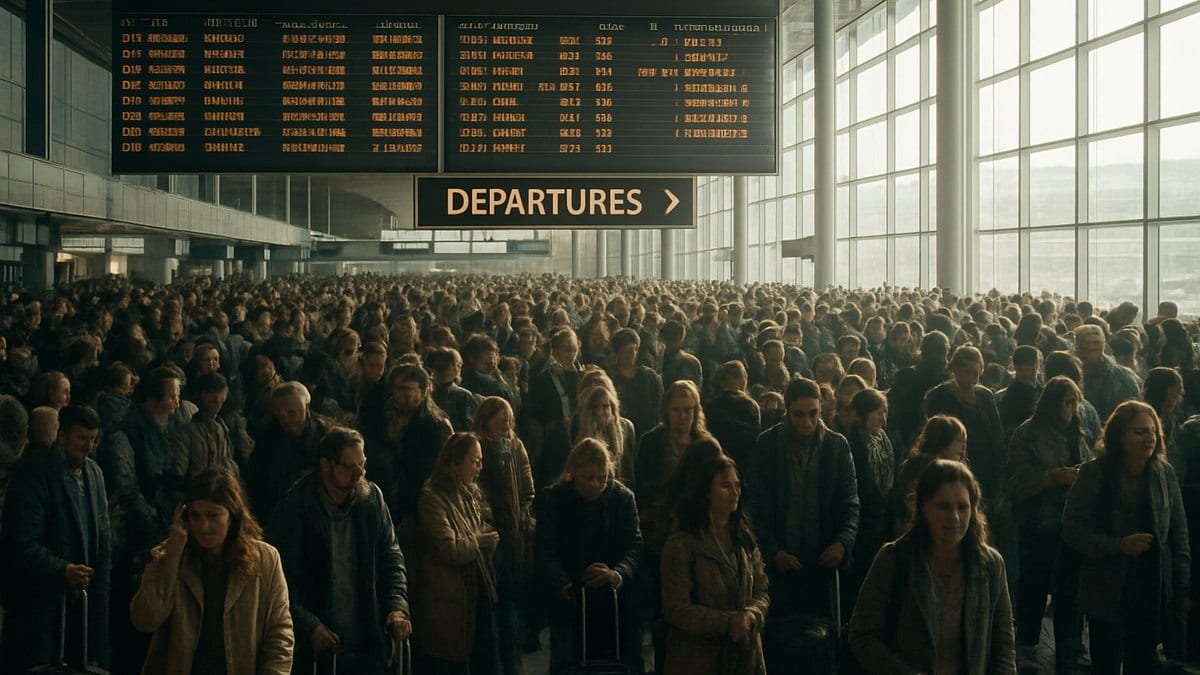
Hundreds of travelers were left stranded across Europe in early April 2026 as a new wave of IT outages, severe weather and staffing gaps combined to disrupt operations at more than ten major airports, snarling holiday travel and business trips alike.
Get the latest news straight to your inbox!
Disruptions Mount Across Continent’s Busiest Airports
Publicly available flight tracking data and recent travel industry analyses indicate that European hubs have endured several consecutive days of heavy disruption in the first full week of April 2026. Reports highlight cascading delays and cancellations affecting airports in the United Kingdom, Spain, Germany, Italy, Denmark, the Netherlands, Türkiye and a number of Nordic countries, with knock-on effects spreading across the wider network.
Figures compiled from multiple aviation data providers show that on some peak days in early April, more than 1,400 flights were delayed and upwards of 150 were cancelled across Europe, leaving passengers stuck in terminals or forced to rebook days later. One snapshot of traffic on April 7 pointed to over 1,400 delays and at least 20 cancellations, with Rome Fiumicino and Milan Malpensa among the worst affected Italian gateways. Separate reporting for the period around April 6 described more than 1,400 delays and over 170 cancellations, stranding thousands of passengers across the continent.
By April 9, travel news outlets tracking real-time operations were still recording extensive disruption, with more than 1,600 delays and several dozen cancellations across major markets including Spain, Germany, England, Denmark, Türkiye and the Netherlands. Key hubs such as London Heathrow, Madrid Barajas, Berlin, Copenhagen, Istanbul and Amsterdam continued to experience schedule instability as airlines attempted to reposition aircraft and crews.
The scale of the disruption follows an already difficult start to the year for European aviation, which has been contending with winter storms, industrial action and lingering capacity constraints. Analysts note that recovery windows between disruption events have been short, helping explain why relatively localized incidents in one country are now producing widespread effects across many others.
Cyber Incidents and IT Failures Add to Operational Strain
Alongside weather and staffing challenges, early April’s flight chaos has been amplified by a series of IT problems affecting systems that underpin airport and airline operations. Coverage in regional and international media over the weekend of April 4 to 6 describes what has been characterized as a significant cyber incident targeting aviation software used at multiple European hubs, forcing operators to revert to manual processes for check in and baggage handling.
Reports referencing flight tracking data for April 4 suggest that airports including London Heathrow, Brussels and Berlin saw check in slowdowns and baggage backlogs as technical teams worked to isolate affected systems and restore backups. In some cases, carriers were reported to have issued paper boarding passes and processed luggage using contingency procedures, lengthening queues and increasing the risk of missed connections even where flights ultimately departed.
Specialist travel and aviation outlets note that the April incident follows other high profile cyberattacks on aviation software in recent years, reinforcing concerns over the sector’s exposure to digital threats. While core air traffic control infrastructure has not been flagged as compromised in the current wave of disruptions, operational tools that airlines and airports rely on to coordinate staffing, gates and turnaround times appear to have been affected, contributing to ground delays.
Industry commentators point out that IT outages do not need to last long to create major schedule problems. A system failure during a morning peak can displace aircraft rotations for the rest of the day and, in some cases, several days afterward. When such issues coincide with tight staffing and full holiday loads, they can quickly escalate into cancellations and overnight strandings for passengers.
Weather, Strikes and Staffing Shortages Compound Delays
Beyond cyber and technology issues, meteorological and labor factors have also played a central role in the April 2026 turmoil. Weather services and travel advisories cite thunderstorms over parts of Western and Southern Europe around April 7 as a key trigger for widespread holding patterns, diversions and ground delays, especially at Italian hubs. At Rome Fiumicino alone, more than 200 departures reportedly faced delays in a single day, with Milan airports adding several dozen more.
In Spain, separate reporting during the Easter peak in early April described strike action affecting airport services and baggage handling, leaving thousands of suitcases stranded and contributing to long queues. Major Spanish hubs such as Madrid and Barcelona experienced disruption that, when combined with technical issues elsewhere, reverberated across northern Europe as aircraft and crews failed to arrive on time for onward sectors.
Staffing pressures at ground handling firms and air traffic control centers remain a complicating factor, according to recent statements and analyses from airport industry bodies. Even modest spikes in demand can overwhelm reduced staffing rosters, particularly when combined with additional checks at border control ahead of the European Union’s new Entry/Exit System, which is due to become fully operational across Schengen borders on April 10.
This convergence of factors means that even routine spring weather events or local labor actions can now trigger region wide disruptions. Aviation experts observing April’s events argue that the system is operating with limited resilience, leaving passengers exposed whenever multiple stressors overlap.
Travelers Face Long Queues, Missed Holidays and Patchy Support
For passengers already in transit, the most visible impacts have been long lines, missed connections and abandoned travel plans. Social media posts and anecdotal accounts from April 4 to 9 depict crowded departure halls, floor sleeping in overnight terminals and baggage belts filled with unclaimed suitcases as airlines attempted to work through backlogs. Families headed for school holiday breaks and city breaks were particularly affected as three or four day itineraries were compressed or lost entirely.
Travel agencies and consumer advocates note that hundreds of passengers at a time have found themselves stranded at key transfer hubs with limited access to rebooking options, as alternative flights on already busy routes quickly sold out. In some cases, travelers were reportedly advised to seek hotel stays at their own expense and attempt reimbursement later, while others accepted multi stop routings or rail alternatives in order to reach their destinations.
The disruption has also highlighted discrepancies between legal entitlements and on the ground experiences. Under European and UK passenger rights frameworks, travelers on many affected routes may be entitled to meals, accommodation and re routing, and in some circumstances compensation for long delays or cancellations. However, consumer groups following the April chaos report that awareness of these rights remains uneven, and that overwhelmed airline help desks have struggled to provide consistent guidance.
Observers warn that as airlines and airports work through the current wave of disruption, travelers planning trips later in April should anticipate possible residual effects. Aircraft and crews that were displaced during the first half of the month may take days to return to planned rotations, raising the risk of further schedule changes even if cyber, weather and staffing conditions stabilize.
What April’s Chaos Signals for Europe’s Peak Summer Season
Aviation analysts and travel planners are increasingly treating the events of early April 2026 as a stress test for Europe’s aviation system ahead of the summer peak. Data from flight tracking firms and travel intermediaries suggests that demand is trending at or above pre pandemic levels, yet airport capacity, staffing and IT resilience have not fully recovered at the same pace.
The rollout of the EU Entry/Exit System, expected to be fully in place across Schengen borders from April 10, adds another layer of complexity. Earlier trial phases generated reports of queues lasting up to several hours at some border checkpoints, prompting airport associations to call for greater flexibility and investment in infrastructure. If similar bottlenecks emerge during the summer holiday season, they could further strain an already fragile system.
Several industry bodies have urged operators and policymakers to treat the April disruption as a warning signal. Recommendations circulating in recent days include building larger staffing reserves, investing in cyber resilience and backup IT systems, and improving communication channels with passengers during irregular operations. Airlines are also being encouraged to review contingency schedules and ensure that ground handling contracts include surge capabilities for peak periods.
For now, the outlook for the remainder of April remains uncertain. While some routes are showing signs of stabilization compared with the most chaotic days of the month’s first week, published schedules and ongoing data from European hubs indicate that pockets of delays and cancellations are likely to continue, particularly at airports that were hardest hit. Travelers preparing to cross Europe in the coming days are being advised by travel intermediaries and consumer groups to monitor flight status closely, allow extra time at airports and stay flexible in case plans need to change at short notice.