

More news on this day
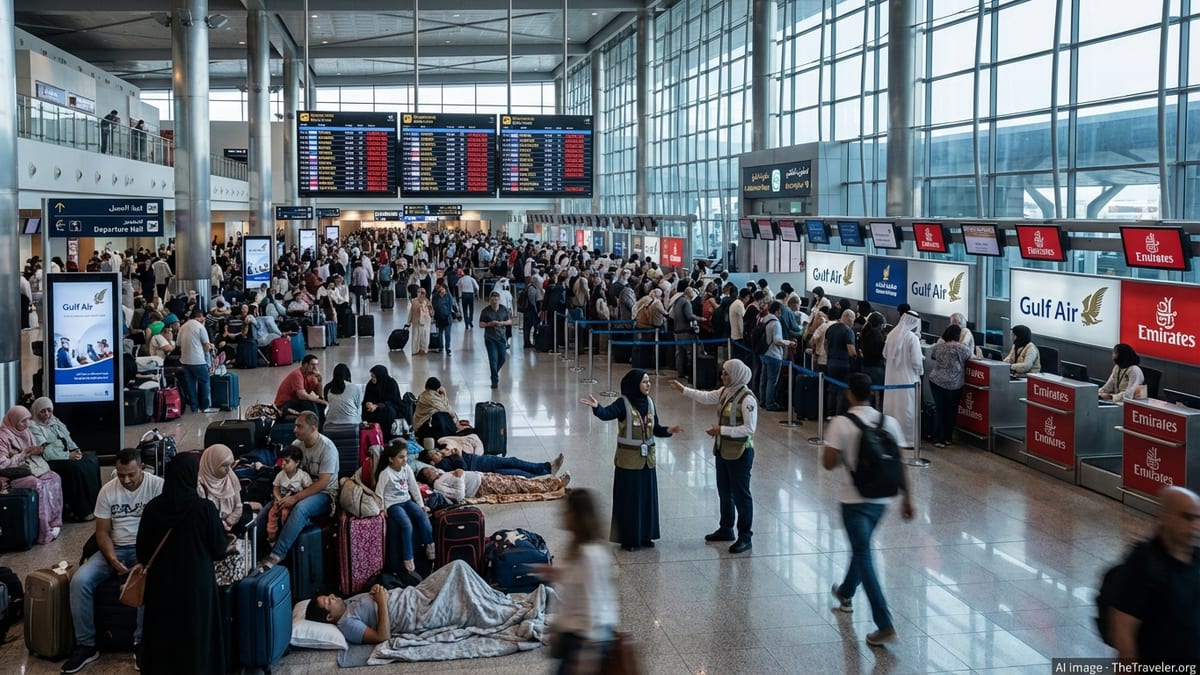
Hundreds of travelers were left stranded at Bahrain International Airport in Manama after a fresh wave of flight cancellations disrupted services on regional and long haul routes to Gulf hubs and major cities including Dubai, Riyadh, Doha, London and New York.
Get the latest news straight to your inbox!
Regional Turmoil Triggers New Wave of Cancellations
Publicly available flight tracking data and industry reports indicate that at least 65 flights linked to Bahrain were canceled on April 8 and 9, sharply curtailing connectivity through the island kingdom’s main gateway. The disruption unfolded against the backdrop of ongoing airspace restrictions and security concerns tied to the wider Iran conflict affecting multiple Middle Eastern states.
Coverage from aviation and travel outlets shows that Bahrain was part of a broader pattern of disruption across the Gulf, with neighboring countries such as the United Arab Emirates, Qatar, Kuwait and Jordan also reporting significant cancellations and delays. While some airports in the region remain technically open, complex routings, overflight limitations and insurance considerations continue to force airlines to thin out schedules and suspend selected services.
The latest turbulence comes on top of weeks of curtailed operations across the Gulf’s major hubs, including Dubai and Doha, where carriers have been operating at reduced capacity compared with late February levels. Data cited by regional media suggests that overall Gulf airline activity is still well below pre crisis norms, with cancellations and diversions continuing to ripple through the global route network.
At Bahrain International Airport, the knock on effects translated into crowded departure halls, extended waits at check in counters and uncertainty for passengers attempting to reach nearby hubs or connect onward to Europe, North America and Asia.
Gulf Air at the Center of Bahrain Disruption
As Bahrain’s national carrier and the primary operator at Bahrain International Airport, Gulf Air has borne the brunt of the local disruption. Industry summaries released this week point to 65 grounded Gulf Air services in a single day, spanning both regional shuttles and longer routes that feed into global connections.
Many of the canceled flights involve high demand corridors linking Bahrain with neighboring Gulf capitals such as Dubai, Riyadh and Doha. These short haul sectors typically function as vital connectors, allowing travelers from across the Middle East and South Asia to access long haul departures heading to European and North American destinations including London and New York.
Publicly available information shows that Gulf Air has been offering affected passengers options such as rebooking on later dates, rerouting via alternative hubs and, in some cases, refunds. However, the compressed timetable and ongoing uncertainty in surrounding airspace have limited the number of available seats, leaving many travelers in Bahrain facing overnight stays and extended layovers.
The national carrier’s network has already been under pressure since late February, when Bahrain’s airspace became entangled in wider regional flight restrictions. Analysts tracking schedule data note that this week’s cancellations represent a renewed setback just as Gulf airlines were attempting to rebuild capacity.
Emirates, Saudia and Other Carriers Feel the Strain
The disruption at Bahrain International Airport has also affected services operated by other major Middle Eastern and international airlines. According to published coverage, carriers such as Emirates and Saudia have continued to adjust their schedules across the region, cutting or consolidating services in response to fluctuating security assessments and airspace closures that complicate normal routings.
Emirates, based in Dubai, has gradually rebuilt its operation since the initial shutdown of parts of UAE airspace but remains below pre conflict capacity. With Dubai International Airport serving as a primary long haul gateway for passengers originating in Bahrain, any reduction in Dubai bound flights from Manama directly affects connections to destinations such as London Heathrow, New York and other transcontinental routes.
Saudi flag carrier Saudia has also been managing a rolling program of suspensions and limited resumptions across its Gulf destinations. Flights between Bahrain and Riyadh form a key component of the regional network, feeding onward journeys to Europe, North America and Asia. Interruptions on this short sector can strand passengers in Bahrain or require wholesale itinerary changes via alternative cities.
Other regional airlines, including Qatar Airways via Doha and low cost operators serving Gulf points, have been navigating similar operational challenges. Frequent last minute timetable changes, equipment swaps and route suspensions have become common as carriers seek to mitigate risk while preserving core connectivity.
Knock On Effects for Long Haul Travelers
The cancellation of dozens of flights touching Bahrain has had outsized consequences for long haul travelers whose journeys depend on tightly timed connections through Gulf hubs. Many passengers ticketed from Bahrain to London, New York and other intercontinental destinations rely on a first leg to Dubai, Doha or Riyadh before transferring to wide body aircraft bound for Europe or North America.
When departures from Manama are pulled from the schedule, travelers often lose not only their short regional hop but also their onward long haul segment. Published analyses of the current disruption highlight the cascading nature of these failures, with a single canceled feeder flight potentially affecting hundreds of travelers who miss connections and require rebooking on already crowded services.
Travel industry commentary notes that rerouting options are constrained by broader capacity limitations. With Gulf airlines collectively operating at around half to two thirds of their previous flight volumes, spare seats on alternative departures are scarce, especially on high demand routes between the Gulf and major Western gateways.
For many stranded passengers at Bahrain International Airport, this means waiting for later flights with open seats, accepting itineraries that involve multiple stops, or in some cases postponing travel altogether. Hotel availability and ground transport in Manama have also come under pressure during peak disruption days, adding another layer of complexity to an already stressful situation.
Uncertain Outlook as Airlines Adjust Schedules Daily
The outlook for travelers using Bahrain International Airport remains uncertain, with airlines reviewing schedules on a day by day basis. Industry observers point out that the pace at which services can be restored depends not only on airline operational readiness but also on evolving security assessments and regulatory guidance related to overflight of sensitive areas.
Recent reporting from regional business and travel media suggests that while some carriers have cautiously added flights back into the system, overall capacity across the Gulf is likely to remain constrained in the near term. Airlines continue to publish flexible booking policies, allowing passengers to change dates or request refunds when journeys are affected by cancellations linked to the wider regional crisis.
For travelers planning to pass through Bahrain, current advice from aviation and consumer organizations emphasizes the importance of checking flight status frequently, monitoring airline announcements and allowing generous connection buffers. Same day turnarounds through Gulf hubs that were once routine now carry a significantly higher risk of disruption.
As of April 9, the situation at Bahrain International Airport illustrates how a relatively small number of cancellations at a single gateway can reverberate through the global air travel system, particularly when multiple Gulf hubs are simultaneously operating under restrictions. Until regional conditions stabilize and airspace constraints ease, Bahrain’s role as a connector between regional cities and long haul destinations is likely to remain fragile, with passengers bearing the brunt of the continuing uncertainty.