

More news on this day
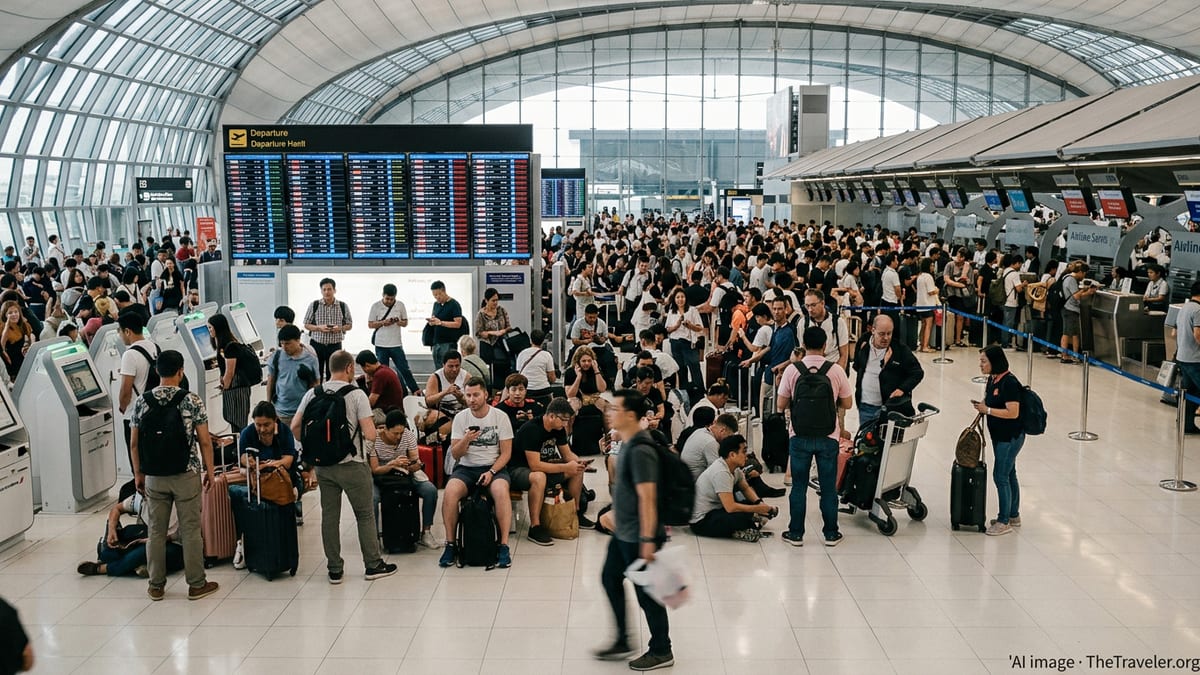
Hundreds of international travellers were left stranded in Thailand today after a wave of cancellations and rolling delays at Bangkok’s Suvarnabhumi Airport, as far‑reaching disruptions tied to Middle East airspace closures continued to snarl routes operated by Thai AirAsia, Cathay Pacific, Thai Vietjet, El Al and other carriers linking Asia with Doha, Abu Dhabi, Muscat and onward to Europe.
Knock-on Disruptions Hit Thailand’s Busiest Gateway
Airport operations data on Monday indicated at least 15 outright cancellations and 93 delays at Suvarnabhumi, magnifying pressure on Thailand’s primary international gateway just as regional air traffic was beginning to recover from the latest shock to global aviation. While the total number of disrupted flights across Asia runs into the hundreds, even a smaller cluster of cancellations at a major hub can leave cabins full of passengers stranded for many hours.
The latest disruption in Bangkok is part of a broader pattern that has swept through Asia’s aviation network over the past week, as carriers reroute or suspend services affected by conflict-linked airspace restrictions over parts of the Middle East. With many Europe–Asia itineraries traditionally funnelling through Gulf hubs such as Doha, Abu Dhabi and Dubai, Suvarnabhumi is now contending with both direct cancellations and late-running inbound aircraft that cascade into missed connections.
Airports of Thailand, which manages Suvarnabhumi, has insisted that terminal facilities and airfield operations remain normal, stressing that the challenges lie with airline schedules rather than airport infrastructure. Nevertheless, long queues at transfer desks and customer service counters were reported throughout the day, with some passengers describing overnight waits for rebooking and hotel arrangements.
Middle East Airspace Closures Ripple Across Doha, Abu Dhabi and Muscat
The disruption in Bangkok has been fuelled by a series of airspace closures and schedule suspensions across key Gulf hubs since late February, after a sharp escalation in regional tensions prompted carriers to halt or severely curtail services over affected territories. Gulf-based airlines have reduced frequencies or temporarily suspended flights on certain routes, while others are operating limited schedules via longer, more southerly corridors.
Doha, Abu Dhabi and Muscat, which together handle a significant share of traffic between Europe and Asia, have all seen waves of cancellations and delays in recent days. As flights are pulled from timetables or rerouted, aircraft and crew are left out of position, and disruptions spread quickly along entire route networks. Passengers starting or ending their journeys in Thailand are feeling the impact when their onward legs through the Gulf are scrubbed or subject to last-minute schedule changes.
Travel agents in Bangkok reported a spike in inquiries from travellers attempting to bypass the Gulf entirely by rebooking through alternative hubs in East Asia, including Seoul, Tokyo, Hong Kong and Singapore. However, the sudden surge in demand on these routes has tightened seat availability and pushed up fares, leaving many travellers with limited and costly options.
Thai AirAsia, Cathay Pacific, Thai Vietjet and El Al Among Affected Carriers
The flight list at Suvarnabhumi on Monday showed cancellations and delays touching a wide cross-section of airlines, including regional low-cost carrier Thai AirAsia, full-service Hong Kong flag carrier Cathay Pacific, Thai Vietjet on short- and medium-haul routes, and El Al on services linking Thailand with Israel via regional partners and connecting hubs. Additional disruptions have been registered among Gulf carriers and other Asian and European airlines with routings that intersect Middle Eastern airspace.
For Thai AirAsia and Thai Vietjet, the principal impact has been on heavily trafficked regional services that depend on tight aircraft rotation to maintain low-cost schedules. When inbound aircraft arrive several hours late, outbound departures quickly fall behind, generating the kind of rolling delays now evident across Suvarnabhumi’s departure boards.
Cathay Pacific, which has already scaled back flying to certain Middle Eastern destinations, is contending with knock-on delays stemming from congested air corridors and the need to adjust flight plans around restricted zones. El Al’s connectivity challenges have been particularly acute given its reliance on safe and predictable routings through an already sensitive airspace environment, with Thailand services caught in a web of shifting overflight permissions and slot allocations.
Passengers Face Long Queues, Scarce Seats and Confusing Rebookings
For travellers on the ground in Bangkok, the operational complexities translate into very human frustrations. With relatively few direct non-stop options from Thailand to Europe or the Americas, many visitors had booked itineraries that relied on smooth connections through Doha, Abu Dhabi or Muscat. As these links falter, passengers find themselves scrambling for alternatives that may involve multiple extra stops, overnight layovers or detours across different continents.
Reports from Suvarnabhumi described crowds forming at airline transfer counters from early morning, with some travellers waiting several hours for updates or reissued boarding passes. While many carriers have offered hotel accommodation and meal vouchers for those facing overnight delays, others have struggled to secure enough nearby rooms, leaving passengers to arrange their own stays and seek reimbursement later.
Families with children, elderly passengers and backpackers on tight budgets were among those most affected, as they weighed whether to stay put in Thailand and ride out the disruption or pay for expensive, last-minute tickets via alternate hubs. Some travellers have turned to social media and online forums to share real-time information on which routes are still moving reliably and which connections to avoid.
Advisories for Travellers Departing Thailand in the Coming Days
Travel authorities and aviation analysts are advising passengers booked to leave Thailand over the next several days to build extra flexibility into their plans. Those holding tickets routed through Doha, Abu Dhabi, Muscat or nearby hubs are being encouraged to check their flight status frequently on airline apps, register for alert notifications, and reconfirm any tight onward connections, particularly to Europe and long-haul destinations.
Where possible, travellers are being urged to consider routings through alternative Asian gateways that have not been directly affected by the airspace restrictions, even if that means longer total travel times or higher fares. For time-sensitive journeys, such as business trips or events, some corporate travel managers are temporarily steering passengers towards itineraries that avoid the Gulf entirely until schedules stabilise.
Consumer groups in Thailand and abroad are also reminding passengers that they may be entitled to refunds, rebookings or care such as accommodation and meals under airline policies or applicable regulations, depending on the origin and nature of the disruption. While the current situation is highly fluid, observers expect that Suvarnabhumi and other regional hubs will continue to experience pockets of disruption as long as airspace constraints in the Middle East remain in place.