

More news on this day
Travelers across the United States are confronting another day of severe disruption as dozens of delays and cancellations at Chicago Midway International Airport trigger a fresh wave of missed connections, overnight airport stays, and rerouted journeys stretching from Florida to New England.
Get the latest news straight to your inbox!
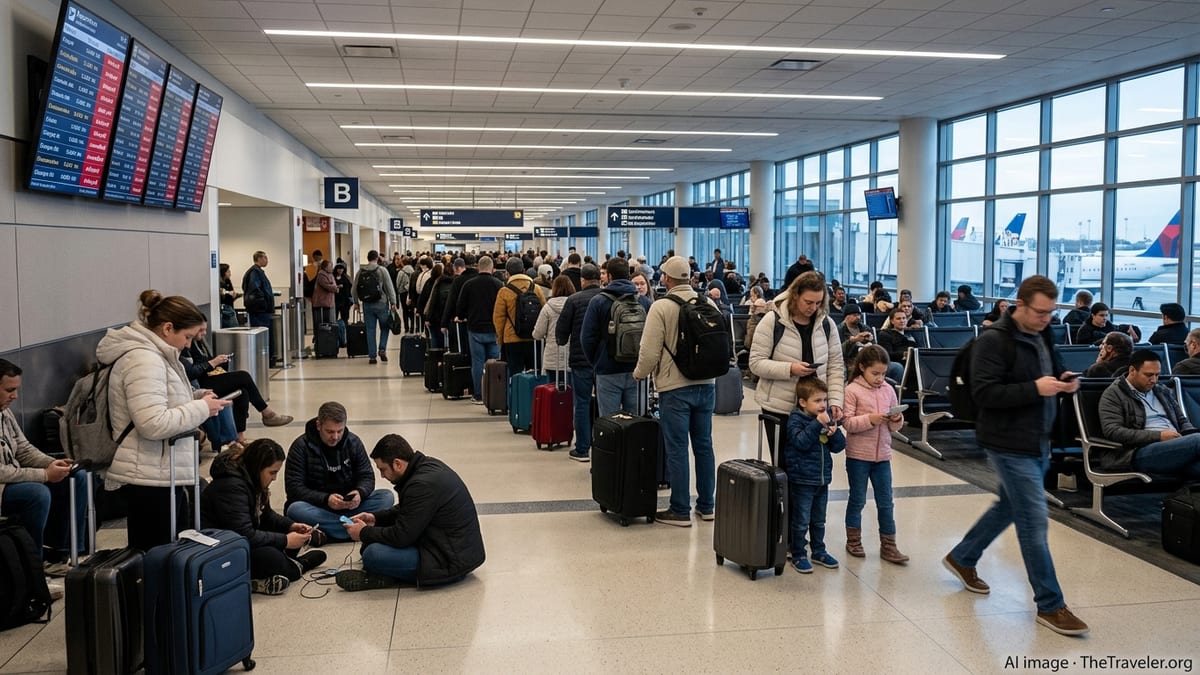
Midway Delays and Cancellations Snarl National Flight Network
Publicly available flight-tracking data on Tuesday indicates that Chicago Midway International Airport is again experiencing acute operational strain, with 51 departures and arrivals delayed and around 80 flights cancelled. The disruptions are concentrated among domestic services operated by major low-cost and full-service carriers that use Midway as a key node in their national networks.
The disruption comes on the heels of a turbulent late-winter period in which Midway has repeatedly ranked among the more delay-prone U.S. airports, according to recent analyses of national flight performance. Data-focused coverage has highlighted the airport’s vulnerability to cascading issues when weather, crew availability, and tight turn times coincide.
Although the raw numbers are smaller than during historic meltdowns, the concentration of cancellations in a single day is sufficient to ripple through connecting routes. Because many Midway flights serve as feeders to destinations across the eastern half of the United States, the impact is being felt far beyond Chicago’s South Side.
Travel industry guidance notes that even a moderate number of cancellations at a hub-style airport can force aircraft and crew out of position, leading to rolling delays that persist for multiple days on downstream routes.
Passengers Stranded Across Florida, the Northeast, and the South
By Tuesday afternoon, the operational strain at Midway was contributing to noticeable disruption at several popular leisure and business airports, including Tampa, Fort Lauderdale, Miami, Nashville, and Boston. Schedules at these destinations show a mix of late departures, equipment substitutions, and outright cancellations on flights linked to Chicago.
In Florida, where air travel remains heavily trafficked in late March, routes connecting Tampa and Fort Lauderdale to Midway have been particularly exposed. Published reports on airline performance in recent years have already placed several Florida airports among the country’s more delay-prone, making fresh knock-on problems especially unwelcome at the tail end of the winter travel season.
Miami International Airport, another major origin and destination for Midwestern travelers, is also seeing the effects of disrupted Midway operations. Irregular schedules between Chicago and South Florida are forcing some passengers into longer routings via other hubs or alternative airports such as Fort Lauderdale, increasing pressure on ground handling and gate availability throughout the region.
Further north, Boston and Nashville are dealing with similar headaches as their Midway-linked flights encounter rolling timetable changes. Online discussions among travelers over recent days have reflected mounting frustration with last-minute adjustments and long days spent waiting for new departure estimates.
Weather, Tight Schedules, and Systemic Fragility
The latest bout of disruption comes shortly after a succession of major winter storms affected large parts of the central and eastern United States in March, forcing thousands of cancellations and widespread delays. Meteorological summaries of this period describe intense blizzard conditions in the Upper Midwest and significant snow and ice farther east, conditions that have repeatedly thrown airline schedules into disarray.
Operational briefings and airline travel waivers issued over the past week highlight how lingering weather effects, including residual snow, high winds, and low visibility, can continue to affect airport performance long after the most severe conditions have passed. Even modest weather challenges can expose the fragility of a tightly wound U.S. flight network already managing high demand and constrained capacity.
Recent data-driven examinations of domestic flight performance between 2020 and 2024 show that while some carriers have improved in managing delays they directly control, overall delay minutes per disrupted flight have increased. This indicates that once a flight does go off schedule, passengers are more likely to experience longer waits, more missed connections, and a higher chance of cancellation.
Chicago Midway’s role as a dense point-to-point hub exacerbates this vulnerability. With tight turn times and heavy reliance on aircraft cycling through multiple Midwestern and East Coast cities each day, a missed slot or extended ground hold early in the sequence can easily cascade into multi-city disruption.
Travelers Face Difficult Choices and Limited Options
As the latest disruptions unfolded, travelers attempting to depart or connect through Midway were met with a familiar set of challenges: long rebooking queues, limited same-day alternatives, and rising demand for nearby airports. Publicly available guidance materials from major U.S. airlines emphasize the importance of checking flight status at regular intervals, enabling mobile alerts, and considering proactive rebooking when significant storms or operational disruptions are forecast.
However, the combination of full spring break loads and aircraft already committed across the network has constrained those options. Many passengers attempting to switch from Midway to Chicago O’Hare, or to alternate routings through other hubs, are finding that remaining seats come at inconvenient times or involve overnight stays.
Online accounts from recent days describe passengers weighing whether to wait out extended delays in terminal seating areas, seek hotel rooms in already busy airport districts, or abandon flights in favor of long-distance drives or overnight trains. Such reports illustrate how quickly an airport-level disruption can turn into a broader logistical challenge for travelers with limited flexibility on timing and budget.
For families traveling with children, older passengers, and those on tight work schedules, the uncertainty surrounding departure times and rebooking possibilities can add significant stress. Travel planning advice from consumer advocates continues to stress the value of travel insurance with strong disruption coverage, as well as keeping essential medications, chargers, and a change of clothes in carry-on bags in case of unexpected overnight stays.
What Today’s Turmoil Signals for Spring and Summer Travel
The current wave of disruptions at Chicago Midway and connected airports offers an early preview of the pressures likely to confront U.S. air travel during the coming spring and summer peak. Analyses of recent years show that while on-time performance has improved for some carriers since the height of the pandemic-era chaos, schedule reliability remains fragile when confronted with major weather events or localized operational issues.
For heavily trafficked destinations like Tampa, Miami, Fort Lauderdale, Nashville, and Boston, which all maintain strong links to Midwestern cities, the latest problems reinforce their dependence on a small number of pivotal connecting airports. Any significant disruption at those nodes can quickly translate into crowded terminals and anxious passengers hundreds of miles away.
Travel-planning resources for 2026 increasingly encourage passengers to build more margin into their itineraries, favor morning departures where possible, and avoid very tight connections through historically delay-prone airports. While no strategy can guarantee a smooth journey, this more conservative approach can reduce the risk of becoming stranded when a single airport, such as Chicago Midway, experiences a sudden spike in delays and cancellations.
As airlines, airports, and federal transportation agencies review performance data from this turbulent late-winter period, travelers are likely to watch closely for signs that the network will be more resilient before the next surge in holiday and vacation demand.