

More news on this day
Major aviation hubs across Asia are wrestling with a fresh wave of disruption in early April, as publicly available flight-tracking data and industry coverage indicate more than 3,800 delays in just a few days, snarling connections and leaving terminals crowded from Tokyo to the Gulf.
Get the latest news straight to your inbox!
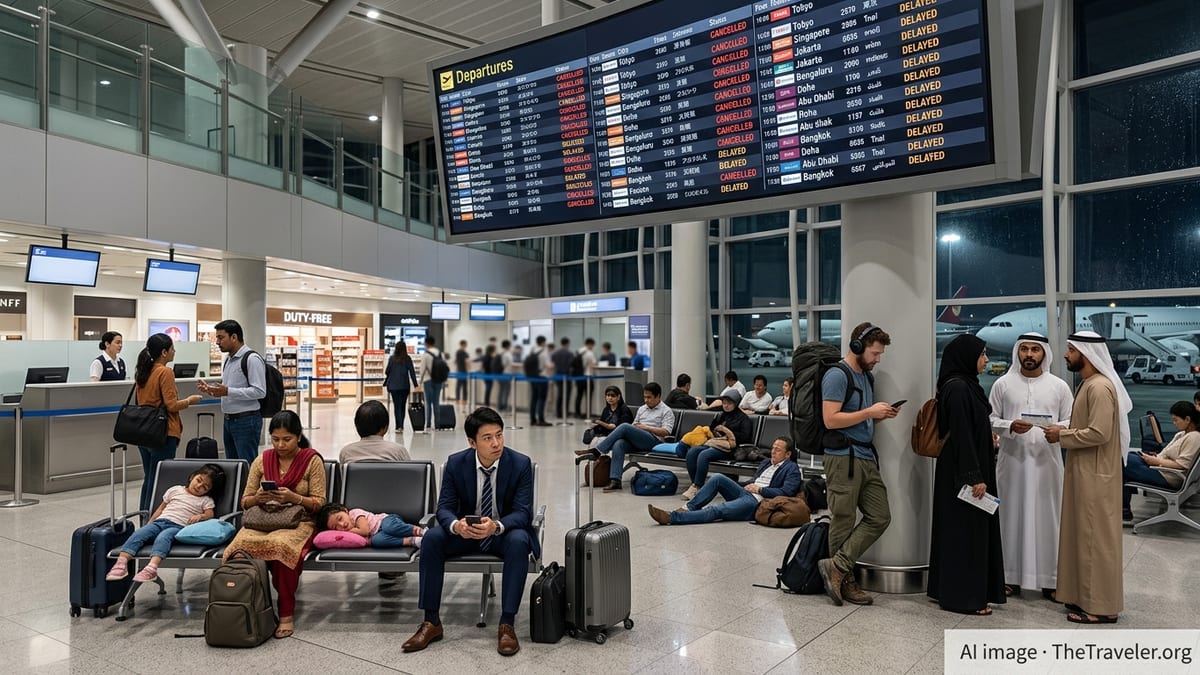
Wave of Delays Hits Core Asian Gateways
Aggregated figures from aviation data platforms and recent industry reports show that flight delays across Asia have surged past 3,800 in the opening week of April 2026, alongside several hundred cancellations. The disruption is concentrated at a tight cluster of major hubs, including Tokyo, Shanghai, Guangzhou, Bangkok, Kuala Lumpur, Singapore, Jakarta, Kolkata, Abu Dhabi and Dubai, where busy spring schedules leave little slack when irregular operations occur.
Coverage from specialist travel outlets indicates that on some days more than 3,600 delays and over 300 cancellations have been recorded across roughly two dozen airports in China, Japan, South Korea, India and Southeast Asia. Additional tallies published on April 6 and April 7 describe successive days with nearly 2,900 and then about 3,800 delayed flights regionwide, underscoring how quickly localized disruption can cascade through Asia’s hub-and-spoke networks.
Travel-focused publications describe scenes of crowded departure halls, rolling delay announcements and long lines at customer service counters as airlines work through rebookings. With many routes already operating at high load factors, passengers missing connections often face limited same day alternatives, particularly on long haul links that rely on carefully timed banks of flights at key gateway airports.
The pattern emerging in early April suggests that multi thousand delay counts are no longer isolated spikes but part of a recurring cycle in which clusters of airports across Asia and the Gulf come under simultaneous strain over short time windows.
Storms, Congestion and Fuel Pressures Combine
Recent coverage from regional outlets highlights a mix of triggers behind the current wave of disruption. Thunderstorms, fog and low visibility have repeatedly affected airfields across East and Southeast Asia in recent days, forcing holding patterns, runway flow restrictions and occasional diversions. Weather related bottlenecks at a few saturated hubs can ripple quickly as aircraft and crews end up out of position for later legs.
Operational congestion compounds the impact. Industry reporting notes that several major Asian airports are handling schedules close to pre pandemic levels, with limited spare runway and gate capacity during peak banks. When a thunderstorm complex or temporary airspace restriction hits, departure and arrival queues build quickly, and recovery takes longer than before because there are fewer empty slots into which delayed flights can be re inserted.
Layered onto this, airlines across the region are grappling with an intensifying jet fuel crunch. Trade and travel publications in March and early April described carriers in markets such as Vietnam and South Korea trimming schedules, warning of possible capacity reductions and adding fuel surcharges as crude prices spike. Global aviation analysis notes that Asia Pacific operators were among the first to feel the impact of the fuel shock, and some have already suspended routes or reduced frequencies.
The result is a fragile operating environment in which bad weather, airspace constraints or a technical outage can rapidly push delay counts into the thousands. With schedules already thinned in some markets because of fuel concerns, the knock on effect for travelers can be more severe, as there are fewer backup flights available once disruption hits.
Passengers Face Missed Connections and Limited Options
Publicly available coverage from travel and consumer outlets indicates that the brunt of the disruption is falling on connecting passengers, particularly those using Asian hubs to link South and Southeast Asia with Europe and North America. Tight connection windows are vulnerable when departure banks out of Japan, China or Southeast Asia slip by an hour or more, and reports describe travelers facing long overnight waits or multi stop reroutes.
In several recent operational windows, regional data compiled by aviation trackers show that carriers such as AirAsia, Batik Air and a range of Chinese and Gulf airlines feature prominently in delay statistics, simply because they operate large volumes of regional and long haul sectors through affected hubs. While many delays are measured in minutes rather than hours, high frequency disruption increases the risk of missed onward flights when itineraries stitch together separate tickets or involve short layovers.
Published guidance from consumer advocates continues to emphasize basic preparation. Travelers are urged to monitor flight status closely through airline apps and airport departure boards, build extra time into itineraries involving critical connections, and keep documentation such as boarding passes and receipts in case compensation or reimbursement is available under local or foreign regulations.
Reports also point to heavy demand on customer service channels as the delays unfold. Call centers, messaging platforms and airport ticket counters across multiple airlines have seen surges in rebooking requests, occasionally resulting in long wait times. Some carriers have expanded the use of self service tools and proactive notifications, but these systems are also being tested by the volume of schedule changes.
Strains Expose Structural Vulnerabilities in Asian Networks
Aviation analysts quoted in recent trade coverage have been warning for months that Asia’s interconnected hub system is vulnerable to exactly the sort of rolling turbulence now unfolding. Strong post pandemic demand, tight capacity and exposure to volatile jet fuel markets mean that airlines and airports have little margin when faced with overlapping shocks such as bad weather, regional geopolitical tensions and technical glitches.
Data from multiple early April disruption events suggest that a relatively small number of bottleneck points can have outsized effects. When a few major hubs in Japan, coastal China or Southeast Asia impose flow restrictions, aircraft and crew rotations across the wider network begin to unravel, leading to secondary delays at outstations far from the original problem. This effect is magnified where carriers rely on complex connection banks built within narrow time windows.
Industry reporting also notes that some Asian carriers are still rebuilding staffing and fleet resilience following cost cutting during the pandemic years. Thinner spare crew rosters and high utilization of aircraft can limit the ability to recover quickly once delays accumulate. In parallel, infrastructure projects intended to ease congestion at several airports are still under way, meaning near term relief in runway or terminal capacity is limited.
The current wave of more than 3,800 delays in early April has therefore become a real time stress test for Asia’s aviation system. Observers are closely watching whether operational changes promised after earlier disruption episodes translate into faster recovery times, or whether rolling waves of irregular operations will remain a fixture of the region’s travel landscape through the coming peak seasons.
What April Travelers Across Asia Should Expect Next
Forward looking commentary from travel industry observers suggests that passengers flying through Asian hubs in the coming weeks should plan for continued pockets of disruption. With the regional storm season still active, jet fuel markets unsettled and some carriers trimming schedules or rerouting around sensitive airspace, the conditions that produced thousands of delays in early April are unlikely to disappear immediately.
Some airlines in the region are adjusting timetables, upgauging aircraft on core routes or consolidating lightly booked services to preserve capacity where demand is strongest. Public information from several carriers and tourism agencies indicates a focus on improving communication during irregular operations, including more frequent app alerts, clearer disruption dashboards and expanded use of messaging services to push rebooking options.
For travelers, the latest wave of disruption serves as a reminder to check flight status repeatedly before leaving for the airport, allow additional connection time when building complex itineraries, and consider travel insurance products that specifically address missed connections and delays. Experts cited in recent coverage also advise keeping essential items in carry on bags in case checked luggage is separated during rebookings.
While the scale of the early April chaos has raised fresh questions about resilience across Asian aviation, the same reporting notes that hubs in the region have repeatedly demonstrated an ability to recover from severe shocks. How quickly they absorb this latest episode of more than 3,800 delays may shape traveler confidence and booking patterns for the rest of 2026.