

More news on this day
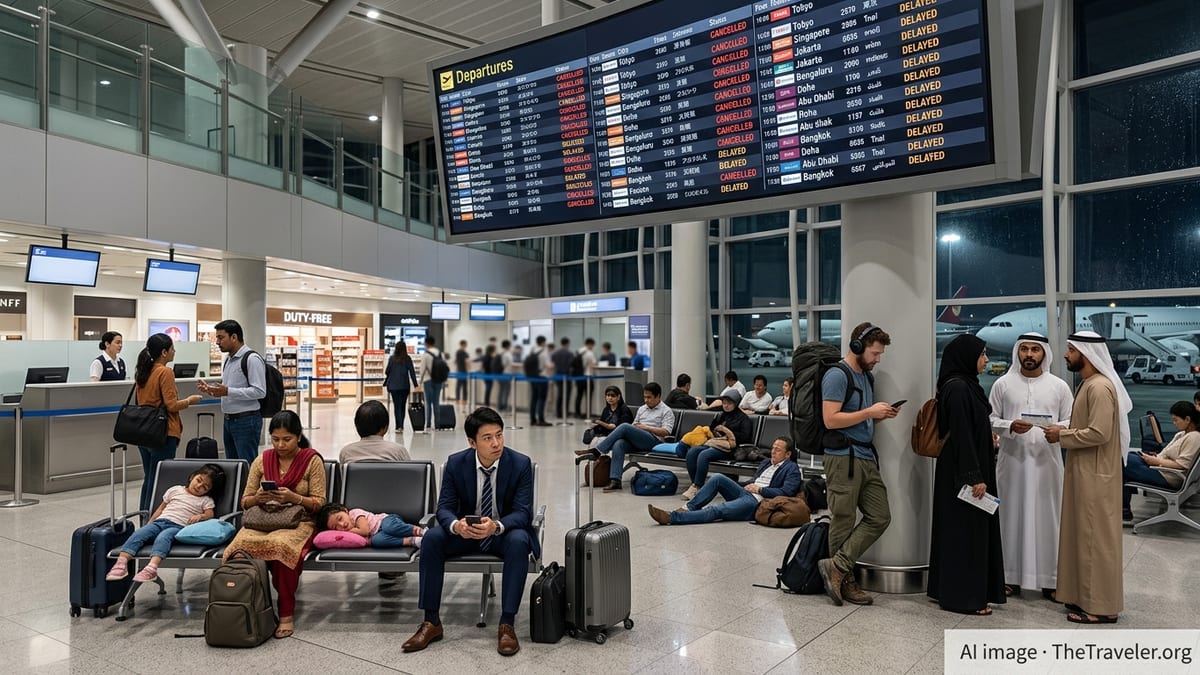
A growing wave of disruption is sweeping across Asia’s aviation network in April 2026, with more than 3,800 flight delays reported in the first week alone as weather, rerouted traffic and tight schedules strain major hubs from southern China to Southeast Asia.
Get the latest news straight to your inbox!
Storm Systems and Congested Skies Trigger a New Wave of Disruption
Data from flight-tracking platforms and regional aviation outlets for the period from April 1 to April 7 point to a sharp spike in irregular operations across Asia, with delays far outnumbering outright cancellations. One industry roundup for April 1 highlighted around 6,000 delays and nearly 300 cancellations touching airports in Thailand, Singapore, Japan, the United Arab Emirates, China, India and Malaysia, underscoring how quickly disruption at a handful of busy gateways can ripple across the region.
The pressure intensified over the weekend of April 4 and April 5, when simultaneous operational strains at Shenzhen Bao’an, Jakarta Soekarno Hatta and Beijing Daxing contributed to at least 651 delays and 65 cancellations in a single day, according to specialized aviation news coverage. Those setbacks translated into hours-long waits for passengers bound for North America, Europe and Australia as missed connections forced airlines to rebook travelers on later departures.
Weather has been a key accelerant. Published reports on April 5 described widespread thunderstorms, fog and low visibility in parts of southern China, a combination that slowed departure and arrival flows and forced traffic-control restrictions at several airports. Even at relatively resilient hubs, the cumulative effect has been visible, with higher than usual numbers of late departures and extended turnaround times for aircraft.
By April 7, aggregated figures from multiple flight-status feeds indicated that the delay count for Asia in the opening week of the month had already cleared 3,800, with additional disruptions continuing to build through rolling knock-on effects rather than a single one-off incident.
Major Hubs Feel the Strain as Delays Cascade Through Networks
Large connecting hubs have been at the center of the disruption pattern. In Southeast Asia, Singapore Changi, Bangkok Suvarnabhumi and Kuala Lumpur International have all seen elevated transit volumes this northern spring as airlines and passengers divert around Middle East bottlenecks. Publicly available analysis from passenger-rights organizations notes that these airports are handling more rerouted long haul services at the same time as they manage seasonal holiday demand.
Operational snapshots from early April show that while Changi has so far avoided mass cancellations, it has recorded notable surges in delayed departures, particularly on regional routes into China, India and Indonesia. Aviation-focused outlets report that even modest weather or congestion events at partner airports can rapidly trigger missed connection banks in Singapore, forcing ground teams to re-accommodate transfer passengers and reshuffle aircraft assignments throughout the day.
In North Asia, networks built around Beijing and Shenzhen have experienced some of the heaviest disruption during stormy periods, with carriers adjusting departure slots and holding aircraft on the ground until conditions improve. Industry monitoring suggests that when several Chinese hubs simultaneously reduce their movement rates, the impact cascades quickly into neighboring markets such as Hong Kong, Seoul and Tokyo, where arriving aircraft can miss their planned turnaround windows.
Secondary hubs and large domestic bases have not been spared. Jakarta, Delhi and Mumbai have all appeared prominently in delay tallies for early April, reflecting how densely scheduled low cost and full service carriers alike are operating as they respond to strong travel demand in the first full northern summer since many pandemic-related restrictions fully unwound.
Airspace Rerouting and Capacity Shifts Add Structural Pressure
The disruption is not only about storms and localized congestion. Ongoing geopolitical tensions and airspace constraints stretching from the Middle East into South Asia are also reshaping traffic flows. Passenger-rights and aviation-analytics sites report that restrictions on some traditional corridors have diverted long haul traffic toward Southeast Asian hubs, placing additional pressure on already busy terminals and runway systems.
At the airline level, network adjustments announced for the 2026 northern summer have further complicated the picture. Singapore Airlines, for example, has extended a suspension of flights to Dubai through the end of April while increasing capacity on selected long haul routes. Publicly available schedules show that other regional and Gulf carriers are also tinkering with frequencies as they adapt to shifting demand and operational constraints.
Some carriers are confronting separate challenges that add to the regional strain. Reports on Qatar Airways, for instance, indicate that the airline has grounded its Airbus A380 fleet and trimmed thousands of flights in April and May, a move that redistributes premium long haul demand onto partner networks and alternative routings. For Asia’s major hubs, this can translate into sharper peaks on certain days as passengers rebook via Singapore, Bangkok, Kuala Lumpur or East Asian gateways.
These structural shifts mean that when bad weather or an equipment issue hits a single airport, the knock-on effects now propagate through a more tightly wound system. Aircraft and crew are cycling through longer, more circuitous routings, leaving less slack to absorb unexpected disruptions and making multi-hour delays more likely when something goes wrong.
Travelers Face Missed Connections, Rising Costs and Longer Journeys
For travelers, the operational story is translating into very tangible frustrations. Consumer-facing coverage and social media posts across the first week of April are filled with accounts of missed onward flights, overnight airport stays and long lines at transfer desks. Data compilations for April 4 and April 5 suggest that passengers transiting through the most affected hubs often encountered delays in the range of two to six hours, especially on itineraries stitching together multiple regional legs before a long haul sector.
Financial analysis from travel and personal finance outlets notes that repeated waves of disruption through March and early April have begun feeding into pricing. With airlines trimming some frequencies and aircraft types while demand remains solid, average fares on remaining seats for certain Asia linked routes in April are tracking higher than a year ago. This dynamic is particularly visible on itineraries that rely heavily on constrained hubs, where fewer alternatives exist if a flight is cancelled or heavily delayed.
Insurance specialists and passenger-rights organizations are reminding travelers that compensation rules vary significantly by jurisdiction and airline. While some routes touching Europe or the United Kingdom may trigger statutory payouts after long delays, many purely intra-Asian itineraries depend on individual carrier policies. Travelers are being advised in public guidance to document delay times, keep boarding passes and request written confirmation of disruptions to support later claims.
Beyond immediate inconvenience, travel planners warn that the cascading nature of current disruptions increases the risk of missed tours, cruises and pre-paid land arrangements. With spring holidays underway in several markets and more peak travel expected around regional festivals later in April, even isolated operational issues at a small number of airports could continue to have outsized effects on passengers across the continent.
What April’s Turbulent Start Signals for the Rest of the Season
Analysts who track global aviation reliability point out that Asia’s early April experience fits a broader pattern of fragile recovery following years of pandemic disruption and subsequent rapid growth. Airlines have restored capacity quickly to meet resurgent demand, yet bottlenecks remain in maintenance, ground handling and air traffic management. In practice, this means schedules are often planned close to the limits of available resources, leaving little margin when storms, equipment problems or airspace changes intervene.
Industry commentary suggests that, unless weather patterns improve markedly and airspace constraints ease, Asia’s hubs may continue to experience elevated disruption levels through the rest of April and into the early summer peak. Additional aircraft deliveries, staffing gains and infrastructure enhancements at key airports could eventually add resilience, but those benefits are likely to materialize over months and years rather than days and weeks.
For now, traveler-focused guidance emphasizes practical steps to navigate the turbulence. Publicly available advice from passenger advocates encourages booking longer connection times, favoring earlier flights in the day where possible and monitoring flight status closely across multiple channels. Some experts also recommend considering travel insurance products that explicitly cover missed connections and extended delays, especially for complex multi stop itineraries.
With more than 3,800 delays already logged across Asian hubs in the first days of April 2026 and further disruption possible as the month unfolds, the region’s experience is emerging as a real time stress test of how well global aviation can cope with a more volatile operating environment.