

More news on this day
Travelers moving through Austin–Bergstrom International Airport on Saturday faced a fresh wave of disruptions, as at least 22 flights were grounded and well over 100 others delayed, snarling departures on major routes to Dallas, Fort Lauderdale, New York, Seattle, Atlanta and other domestic hubs across multiple carriers.
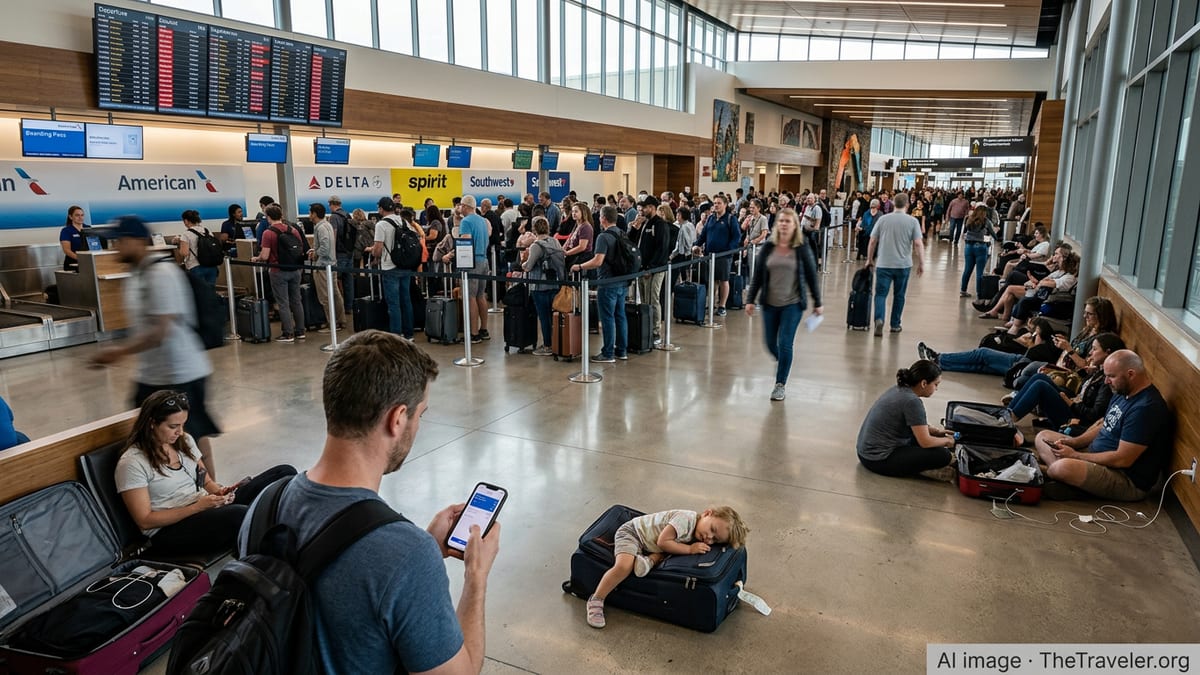
Grounded Flights Ripple Across Major U.S. Routes
Operational data from airline tracking services on March 7 indicated that American Airlines and its regional partner PSA Airlines, along with Delta Air Lines, Spirit Airlines, Southwest Airlines and several smaller carriers, collectively scrubbed 22 departures and arrivals linked to Austin–Bergstrom. Those cancellations, combined with more than 100 reported delays, created rolling knock-on effects across the domestic network, particularly for travelers connecting onward through Dallas, Atlanta and New York.
Among the hardest hit were short-haul corridors that typically function as high-frequency shuttles. Multiple flights between Austin and Dallas were either canceled or pushed back, straining tightly timed business itineraries and weekend leisure trips. Passengers booked on American and PSA services into the Dallas–Fort Worth hub reported gate holds, rolling departure times and, in some cases, outright cancellations that forced them to seek same-day rebooking.
Longer-haul routes also felt the strain. Delays on departures to New York and Fort Lauderdale disrupted transcontinental and Caribbean connections, while operational issues on Seattle- and Atlanta-bound flights threatened the broader connectivity of Austin as a fast-growing tech and tourism gateway. With many of these routes operating only a few times per day, a single grounded flight often meant hours of uncertainty for stranded travelers.
Weather and Network Strains Converge on Austin
The disruptions in Austin came as U.S. airlines coped with wider strains elsewhere in the national network. A series of ground delay programs around key hubs, driven in part by unsettled weather and air traffic management constraints, left carriers juggling aircraft and crew availability. Delta in particular spent Saturday working to recover from heavy delays and cancellations centered on its Atlanta base, sending shockwaves through spoke cities, including Austin.
Industry analysts note that when a major hub like Atlanta or Dallas experiences a ground delay or flow-control program, aircraft and crews can quickly fall out of position. Flights that would ordinarily turn around in 45 to 60 minutes instead sit on tarmacs or at gates for much longer, compressing the entire day’s schedule. In Austin, that translated into late-arriving inbound aircraft, which in turn triggered delayed or canceled outbound segments to cities such as Seattle, New York and Fort Lauderdale.
Local conditions in Central Texas added another layer of complexity. Periodic low clouds and brisk crosswinds around midday prompted cautious spacing of arrivals and departures, limiting the number of movements the airport could handle each hour. While the Federal Aviation Administration did not report a prolonged full ground stop for Austin, intermittent flow restrictions were enough to push marginal flights over the edge into cancellation, especially for regional jets operated by partners like PSA.
Passengers Face Long Lines, Scrambled Itineraries
Inside the terminal, the operational turmoil played out in familiar scenes of crowded concourses and restless passengers clustered around departure boards. Security lines grew as travelers arrived early, hoping to hedge against unexpected schedule changes, only to find their flights showing successive delays. Check-in counters for American, Delta, Spirit and Southwest remained busy throughout the day as customers sought rerouting options and negotiated overnight arrangements when same-day alternatives were no longer available.
For those bound for Dallas, the relative proximity of North Texas gave some travelers an escape route. Rental car desks reported heightened demand as stranded passengers considered driving the three-hour stretch to make critical meetings or onward flights from Dallas–Fort Worth. Others with tickets to New York or Seattle had fewer options, often accepting multi-stop routings through secondary hubs or shifting their trips by a day or more.
Families traveling at the start of the spring break period faced particular challenges. With many school districts nearing holiday windows, flights in and out of Austin were already heavily booked, limiting the seats available for rebooking. Airline agents worked to prioritize unaccompanied minors, elderly passengers and those with international connections, but long hold times on customer-service phone lines and crowded service desks left many travelers frustrated.
Airlines Respond With Waivers and Recovery Plans
In response to the day’s disruptions, several carriers introduced limited travel waivers for passengers whose itineraries touched Austin and affected hubs such as Dallas and Atlanta. These waivers typically allowed customers to shift their travel by a day or two without change fees, provided they kept the same origin and destination. While helpful for some, the waivers offered little relief for travelers who needed to reach events or cruises departing on fixed dates from Fort Lauderdale or New York.
American Airlines and PSA Airlines deployed additional customer-service staff at Austin–Bergstrom to manage rebookings on Dallas and East Coast routes, while Delta focused on reconnecting Austin passengers through a gradually stabilizing Atlanta hub. Spirit and Southwest, which operate point-to-point networks with fewer backup aircraft, leaned on schedule adjustments elsewhere in Texas and the Southeast to free up planes and crews.
Operational planners expect some lingering effects into Sunday, as aircraft and staff gradually reposition to their intended routes. Early-morning departures from Austin to Atlanta, Seattle and New York are expected to be especially sensitive to incoming aircraft arriving late the previous night. Travelers booked in the coming 24 hours are being urged to keep a close eye on airline apps and departure boards and to verify their flight status before leaving for the airport.
What Travelers Through Austin Should Do Now
Transportation officials and consumer advocates offered a familiar set of recommendations for those passing through Austin–Bergstrom in the wake of Saturday’s disruptions. Passengers were urged to download and actively use their airline’s mobile app, which typically provides the earliest notice of gate changes and delay estimates. Opting in to text or push alerts can help travelers react quickly if a flight to Dallas, Fort Lauderdale, New York, Seattle or Atlanta suddenly shifts departure times or is canceled altogether.
Experts also recommend building in extra connection time for itineraries that route through major hubs still recovering from Saturday’s operational challenges, especially Atlanta and Dallas–Fort Worth. Travelers with tight layovers may want to proactively switch to slightly later connections where seats are available, reducing the risk of misconnecting if an Austin departure incurs a short delay.
Finally, seasoned flyers advise arriving at Austin–Bergstrom earlier than usual while the airport works through the backlog. With security and check-in areas already under strain from steady passenger growth in the region, the added pressure of irregular operations can lengthen queue times. For now, anyone traveling through Austin to key domestic hubs is being advised to treat schedules as flexible and to keep backup plans, including alternative routings or overnight options, firmly in mind.