

More news on this day
Hundreds of passengers from the United States to Germany faced fresh travel chaos on March 9 as severe disruption at Houston’s George Bush Intercontinental Airport triggered a ripple effect of delays and cancellations across major hubs including San Francisco, Portland, Orlando, Charlotte and Munich.
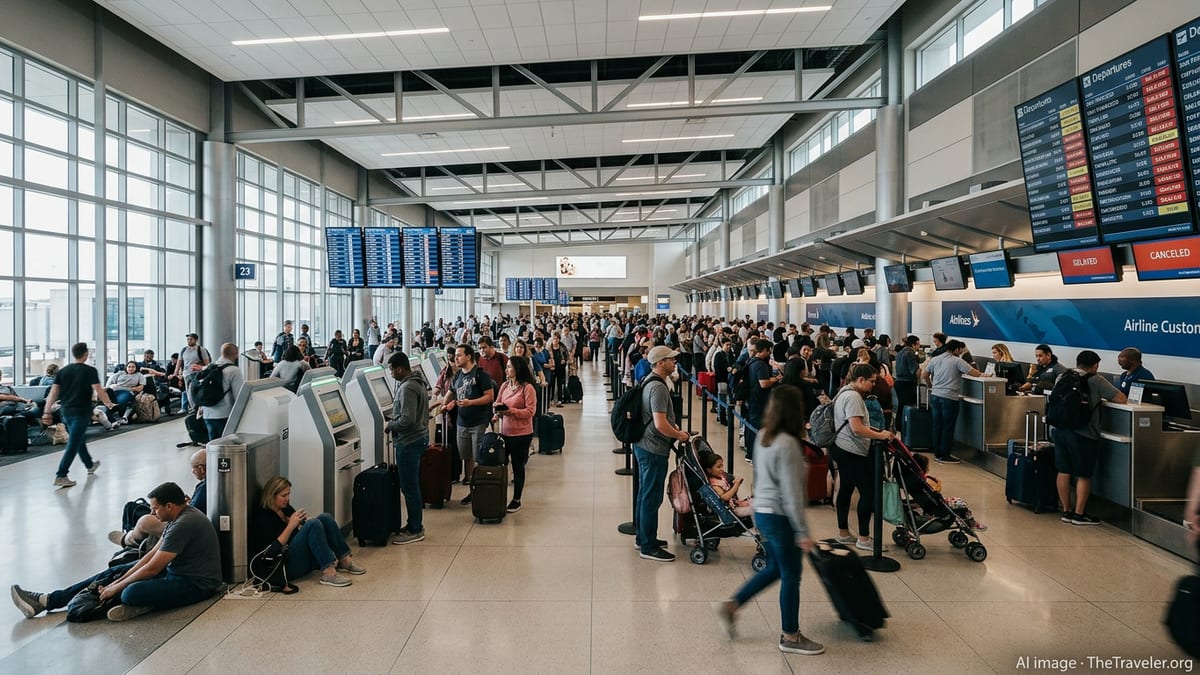
Houston Bush Becomes Epicenter of Fresh Disruptions
George Bush Intercontinental Airport in Houston emerged as one of the worst affected hubs on Monday, with airlines struggling to restore normal operations after a turbulent weekend. Airport data and aviation trackers showed dozens of flights departing or arriving late, while a significant number were scrubbed entirely, compounding frustration for travelers already contending with long lines and operational strain.
At least 41 flights were delayed and 40 canceled at Houston Bush during the latest wave of disruption, according to aggregated schedule and status data analyzed on March 9. Those figures come on top of a wider pattern of operational stress seen at the airport in recent days, driven by volatile weather systems sweeping across Texas and heavy national traffic tied to the spring break travel surge.
While security wait times at Bush Intercontinental remained more manageable than at neighboring Hobby Airport, the knock-on effect of earlier weather holds and tight aircraft rotations has left the schedule fragile. Gate areas in the domestic terminals on Monday morning and early afternoon were packed with travelers staring at departure boards filled with delayed and reassigned flights.
Airlines operating large connecting banks through Houston, including United Airlines and several international carriers, have been juggling aircraft reassignments and crew rest requirements. Those behind-the-scenes adjustments, often invisible to passengers, translated into rolling delays that kept some travelers in the terminal for hours while their flights shifted from one departure time to the next.
Spring Break Crowds and Shutdown Woes Strain US Airports
The turbulence in Houston is unfolding against a broader backdrop of strain across the US aviation system as spring break demand peaks. Airlines have scheduled dense networks of leisure-oriented routes to coastal and sunbelt destinations, including Orlando and San Francisco, leaving little slack in the system when storms, staffing shortages or air traffic control constraints emerge.
Houston’s airport authority has warned that the ongoing partial federal government shutdown is adding to the pressure. Transportation Security Administration officers have been working without pay, and staffing shortfalls have produced long security lines, particularly at Houston’s Hobby Airport. Although Bush Intercontinental’s security checkpoints appeared smoother on Monday, officials continued to urge passengers to arrive early and be prepared for wait times that could stretch well beyond typical pre-pandemic norms.
Other US airports also reported pockets of disruption as the day progressed. Orlando, a major family-travel hub during school holidays, faced clusters of delayed departures tied to aircraft and crew arriving late from affected cities. On the West Coast, San Francisco and Portland logged weather-related and flow-control delays earlier in the season, and residual scheduling tightness has meant even minor operational hiccups can cascade quickly into missed connections.
Charlotte, a key connecting hub for flights up and down the East Coast and to Europe, saw its own wave of knock-on delays as aircraft routed through Houston and other constrained airports arrived behind schedule. For travelers with itineraries chaining together multiple domestic legs before an overnight transatlantic flight, even modest schedule slippage at one airport risked derailing entire trips.
Munich and German Hubs Feel the Transatlantic Ripple
The latest setbacks have not been confined to the United States. Germany, a crucial anchor for transatlantic capacity, has felt the ripple effects in Munich and other major hubs as delayed US departures knocked aircraft and crew positioning off balance. Flights linking Houston and other American gateways with German airports arrived outside their planned windows, forcing airlines to compress ground times or re-slot departures.
Munich, which serves as a key European transfer point for both business and leisure travelers, registered a series of late arrivals on US-origin flights, particularly from southern and coastal states hit hardest by recent storms and air traffic restrictions. Even when cancellations were limited, extended delays narrowed connection windows for onward flights into central and eastern Europe, leaving some passengers queueing at transfer desks to be rebooked on later services.
Germany’s wider aviation network has also had to contend with seasonal weather challenges and the lingering impact of earlier winter storms. Those disruptions left little margin in airline schedules to absorb transatlantic irregularities. As a result, a disruption day in Houston could be felt hours later in Munich and Frankfurt, where ground handlers and customer service teams worked to accommodate missed connections and re-routed bags.
For travelers, the transatlantic knock-on effects were particularly painful for itineraries involving multiple short-haul European segments after an overnight crossing. Missed connections in Munich often meant lengthy waits for the next available flight to smaller regional destinations, turning what should have been a single long day of travel into an unplanned overnight stay.
Passengers Caught Between Rolling Delays and Sparse Information
Across airports from Houston to Munich, passengers described a familiar pattern of rolling delays punctuated by brief announcements and changing departure times on screens. Many reported spending several hours at gates only to see their flights pushed back repeatedly, with some eventually canceled outright after crews timed out or aircraft were reassigned.
Families traveling for long-planned spring break vacations appeared particularly hard hit. In Orlando and San Francisco, crowded concourses were filled with children, strollers and carry-on bags as parents attempted to rebook trips that depended on tightly coordinated hotel and theme park reservations. In Charlotte, business travelers trying to make early-week meetings in Europe and the US East Coast scrambled to secure last-minute alternatives when transatlantic connections evaporated.
At Houston Bush, airport and airline staff deployed additional customer service agents and volunteers to help with rebooking and provide updates, but the sheer volume of disrupted itineraries meant some travelers waited in long lines at service counters or struggled to reach call centers. Those with flexible tickets or elite status often fared better, able to shift to earlier or later departures, while others were left weighing whether to abandon trips altogether.
In Germany, passengers arriving late into Munich faced similar queues as they sought vouchers for meals and accommodation. Some airlines provided hotel rooms when delays stretched overnight, but others cited weather and air traffic control as circumstances beyond their control, limiting compensation and further frustrating travelers who had already endured long-haul flights.
What Travelers Can Expect in the Coming Days
Aviation analysts say the combination of heavy holiday demand, government-related staffing strain and changeable late-winter weather means the US and European air networks are likely to remain fragile in the short term. Even as the worst of the immediate disruption at Houston Bush is gradually cleared, airlines may need several days to fully reposition aircraft and crews, particularly on long-haul routes linking the US with Germany.
Passengers scheduled to travel through Houston, San Francisco, Portland, Orlando, Charlotte or Munich in the coming days are being advised to monitor their flight status frequently and to keep a close eye on connection times. Travel planners recommend building in longer layovers, favoring nonstop flights where possible and making use of airline apps or text alerts for rapid rebooking options when things go wrong.
Airport authorities in Houston and other major hubs continue to encourage early arrival, especially for morning and early afternoon departures when security lines and check-in counters are under the greatest strain. Travelers are also being urged to pack essential medications, chargers and a change of clothes in carry-on bags, in case delays escalate into overnight disruptions.
For now, the latest wave of delays and cancellations underscores how tightly interconnected the global air network has become. A day of operational turbulence at Houston Bush Intercontinental can scatter disruption across cities as far flung as Portland and Munich, leaving travelers once again reminded that even routine journeys can quickly turn unpredictable when the aviation system comes under stress.