

More news on this day
Thousands of passengers across Asia are facing another day of turbulence and uncertainty as airlines including Qatar Airways, Batik Air and Malaysia Airlines cancel scores of flights, disrupting travel to major leisure and business gateways from Jakarta and Bali to Kuala Lumpur, Phuket, Hong Kong and Taipei.
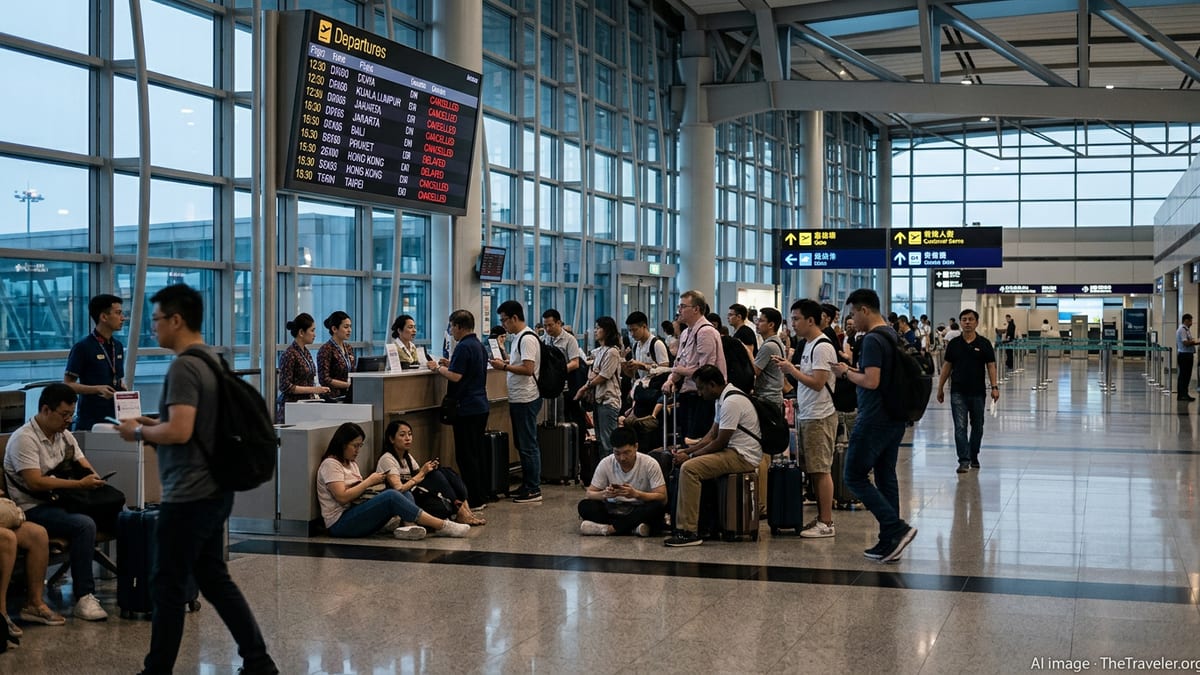
Over 70 Flights Canceled As Regional Crisis Ripples Into Asia
The latest wave of cancellations comes as Middle East airspace restrictions tied to the Iran conflict continue to upend airline schedules well beyond the Gulf. Aviation data and regional travel advisories indicate that more than 70 flights touching Indonesia, Malaysia, Hong Kong and Taiwan have been scrubbed or heavily delayed in recent days, with many of them operated by or connected to Qatar Airways services through Doha.
Qatar Airways, which normally carries a significant share of Europe Asia and Australia traffic via its Doha hub, has been operating a sharply reduced schedule after airspace closures and strikes linked to the war forced it to suspend or curtail operations on multiple days. The airline has begun running a limited number of relief and repositioning flights, but its regular network across Asia remains severely disrupted, triggering knock on effects for partner and codeshare services.
Regional carriers are being pulled into the turmoil as they adjust schedules around lost connections and longer routings. Malaysia Airlines and Batik Air, both heavily exposed to Middle East transit traffic, have canceled or retimed flights on routes feeding into Qatar Airways services, including links from Kuala Lumpur and Jakarta to secondary Asian cities popular with leisure and migrant workers.
Travel industry analysts say the pattern mirrors previous crises in which a shutdown of Gulf aviation corridors rapidly cascaded into Asia, where many itineraries rely on a single seamless connection through Dubai, Abu Dhabi or Doha. For passengers, the result is a patchwork of last minute cancellations, rolling delays and fragmented rebooking options that can stretch a journey by days.
Jakarta, Bali, Kuala Lumpur and Phuket See Mounting Disruptions
Southeast Asia s busiest hubs are among the hardest hit by the latest schedule upheavals. Airports in Indonesia and Malaysia have reported rising numbers of cancellations and delays over the past week as carriers adjust to the loss of predictable transit flows through the Gulf and the need to reroute around restricted airspace.
Jakarta s Soekarno Hatta International Airport has seen dozens of flights affected, including long haul services that previously connected via Doha. Passengers heading to and from Europe, Africa and the Middle East are finding themselves stranded in the Indonesian capital as onward connections evaporate or are pushed back by 24 hours or more, with airport hotels filling and terminal seating areas crowded with overnight campers.
On the Indonesian island of Bali, a key holiday gateway for Australian and European travelers, cancellations and retimings have created uncertainty at the start of the spring peak. Tour operators in Denpasar report clients stuck in transit in other Asian cities after their Qatar Airways or partner flights through Doha were pulled from schedules, while inbound visitors face sudden changes to itineraries and, in some cases, lost nights of prepaid accommodation.
In Malaysia, Kuala Lumpur International Airport is grappling with a surge in delayed and canceled operations involving Malaysia Airlines, AirAsia Group carriers and Batik Air. While many of these flights do not fly near the Gulf, they depend on feed traffic from Europe and the Middle East that has dwindled or been rescheduled. Popular leisure routes from Kuala Lumpur to Phuket and other Thai resorts have seen schedule changes as airlines redeploy aircraft and crews to cover more profitable or strategically important services.
Hong Kong and Taipei Feel Knock On Effects
Farther north, travel through Hong Kong and Taipei is also being reshaped by the continuing disruption. Both cities serve as key connection points between Northeast Asia, Southeast Asia and long haul markets, and both have been absorbing passengers who can no longer transit through the Gulf on their original tickets.
Hong Kong International Airport has reported a sharp increase in transit demand from Europe bound travelers rebooked off Middle East carriers. While local airlines continue to operate their core schedules, the added strain is contributing to tight seat availability, higher fares and longer minimum connection times, especially on short notice bookings from Southeast Asian origins such as Jakarta, Denpasar and Bangkok.
In Taiwan, Taoyuan International Airport outside Taipei has seen a similar pattern. Travelers originally booked on itineraries that threaded through Doha or other Gulf hubs are being funneled onto alternative routings via Taipei, Seoul, Tokyo and Singapore. The rebalancing is pushing some carriers close to capacity on popular Asia Europe and Asia Pacific services, leaving limited options for stranded passengers hoping to depart on the same day.
Airlines and airport authorities in both Hong Kong and Taipei have advised travelers to arrive early, monitor flight status constantly and be prepared for gate changes or last minute retimings. With aircraft and crews out of position across the region, even flights not directly connected to the Middle East can be affected by knock on operational challenges.
Qatar Airways, Batik Air and Malaysia Airlines Under Pressure
For Qatar Airways, the crisis strikes at the heart of its hub and spoke model. The airline relies on unconstrained access to regional airspace and a densely banked schedule at Doha to connect passengers from cities across Asia, including Jakarta, Denpasar, Kuala Lumpur, Bangkok, Hong Kong and Taipei, to destinations in Europe, Africa and the Americas. With those banks now thinned out and some corridors still restricted, the carrier has been forced to prioritize repatriation and essential routes.
The knock on is particularly acute for travelers who booked through tickets on partner airlines. In Indonesia and Malaysia, Batik Air and Malaysia Airlines sell itineraries that hinge on seamless connections to Qatar Airways services. As the Gulf carrier pares back its network, these regional airlines are having to cancel or adjust their own flights, sometimes at short notice, stranding passengers at origin airports or intermediate hubs without immediate alternatives.
Malaysia Airlines has issued updated travel advisories and flexible rebooking policies for customers traveling to, from or via the Middle East and affected Asian destinations. Batik Air, which had earlier warned of potential schedule changes due to the evolving security situation, is working with travel agents and airport ground handlers to contact passengers and arrange new routings where possible. Both carriers, however, are constrained by limited spare capacity and the need to maintain service on domestic and regional routes unaffected by the conflict.
Industry observers note that airlines across Asia are still recovering from pandemic era financial strains and supply chain challenges. Sudden geopolitical shocks that simultaneously hit fuel prices, insurance costs and network reliability are forcing difficult choices about which routes to preserve and which to trim, particularly for smaller and mid sized carriers with thinner margins.
Passengers Face Long Waits, Complex Rebookings and Rising Costs
For many travelers caught in the disruption, the most immediate impact is practical rather than geopolitical. At airports from Jakarta and Bali to Kuala Lumpur, Phuket, Hong Kong and Taipei, passengers are lining up at airline counters seeking rebookings, refunds and hotel vouchers, often facing queues that stretch for hours as staff work through backlogs created by rolling schedule changes.
Travel agents and online booking platforms report a surge in last minute searches for itineraries that bypass the Gulf altogether. Routes via East Asian and South Asian hubs such as Singapore, Tokyo, Seoul, Mumbai and Delhi are in high demand, pushing fares higher and reducing availability in premium cabins and on key overnight departures. Some long haul travelers are stitching together multi stop itineraries on different carriers, accepting longer journey times in exchange for certainty of departure.
Insurance providers and consumer advocates are urging passengers to review policy terms carefully, as coverage for war related disruptions, airspace closures or government advisories can vary widely. Airlines have introduced temporary waivers allowing free date changes or refunds on affected tickets, but the details differ by carrier and route, and some travelers are discovering that ancillary costs such as extra hotel nights or missed tours fall outside standard compensation schemes.
With no clear timeline for a full reopening of Middle East airspace and normal operations at Gulf hubs, travel experts caution that further schedule adjustments are likely in the coming days. They advise passengers with imminent trips involving Qatar Airways or connections through Doha to monitor airline communication channels closely, reconfirm flights before departing for the airport and, where possible, secure backup options that route through alternative hubs in Asia or Europe.