

More news on this day
Hundreds of air travelers were stranded on Saturday across major hubs including New York, Toronto, Bogotá, Los Angeles and Calgary as InterCaribbean Airways, Alaska Airlines, Avianca and Air Canada scrubbed 35 flights and delayed 109 more, creating a fresh wave of disruption across some of the busiest corridors in North and South America.
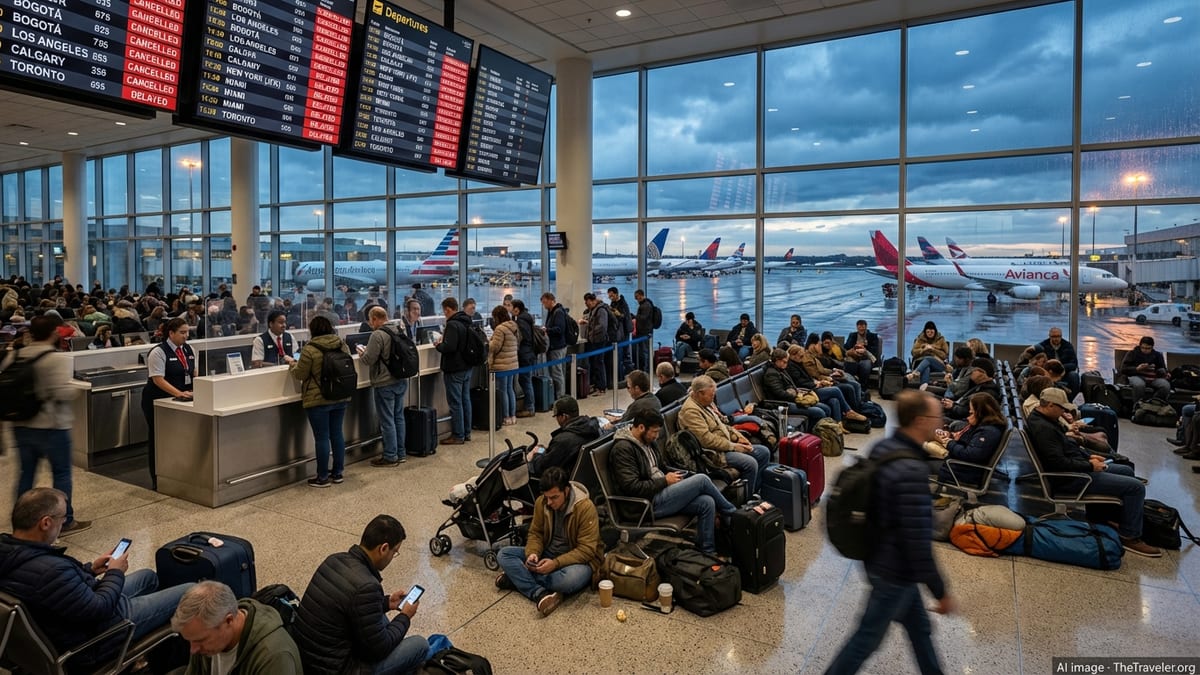
Disruptions Ripple Across Key North and South American Gateways
The latest round of cancellations and delays unfolded on February 21, 2026, hitting international gateways and regional airports from the Caribbean to the Pacific Northwest. Data drawn from flight-tracking services and airport operations reports indicate that at least 35 scheduled departures were cancelled outright while another 109 were significantly delayed, leaving passengers facing missed connections, overnight stays and hastily improvised alternative routes.
Among the most heavily affected cities were New York, Toronto, Bogotá, Los Angeles and Calgary, where the four carriers either operate hub facilities or feed traffic into partner networks. Crowded departure halls and long customer service queues were reported through the afternoon as travelers scrambled to secure scarce seats on later departures or connect through less congested hubs.
While overall traffic levels remained high, the loss of relatively small numbers of flights on key trunk and regional routes had an outsized effect. Tight schedules, crew duty limits and aircraft rotations meant even modest disruptions quickly cascaded, particularly for passengers traveling onward to smaller markets in the Caribbean, northern Canada and secondary Colombian cities.
Airline officials stressed that safety and operational integrity remained the priority, but for stranded travelers the immediate concern was simply getting moving again. Many found themselves shuttling between gate desks and self-service kiosks as rebooking systems struggled to absorb the sudden wave of disrupted itineraries.
InterCaribbean Cancellations Hit Island Connectivity
InterCaribbean Airways bore a notable share of the cancellations, with a string of scrubbed flights across its regional Caribbean network severing vital links between smaller islands and major tourism gateways. Services involving airports such as Providenciales, Grand Turk, Barbados and St Kitts were among those affected, according to schedules reviewed on Saturday.
The airline’s operations are a lifeline for both residents and visitors in the Eastern and Southern Caribbean, connecting remote islands that see limited service from larger international carriers. The cancellation of multiple short-haul hops in quick succession effectively stranded passengers mid-journey, particularly those relying on same-day connections to long-haul flights in Barbados or Providenciales.
Local tourism operators reported that some guests were unable to check out or depart as planned, forcing hotels and guesthouses to extend stays at short notice. While many properties were able to accommodate the changes, the disruptions added last-minute strain at the height of the winter travel season when occupancy is already high.
InterCaribbean has advised passengers to monitor their booking details closely and to contact the airline or their travel agent before heading to the airport. With aircraft and crews out of position following the cancellations, some routes are expected to operate on irregular schedules over the coming days as the carrier works to restore normal connectivity.
Alaska Airlines Delays Snarl Transcontinental and West Coast Traffic
Alaska Airlines, which has been expanding its transcontinental footprint, saw a wave of delays across routes linking New York, Los Angeles, Seattle and other key US gateways. While not all disruptions rose to the level of outright cancellations, extended ground holds and rolling departure changes created an increasingly unstable operating day for the carrier’s network.
Passengers at New York’s John F. Kennedy Airport, Los Angeles International and Seattle-Tacoma reported departing later than scheduled or facing gate changes as Alaska adjusted rotations. The knock-on effects were especially acute for travelers bound for secondary cities or international connections, where missed windows could mean waiting many hours for the next available service.
Airline representatives pointed to a combination of operational constraints and residual weather impacts at some hubs, noting that once delays start to accumulate early in the day it can be difficult to reset the system quickly. Crew duty limits and aircraft availability can force last-minute changes even when weather has improved, a dynamic that leaves travelers frustrated when skies appear clear but flights remain off-schedule.
To ease congestion at service counters, Alaska encouraged impacted customers to use digital tools to rebook or request travel credits where eligible. Even so, customer service agents in New York and Los Angeles said they were handling a steady stream of passengers seeking clarification on connection protection, hotel vouchers and meal allowances as delays stretched into the evening.
Avianca Passengers Face Disruptions in and out of Bogotá
In Colombia, Avianca’s cancellations and delays were felt most strongly in and out of its Bogotá hub, where the carrier concentrates a large share of its domestic and regional operations. At least one flight to the southwestern city of Popayán was among those cancelled, and delays affected several other departures from El Dorado International Airport.
The Bogotá disruptions reverberated across Avianca’s broader South American and North American network. With multiple daily services to cities such as New York and Toronto, even isolated schedule changes on domestic feeders can cause missed connections for long-haul passengers and complicate baggage transfers, particularly for those traveling on separate tickets or through codeshare partners.
Airport officials in Bogotá said they were working closely with carriers to manage gate assignments and turn times, but acknowledged that peak-hour congestion and tight runway capacity leave little margin when delays stack up. Travelers described crowded boarding areas and long lines at information desks as they waited for updates on revised departure times.
For many passengers, the timing of the disruption has been especially challenging. February is a popular period for both outbound Colombian travelers heading to North America and inbound tourists visiting cities such as Bogotá, Cartagena and Medellín, and seats on alternative services remain limited. Travel agents advised customers to build extra time into itineraries involving domestic connections and to reconfirm flight status frequently.
Air Canada’s Network Feels Strain at Toronto and Calgary
Air Canada, the country’s largest airline, reported cancellations and delays affecting both domestic and transborder routes, with particular pressure on Toronto Pearson and Calgary International. These airports serve as critical hubs not only for Canadian travelers but also for connecting passengers moving between the United States, Europe and Latin America.
Operations in Calgary were closely watched on Saturday as some services to and from major US hubs experienced schedule adjustments. Toronto, meanwhile, continued to absorb lingering disruption from recent weather systems that have periodically slowed arrivals and departures, forcing the airline to trim frequencies or consolidate flights on select routes.
The carrier has also been juggling a complex operational environment shaped by broader strategic decisions. Earlier this month, Air Canada Vacations suspended services to Cuba through late April in response to fuel supply constraints, a move that has already prompted rebookings and refunds for thousands of customers. Saturday’s additional cancellations and delays added another layer of complexity for planners attempting to keep aircraft and crews properly positioned.
Customer advocates in Canada reiterated calls for clearer real-time communication when schedules change, urging airlines and airports to push timely updates through mobile apps, displays and public address systems. Passengers at Toronto Pearson and Calgary described situations in which departure times slipped in small increments over several hours, making it difficult to plan for meals, transfers and potential overnight stays.
Why a Relatively Small Number of Cancellations Has an Outsized Impact
Although 35 cancellations and 109 delays represent a fraction of the flights operated each day by InterCaribbean, Alaska Airlines, Avianca and Air Canada combined, aviation analysts say such numbers can have outsized consequences when they affect high-density routes and hub-and-spoke networks. A single cancelled leg on a regional route can strand passengers far from major hubs, while a delayed transcontinental service can disrupt the carefully timed banks of arrivals and departures that support international connections.
In North America, where many carriers rely on tight turn times and high aircraft utilization to maintain profitability, there is limited slack in the system. When weather, air traffic control restrictions or operational issues force changes, airlines must often choose between protecting long-haul departures or maintaining smaller regional services, leading to difficult tradeoffs for planners and frustrating outcomes for affected customers.
Codeshare and alliance arrangements add another layer of complexity. Flights marketed by multiple airlines and carrying passengers on through-tickets to third countries require coordination across carriers’ systems when things go wrong. Reaccommodating these travelers can take longer and may involve reroutes through less direct paths, contributing to congestion at already busy hubs like New York, Toronto and Bogotá.
Industry observers note that such incidents highlight the continuing vulnerability of global aviation networks to localized shocks, whether from storms, infrastructure constraints or staffing challenges. While airlines have invested heavily in operational control centers and predictive tools, there is still no fully reliable way to prevent cascading disruptions once multiple flights fall out of sequence.
Stranded Passengers Confront Long Lines and Limited Options
For the travelers affected on Saturday, the operational nuances mattered less than immediate realities: crowded terminals, rebooking uncertainty and the prospect of unexpected overnight stays. At airports across New York, Toronto, Bogotá, Los Angeles and Calgary, check-in halls and customer service counters remained busy throughout the day as queues formed and snaked through concourses.
Families with children, elderly passengers and those with tight onward connections were often given priority as agents worked case by case to find seats on later flights or reroute through alternative hubs. In some instances, passengers accepted connections involving longer layovers or additional stops simply to secure a confirmed itinerary rather than risk standing by on heavily booked direct services.
Accommodation proved a particular pain point in cities where major events and peak-season demand had already filled many hotels. While some airlines provided vouchers for passengers whose disruptions met internal criteria, others were only able to offer discounted rates or advice on nearby options, leaving travelers to absorb unexpected costs.
At the same time, airport concessions and ground staff faced their own pressures, coping with surges in foot traffic and extended operating hours. Food courts and seating areas near departure gates filled quickly as customers settled in for waits that often stretched well beyond initial delay estimates.
Guidance for Travelers Caught in the Latest Wave of Delays
Travel experts urged passengers scheduled to fly with InterCaribbean, Alaska Airlines, Avianca or Air Canada over the coming days to take proactive steps to minimize the risk of severe disruption. The first recommendation is to monitor flight status closely through official airline channels before leaving for the airport and to enable notifications for schedule changes, gate updates and cancellations.
Where possible, they suggest building additional buffer time into trips that involve tight connections, especially at major hubs such as New York, Toronto, Bogotá, Los Angeles and Calgary. Travelers with essential engagements, from business meetings to cruise departures, are being advised to consider arriving a day early to reduce exposure to same-day delays.
Passengers whose flights are cancelled outright should document their communications with airlines and keep all receipts for meals, ground transportation and lodging. Depending on the jurisdiction and the cause of the disruption, some travelers may be entitled to refunds, rebooking at no additional cost or partial reimbursement of out-of-pocket expenses, though policies differ significantly between countries and individual carriers.
With winter weather, constrained capacity and strong leisure demand continuing to weigh on airline operations across the Americas, industry insiders warn that further episodes of disruption are likely in the weeks ahead. For now, the hundreds of passengers stranded across New York, Toronto, Bogotá, Los Angeles, Calgary and other cities serve as a reminder of how quickly even a modest schedule shock can ripple through a finely tuned global network.